Georgia Genealogy
USA (1,403,636) > Georgia (42,322)
By Record Type

Georgia Genealogy Research Guide
If you're not sure which records would be helpful, you can try our Ancestor Source Finder tool.
|
Birth Records (352) Cemetery Records (18,015) Census Records (6,025) Church Records (1,093) City Directories (1,430) Court Records (614) Death Records (1,937) Histories and Genealogies (1,293) Immigration Records (241) Land Records (741) |
Map Records (1,631) Marriage Records (1,834) Military Records (1,062) Minority Records (185) Miscellaneous Records (496) Newspapers and Obituaries (3,431) Probate Records (891) School Records (2,399) Tax Records (409) |
By County
By City
Georgia Genealogy Research Guide
Quick Facts
Georgia was the last of the thirteen British colonies to be founded and the fourth state to ratify the U.S. Constitution, on January 2, 1788. It began in 1732 as a philanthropic trustee colony under James Oglethorpe, whose first settlers landed at Savannah in 1733, and it became a royal colony in 1752. Because Georgia distributed its own land and kept most records at the courthouse door, research here is intensely local — and shaped by a long history of record loss.
- Capital: Atlanta, since 1868. The seat of government moved westward with the frontier — from Savannah to Augusta, Louisville, and Milledgeville before reaching Atlanta.
- Statehood: January 2, 1788, the fourth state to ratify the Constitution, formed from the royal Province of Georgia.
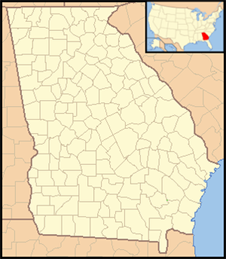
- Counties: 159, among the most of any state. The eight original counties date from 1777; the total reached 161 by 1924, then dropped to 159 in 1932 when Milton and Campbell counties were absorbed into Fulton. The last county created was Peach, in 1924.
- Land type: Georgia is a state-land state, not a federal (public-domain) state. It granted its own land through the colonial and headright systems and through a series of land lotteries, so there are no federal General Land Office patents for Georgia — original grants are documented at the state level and later transfers at the county level.
- Nickname and motto: the Peach State; the state motto is Wisdom, Justice, and Moderation.
- Where records live: most genealogical records — deeds, probate, marriages, and (before 1919) such vital records as exist — are kept at the county level by the Clerk of Superior Court and the Court of Ordinary (now Probate Court), while colonial grants, land-lottery records, tax digests, Confederate pensions, and statewide death certificates are held by the state.
Libraries and Archives
Georgia's richest collections cluster in and around Atlanta, which holds state-government records, and in Savannah, the colonial capital; county courthouses, regional libraries, and local historical societies hold material for their own areas. The principal repositories include:
- Georgia Archives (Morrow) — the central repository for state-government and older county records: colonial and headright land grants, land-lottery records, tax digests, Confederate service and pension records, statewide death certificates, and county records on microfilm.
- Georgia's Virtual Vault — the Archives' digital collections, with digitized colonial wills, headright and bounty plats, Confederate pension applications, county tax digests, county maps, and death certificates.
- National Archives at Atlanta — federal court, census, naturalization, immigration, and military records for Georgia and the surrounding states.
- Georgia Historical Society (Savannah) — the state's oldest cultural institution, holding manuscripts, family papers, colonial and coastal records, and an extensive research library.
- Digital Library of Georgia — a statewide portal to digitized books, manuscripts, government records, photographs, and newspapers.
- GALILEO — Georgia's virtual library, the gateway to many of the state's licensed and digitized resources.
- Georgia Public Library Service — the state library agency and its network of public libraries.
- Atlanta History Center and its Kenan Research Center — Atlanta and north Georgia history, family papers, and photographs.
- Washington Memorial Library (Middle Georgia Regional Library, Macon) — its Genealogical and Historical Room is one of the largest genealogy collections in the state.
- The Stuart A. Rose Manuscript, Archives, and Rare Book Library at Emory University and the Hargrett Rare Book & Manuscript Library at the University of Georgia — major manuscript collections on early Georgia settlers and families.
- Georgia Genealogical Society — the statewide society and publisher of its Quarterly.
- The FamilySearch Library and its worldwide FamilySearch Centers hold extensive Georgia microfilm and digital collections, and county courthouses (Clerk of Superior Court and Probate Court), regional libraries, and local historical societies hold records for their own areas.
Major Websites
These sites host digitized Georgia records and indexes. Subscription sites are marked ($).
- FamilySearch — free; the backbone finding aid, with the FamilySearch Research Wiki, catalog, and large digitized collections of Georgia vital, land, probate, court, tax, and military records, plus a growing Full-Text Search.
- Ancestry ($) — extensive Georgia vital, census, land-lottery, probate, tax, military, and naturalization collections.
- MyHeritage ($) — Georgia vital records, censuses, newspapers, and immigration collections.
- Findmypast ($) — select Georgia marriage, military, and newspaper collections within its United States records.
- Georgia's Virtual Vault — free; the Georgia Archives' digitized colonial wills, land plats, Confederate records, tax digests, and death certificates.
- Digital Library of Georgia — free; digitized government records, manuscripts, maps, and photographs from repositories across the state.
- Georgia Historic Newspapers — free; full-text newspapers spanning the colonial era to modern times.
- Chronicling America — free; the Library of Congress newspaper archive.
- Find a Grave and BillionGraves — free; cemetery listings, photographs, and transcriptions.
Law and Government
Georgia's colonial and state laws help explain the jurisdictions and record-keeping practices that produced genealogical records, and many foundational texts are digitized and free to read.
- The Colonial Records of the State of Georgia (compiled by Allen D. Candler and others) reprint the trustee minutes, colonial council and assembly journals, and correspondence of the colony; the companion Revolutionary Records of the State of Georgia cover the war years. Both are digitized and free on the Internet Archive and HathiTrust.
- The Historical Georgia Digests and Codes Collection at the University of Georgia School of Law gathers the early statute compilations, including Watkins’ Digest of the Laws of the State of Georgia (which famously prints the rescinded Yazoo act) and Marbury and Crawford’s Digest, through the later codes.
- The annual Acts of the General Assembly (session laws) and the nineteenth-century codes are digitized on the Internet Archive and HathiTrust, and additional colonial and legal materials are on the Digital Library of Georgia.
Vital Records (Birth, Marriage, Death)
Statewide civil registration of births and deaths began on January 1, 1919, and compliance grew over the following decade, so many events before the mid-1920s were never recorded at the state level. Marriages, by contrast, were recorded at the county level from the time each county was organized — by 1805 the Court of Ordinary was issuing licenses — making marriage the most complete of Georgia's vital records. Several cities kept their own earlier registers: Savannah recorded deaths from 1803, and Macon and Atlanta began municipal birth and death registration in the closing decades of the nineteenth century.
Access to recent records is restricted; births and recent deaths are available only to the person or an immediate family member, and copies carry a fee. Statewide death certificates from 1919 into the 1920s are open and digitized, later certificates are held by the Georgia Archives and the state vital-records office, and the most recent records come from the state Department of Public Health. Use these indexes to locate a record, then order it:
- Deaths (statewide, from 1919): Georgia Deaths, 1914–1927 and Georgia Deaths, 1928–1943 are free on FamilySearch, along with the Georgia Death Index, 1933–1998; the same records are indexed on Ancestry ($) as Georgia Death Records, 1914–1940 and the Georgia Death Index, 1919–1998 ($), and on MyHeritage ($). Digitized 1919–1927 death certificates are free on Georgia's Virtual Vault.
- Births (from 1919; some earlier): Georgia Births and Christenings, 1754–1960 and Georgia County Delayed Birth and Death Records are free on FamilySearch; birth records less than about a century old are restricted.
- Marriages (county level, from county formation): Georgia County Marriages, 1785–1950 and Georgia Marriages, 1808–1967 are free on FamilySearch; Georgia Marriages, 1699–1944 ($) and Georgia Marriage Records From Select Counties, 1828–1978 ($) are on Ancestry.
- Church registers are a key substitute for births, marriages, and deaths before 1919 — see Church Records below.
History and Timeline of Major Events
Key dates that shaped Georgia's jurisdictions and records:
- 1732–1733 — Georgia is chartered as a trustee colony; Oglethorpe's settlers found Savannah in 1733.
- 1734–1736 — Salzburger Lutherans settle Ebenezer; Highland Scots settle Darien.
- 1752 — the trustee period ends and Georgia becomes a royal colony; parishes are established in 1758.
- 1777 — the first state constitution converts the parishes into the eight original counties.
- January 2, 1788 — Georgia ratifies the U.S. Constitution as the fourth state.
- 1795–1796 — the Yazoo land fraud and its rescission.
- 1805–1833 — a series of land lotteries distributes former Creek and Cherokee lands across central, western, and northern Georgia.
- 1828–1830s — gold is discovered in the north Georgia mountains, intensifying pressure on Cherokee lands.
- 1838 — the forced removal of the Cherokee along the Trail of Tears.
- 1861 — Georgia secedes and joins the Confederacy.
- 1864 — Sherman's March to the Sea; several county courthouses and their records are destroyed.
- 1865–1872 — the Freedmen's Bureau operates in Georgia during Reconstruction.
- 1868 — the capital moves to Atlanta and the Inferior Court is abolished.
- 1919 — statewide registration of births and deaths begins.
- 1924 — Peach County, the last of Georgia's counties, is created.
Census Records and Substitutes
Federal censuses were taken every ten years from 1790 through 1950, but Georgia's schedules for 1790, 1800, and 1810 are lost, and the 1820 census is the earliest to survive — and even it is missing Franklin, Rabun, and Twiggs counties. The 1890 federal census was destroyed nationally; only a fragment for Muscogee County survives for Georgia. The surviving federal censuses are free on FamilySearch and searchable on Ancestry ($) and MyHeritage ($). Because the early schedules are gone, substitutes are essential for pre-1820 Georgia.
State and colonial enumerations were taken in scattered years, and most survive only in fragments, usually listing heads of household. Notable survivals include:
- 1790 (reconstructed): a statewide substitute assembled from tax lists stands in for the lost first federal census; indexed on Ancestry ($).
- Late 1700s to 1820s: partial state enumerations for various counties survive in print and manuscript.
- 1827 and 1834: enumerations tied to the land lotteries and to the settlement of the Cherokee country name many households; the 1834 census of white residents in the Cherokee Territory survives for the northwestern counties.
- 1838 and later: additional partial returns survive for scattered counties.
- 1864: the Census for Re-Organizing the Georgia Militia ($) lists men of military age across much of the state late in the Civil War.
Substitutes. Given the lost early federal censuses, the county tax digests (see Tax Records) and the land-lottery lists of 1805–1833 (see Land Records) are the most valuable population substitutes, since both name most free adult men. City directories, militia lists, and the Georgia Compiled Census and Census Substitutes Index, 1790–1890 ($) help fill the gaps.
Church Records
Because civil registration is late, church registers are the most important substitute for vital records before 1919. Georgia's dominant denomination has long been Baptist, followed by Methodist; Presbyterians, Anglicans and Episcopalians, Lutherans (the Salzburgers at Ebenezer), Roman Catholics (concentrated early around Savannah), and Quakers (at Wrightsborough) round out the colonial and early-state picture.
- Georgia Church Vital Records, 1828–1991 and Georgia Church Marriages, 1754–1960 are free on FamilySearch.
- Baptist association and church minutes are gathered in the Georgia Baptist history collections of Mercer University; Methodist records are held at the Pitts Theology Library at Emory University.
- The Salzburger Lutheran records of Ebenezer are documented through the Georgia Salzburger Society, and thousands of congregational registers can be located through the FamilySearch Catalog by county and town.
Court Records
Georgia's courts reach well beyond lawsuits into land, estates, guardianships, and naturalizations, and their jurisdictions shifted over time. The main courts a researcher encounters are:
- Superior Court, in each county from its organization — deeds and land records, civil and criminal cases, divorce, and (before 1906) many naturalizations; its records are kept by the Clerk of Superior Court.
- Court of Ordinary (now Probate Court) — wills, estates, guardianships, and marriage records.
- Inferior Court (colonial era to 1868) — county administration and roads, and it handled probate and guardianship matters from 1798 to 1852.
- Minor matters went to Justice of the Peace and militia-district courts; the militia districts also served as tax and enumeration districts.
Colonial and early-state court records that survive are largely at the Georgia Archives and on FamilySearch, and modern case information comes from the county courts.
Ethnic/Minority Records
Georgia's population has been diverse since its founding, and knowing where a group settled points to the records most likely to document a family.
- Native peoples. The Muscogee (Creek) held central and southern Georgia and the Cherokee the north; their ceded lands became the lottery districts, and their removal in the 1820s–1838 is documented in federal rolls and treaty records held by the National Archives.
- African Americans. People of African descent have lived in Georgia since the colonial period, first largely enslaved on the rice coast and cotton interior and later greatly increased in the cities. Before 1865, research relies on slaveholders' probate, deed, and tax records; afterward, the Freedman's Bank Records and Freedmen's Bureau Marriages are free on FamilySearch, the Savannah Registers of Free Persons of Color, 1817–1864 ($) document the antebellum free community, and the Reconstruction Registration Oath Books record newly enfranchised men.
- Salzburger Germans settled Ebenezer in Effingham County (see the Georgia Salzburger Society and The Germans of Colonial Georgia, $), and Highland Scots settled Darien in McIntosh County.
- Jewish settlers arrived at Savannah in 1733, founding Congregation Mickve Israel, among the oldest Jewish congregations in the country.
Immigration and Naturalization
Savannah was Georgia's colonial gateway and later a federal port of entry, receiving the first settlers in 1733 and, over the following centuries, Salzburgers, Highland Scots, and later arrivals. Surviving passenger records are concentrated on the coast.
- Georgia, Savannah Passenger Lists, 1906–1945 and Georgia, Brunswick Passenger Lists, 1904–1939 are free on FamilySearch.
- Naturalization. Before 1906, any court of record — most often the county Superior Court — could naturalize, so records are scattered; after 1906 the process was federalized, and later federal naturalizations are at the National Archives at Atlanta. Key indexes include Savannah, Georgia, Naturalization Records, 1790–1910 ($) and Georgia Naturalization Records, 1893–1991 ($).
Land Records
As a state-land state, Georgia granted land itself rather than through the federal government, so there are no General Land Office records. Original title flowed first from the trustees and the royal governors, then from the State of Georgia through the headright system and the land lotteries; later transfers between individuals are recorded as deeds by the county Clerk of Superior Court. The Georgia Archives (Surveyor General collection) holds the colonial grants, headright and bounty plats, and lottery records, while deeds remain in the counties.
Colonial and headright grants. Under the trustees (1732–1752) land was granted in limited tenure, and few complete grantee lists survive; after Georgia became a royal colony, grants were recorded in Savannah. The state's headright law of 1783 granted a head of household 200 acres free, plus 50 acres for each additional member of the household (including enslaved people), up to a 1,000-acre limit, with a land court issuing a warrant of survey before the grant. Headright and bounty grants covered the older counties east of the Oconee River.
The land lotteries (1805–1833). Georgia distributed most of its remaining land by lottery, drawing eligible names against surveyed lots. The winners' lists work as statewide name lists, and the lot-and-district numbers they assigned are still used in deeds and tax records today.
- 1805: the first lottery distributed former Creek land in the original Baldwin, Wilkinson, and Wayne counties.
- 1807: distributed additional Creek land in the original Baldwin and Wilkinson counties.
- 1820: distributed Creek and Cherokee cessions in the original Appling, Early, Habersham, Hall, Irwin, Rabun, and Walton counties; Revolutionary and War of 1812 veterans, widows, and orphans received extra draws.
- 1821: distributed the Creek cession that includes the future site of Atlanta, in the original Dooly, Fayette, Henry, Houston, and Monroe counties.
- 1827: distributed the last Creek lands in Georgia, in the original Carroll, Coweta, Lee, Muscogee, and Troup counties; indexed on Ancestry ($).
- 1832 (Cherokee Land Lottery): distributed the Cherokee country of northwest Georgia in 160-acre lots; indexed on Ancestry ($).
- 1832 (Gold Lottery): a separate drawing over the same region distributed 40-acre gold lots in the mountain gold belt, with a final drawing in 1833.
Online, Georgia Headright and Bounty Land Records, 1783–1909 is free on FamilySearch, and Land Grants to Georgia Revolutionary War Veterans ($) covers bounty grants. Colonial wills, headright and bounty plats, and land-lottery records are digitized on Georgia's Virtual Vault, and FamilySearch Full-Text Search makes many unindexed deeds and grants searchable by every name they contain.
Military Records
Georgia took part in every American conflict from the colonial wars onward, though repeated record losses — the 1864 destruction among them — thinned the early muster rolls; published rosters and abstracts fill many gaps.
- Colonial and Revolutionary War: Revolutionary War Rolls for Georgia, 1775–1783 ($); state bounty land rewarded Georgia service (see Land Records), and published rosters and Daughters of the American Revolution abstracts supplement the surviving records.
- War of 1812 and the Creek and Indian wars: federal service records and state militia records document Georgia's frontier campaigns.
- Civil War: Georgia Confederate service records and Union service records are free on FamilySearch, with Georgia Civil War Muster Rolls ($) on Ancestry; the state's Confederate pension applications — begun in 1877 for disabled veterans and later extended to indigent veterans and widows — are a major source, free on Georgia's Virtual Vault and indexed on FamilySearch and Ancestry ($).
- Spanish-American War and World War I: the Georgia Archives holds Spanish-American War service summary cards (on the Virtual Vault), and World War I statement-of-service cards are free on FamilySearch.
Probate Records
Probate — wills, administrations of intestate estates, and guardianships of minors — is among the richest sources for family relationships, and jurisdiction shifted over time. The colonial courts kept some early probate business, from which little survives; the Court of Ordinary in each county handled probate from 1777 to 1798 and again from 1852 onward, while the Inferior Court held it from 1798 to 1852.
- Georgia Probate Records, 1742–1990 is free on FamilySearch and browsable by county, and Georgia Wills and Probate Records, 1742–1992 ($) is name-searchable on Ancestry.
- Digitized Colonial Will Books and Colonial Wills are free on Georgia's Virtual Vault, and the R. J. Taylor Jr. Foundation's published abstracts index the colonial estate records.
- FamilySearch Full-Text Search makes many unindexed wills and estate files searchable by every name they contain.
Tax Records
Because Georgia's earliest federal censuses are lost, the county tax digests are the single most valuable census substitute: the poll tax fell on nearly every free adult man, so the digests function as broad, near-annual name lists, organized by militia district. After the Civil War they are arranged by race, and they are among the best tools for tracking a family year by year.
- Georgia Tax Digests, 1787–1900 is free on FamilySearch; the Georgia Tax Index, 1789–1799 ($) and Georgia Property Tax Digests, 1793–1892 ($) are on Ancestry.
- The U.S. Internal Revenue Assessment Lists, 1862–1874 record Civil War–era and later federal taxes for Georgia, free on FamilySearch.
- The Georgia Archives holds the original county tax digests, many digitized on the Virtual Vault, while county tax offices hold later assessment rolls.
Back to Top