Washington DC Genealogy
USA (1,403,636) > Washington DC (1,888)
By Record Type

If you're not sure which records would be helpful, you can try our Ancestor Source Finder tool.
|
Birth Records (10) Cemetery Records (121) Census Records (50) Church Records (74) City Directories (134) Court Records (9) Death Records (58) Histories and Genealogies (95) Immigration Records (34) Land Records (6) |
Map Records (81) Marriage Records (31) Military Records (238) Minority Records (38) Miscellaneous Records (35) Newspapers and Obituaries (717) Probate Records (9) School Records (229) Tax Records (4) |
Washington, DC Genealogy Research Guide
Quick Facts
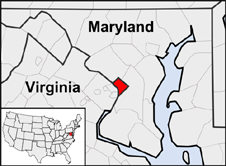
Washington, DC is the capital of the United States and a federal district rather than a state — it has never been one, and it answers directly to Congress. It was carved in 1790 from land ceded by Maryland and Virginia, laid out along the Potomac in 1791, and organized under federal law in 1801, so its records form a single compact jurisdiction layered over an unusually deep body of federal holdings kept nearby at the National Archives. For the family historian this combination makes the District at once small in area and exceptionally rich in surviving records.
- Status: the capital of the United States and a federal district, today coextensive with the city of Washington; it is not a state and has never been admitted as one.
- Founding: authorized by the Residence Act of July 16, 1790, from land ceded by Maryland and Virginia; the boundary was surveyed beginning in 1791 by Andrew Ellicott, assisted by the free Black astronomer Benjamin Banneker, and marked with the boundary stones. The federal government moved from Philadelphia in 1800.
- Governing act: the Organic Act of 1801 placed the District under the exclusive jurisdiction of Congress and created its first courts and counties.
- Land type: the District is neither a conventional state-land nor a federal public-domain jurisdiction. Original title runs from Province and State of Maryland grants (and Virginia grants for the retroceded portion) directly to the founding landowners — the "original proprietors" who conveyed land for the federal city in 1791 — so there are no General Land Office records; deeds are recorded locally, and the earliest layer of title runs through colonial Maryland patents.
- Subdivisions: the original ten-mile square held the City of Washington, the City of Georgetown, Washington County (the rural Maryland-side land), and — until 1846 — Alexandria County and the City of Alexandria on the Virginia side. Alexandria was retroceded to Virginia in 1846, and in 1871 the separate governments of Washington, Georgetown, and Washington County were abolished and merged into a single District government.
- Nickname and motto: the Nation's Capital; the District's motto is Justitia Omnibus ("Justice for All").
- Where records live: the District is a single jurisdiction. Land is recorded by the Recorder of Deeds; early vital, court, land, and probate records are held by the DC Archives; recent births and deaths are held by the DC Health Vital Records Division; marriages and probate are with the Superior Court and its Register of Wills; and a deep layer of court, census, naturalization, military, and emancipation records is held by the National Archives.
Libraries and Archives
Research in the District draws on an unusual concentration of national and local repositories within a few square miles: the federal archives and the Library of Congress hold the records generated by the seat of government, while the District's own archives, public library, and historical society hold municipal and community records. The principal repositories include:
- DC Archives (Office of Public Records) — the District's early birth, marriage, and death records, wills and probate, land records, and government records.
- DC Public Library, home of the People's Archive and the Washingtoniana and Peabody Room collections — local histories, newspapers, city directories, photographs, maps, manuscripts, and vital-record indexes.
- DAR Library (National Society Daughters of the American Revolution) — one of the country's premier genealogical collections, strong in compiled genealogies, published record abstracts, and early records.
- National Archives in Washington and the National Archives at College Park — federal court, naturalization, census, emancipation, military, and Freedmen's Bureau records for the District.
- Library of Congress, Local History and Genealogy section — one of the largest genealogical and local-history collections anywhere, including directories, newspapers, and manuscripts.
- DC History Center (Historical Society of Washington, DC) and its Kiplinger Research Library — manuscripts, photographs, maps, and research files on the city and its neighborhoods.
- Moorland-Spingarn Research Center at Howard University — one of the world's most comprehensive repositories documenting people of African descent.
- Afro-American Historical and Genealogical Society (AAHGS) — the national society for African American family history, headquartered in the Washington area.
- The FamilySearch Library and its worldwide FamilySearch Centers hold extensive District microfilm and digital collections, and the Recorder of Deeds, the Superior Court and its Register of Wills, and the DC Health Vital Records Division hold their own record series.
Major Websites
These sites host digitized District records and indexes. Subscription sites are marked ($).
- FamilySearch — free; the backbone finding aid, with its catalog and large digitized collections of District vital, land, probate, court, and church records.
- Ancestry ($) — extensive District vital, census, court, naturalization, and tax collections.
- MyHeritage ($) — District vital records, censuses, and directories.
- Findmypast ($) — District births and baptisms, marriages, and deaths and burials, digitized in partnership with FamilySearch.
- Chronicling America — free; the Library of Congress newspaper archive, including historic Washington papers.
- Internet Archive and HathiTrust — free; digitized District histories, published record abstracts, city directories, and law books.
- Civil War Washington — free; a University of Nebraska project with transcribed emancipation petitions and other records of wartime Washington.
- Find a Grave and BillionGraves — free; cemetery listings, photographs, and transcriptions.
Law and Government
Because the District is governed by Congress, its foundational laws are federal statutes and organic acts, and understanding them explains the offices and jurisdictions that produced genealogical records. Many of these texts are digitized and free to read.
- The Revised Code of the District of Columbia (prepared under the act of 1855 and published in 1857) — an early consolidation of the District's law; free on HathiTrust.
- The Revised Statutes of the United States Relating to the District of Columbia (1873–74) — the consolidated statutory law of the District after the organic changes of 1871; free on HathiTrust.
- The Code of Law for the District of Columbia (enacted 1901, with later compilations) — the twentieth-century code, useful for tracing offices and record-keeping; free on HathiTrust.
- The United States Statutes at Large — contains the Residence Act, the Organic Acts of 1801 and 1871, the 1846 retrocession, the 1862 emancipation act, and the 1973 Home Rule Act; free on HathiTrust.
- Session laws, the municipal charters of Washington and Georgetown, the acts of the Levy Court of Washington County, and the acts of the short-lived Legislative Assembly are digitized on the Internet Archive and HathiTrust, and the GW Law Library District of Columbia guide maps the sequence of early District statutes.
Vital Records (Birth, Marriage, Death)
Civil registration in the District began at different times for each kind of event, and early compliance was uneven, so church and court records remain essential for the earliest years. Because the District is a single jurisdiction, there is no separate municipal system to search alongside it, but the split between older records at the DC Archives and recent records at the city agencies matters for access.
Deaths were recorded from about 1855, with compliance general by about 1880 and a gap during the Civil War years of 1861–1865; marriages from 1811, kept by the clerk of the court; and births from 1874, with compliance general by about 1915. Older records are held by the DC Archives, recent births and deaths by the DC Health Vital Records Division, and marriages by the Superior Court Marriage Bureau. Genealogical copies are available under access rules and time limits, with a fee for certified copies and the most recent records restricted; use the indexes below to identify a record, then order it through the DC Archives.
- Births: District of Columbia births and christenings from 1830 to 1955 are indexed free on FamilySearch, and Washington, DC Birth Certificates, 1874–1895 ($) provides District birth certificates on Ancestry.
- Marriages: Washington, D.C. Marriage Records, 1810–1953 ($) and Marriage Certificates, 1870–1920 ($) are name-searchable on Ancestry; District marriages from 1811 to 1950 are also indexed free on FamilySearch, and later licenses appear in Marriage Bureau Listings, 1921–1990 ($).
- Deaths: free District death and burial indexes, covering roughly 1840 into the mid-twentieth century, are on FamilySearch; Washington, DC Death Certificates, 1874–1931 ($) and the District of Columbia Select Deaths and Burials Index, 1769–1960 ($) are on Ancestry.
Because registration only became routine in the 1870s and 1880s, the earlier decades are best filled from church registers, the court and emancipation records, cemetery transcriptions, and newspaper notices.
History and Timeline of Major Events
Key dates that shaped the District's jurisdictions and records:
- 1790 — the Residence Act authorizes a permanent national capital on the Potomac, from land to be ceded by Maryland and Virginia.
- 1791 — Andrew Ellicott and Benjamin Banneker survey the ten-mile-square boundary and set the boundary stones; the original proprietors sign the agreement conveying land for the federal city.
- 1800 — the seat of government moves from Philadelphia, and Congress first meets in the new capital.
- 1801 — the Organic Act places the District under exclusive congressional jurisdiction, creates Washington and Alexandria counties, and establishes the Circuit Court of the District of Columbia.
- 1802 — the City of Washington is incorporated under a municipal charter.
- 1812 — the Levy Court governs Washington County, and the city government is reorganized.
- 1814 — during the War of 1812, British forces burn Washington after the Battle of Bladensburg.
- 1846 — Alexandria County and the City of Alexandria are retroceded to Virginia, reducing the District to the Maryland-ceded portion.
- 1850 — the Compromise of 1850 abolishes the slave trade, though not slavery, in the District.
- 1862 — the District of Columbia Compensated Emancipation Act frees the enslaved people of the District and generates detailed petitions naming both the enslaved and their former enslavers.
- 1863 — the Supreme Court of the District of Columbia replaces the Circuit Court.
- 1867 — Howard University is chartered, and Black men gain the vote in the District.
- 1871 — a territorial government is created, merging Washington, Georgetown, and Washington County into a single District government.
- 1874 — the territorial government gives way to a presidentially appointed commission; birth registration is by now generally observed.
- 1878 — a permanent three-member commission government is established.
- 1890 — the District's schedules in the federal census of this year are later destroyed, a records loss affecting all researchers.
- 1936 — federal trial jurisdiction passes to the District Court of the United States for the District of Columbia.
- 1973 — the Home Rule Act restores an elected mayor and council.
Census Records and Substitutes
Federal censuses were taken every ten years, and the District appears from 1800 onward, though several early returns are missing.
The 1800 census survives only for the Maryland-side portion; the 1810 census is lost; and the 1890 census was almost entirely destroyed. Surviving schedules for 1800 and 1820 through 1950 are free on FamilySearch and the National Archives 1950 census site, and are searchable on Ancestry ($) and MyHeritage ($).
The District never conducted its own "state censuses," but several special enumerations serve the same purpose and should be searched individually:
- 1803, 1807, and 1818: early District enumerations that survive mainly as name lists, useful for placing a household in the young city.
- 1867: a detailed District census recording name, age, sex, marital status, color, length of residence, occupation, and the nativity of parents.
- 1878: a second detailed District census on the same plan, valuable in the gap between the 1870 and 1880 federal censuses.
- Police censuses: head counts taken in numerous years from the 1880s into the 1920s and published in the annual reports of the District commissioners.
The 1867 and 1878 District censuses are held at the Maryland State Archives. Where censuses are missing, city directories are the best tool for placing a family year by year: Washington and Georgetown directories survive from the 1820s, with Boyd's directories running from 1858 forward, and many are digitized free on the Internet Archive and HathiTrust; the U.S. City Directories, 1822–1995 ($) collection includes Washington directories. Tax lists are the other main substitute and are described below.
Church Records
Because civil registration is comparatively late, church records are the most important substitute for vital records before the 1870s. The largest early denominations were Roman Catholic, Baptist, Protestant Episcopal, and Methodist, with Presbyterian and Quaker congregations also present; baptism, marriage, and burial registers from these churches often reach well before the health department's records.
- Georgetown was heavily Catholic, and Holy Trinity Church (established 1787, with registers from the 1790s) is the oldest Catholic parish; its older sacramental registers are held at Georgetown University's special collections, and jurisdiction historically ran through the Archdiocese of Baltimore and later the Archdiocese of Washington.
- The District's historically Black congregations are genealogically significant. Mount Zion United Methodist, organized in 1816, is recognized as the oldest Black congregation in the District and was active on the Underground Railroad; its records and those of other early Black churches document families long before civil registration.
- FamilySearch gathers many digitized and microfilmed District church registers, and its free index of births and christenings for 1830 to 1955 draws heavily on those registers.
Court Records
The District's courts changed several times, and their records reach far beyond lawsuits into estates, guardianships, naturalizations, and the affairs of free and enslaved residents. The main courts a researcher encounters are:
- Circuit Court of the District of Columbia (1801–1863) — the early trial court, which handled civil and criminal cases, naturalizations, and, through its Orphans' Court, probate; it also produced much of the surviving record of free and enslaved Black residents.
- Supreme Court of the District of Columbia (1863–1936) — the successor trial court, which continued naturalizations, civil matters, and equity.
- District Court of the United States for the District of Columbia — carried forward federal trial jurisdiction after 1936.
- Superior Court of the District of Columbia — the modern local trial court, whose Marriage Bureau holds marriages and whose Register of Wills holds wills and probate.
The bulk of the District's federal-era court records is held by the National Archives, and FamilySearch digitizes an important early series free as its District court and emancipation records for 1820 to 1863.
Ethnic/Minority Records
The District has been home to a large and historically significant Black community since its founding, alongside Irish, German, and Italian immigrant populations, and knowing which community a family belonged to points to the records most likely to document it.
- African Americans. The District had a substantial free Black population before the Civil War and was a center of the domestic slave trade, so it is unusually rich in records of both free and enslaved people. The District of Columbia Slave Emancipation Records, 1851–1863 ($) capture the 1862 Compensated Emancipation petitions, which name enslaved people and their former enslavers; free transcriptions searchable by name are available through Civil War Washington, and the same records are digitized free on FamilySearch as its District court and emancipation records. Manumission papers and free-Negro registers are described in the DC Archives guide to records related to slavery.
- Freedmen's records. The District's Freedmen's Bureau field office records and the Freedman's Savings and Trust Company (Freedman's Bank) registers, both free on FamilySearch, document formerly enslaved families in the years after emancipation.
- Repositories. The Moorland-Spingarn Research Center at Howard University and the Afro-American Historical and Genealogical Society are central to African American research in the District, and the DC Public Library holds extensive Black Studies collections.
- Irish, German, and Italian communities. Nineteenth- and early-twentieth-century immigrants settled in the growing city and appear chiefly in Catholic parish registers, naturalization records, and city directories.
The Library of Congress District of Columbia guide gathers additional community resources.
Immigration and Naturalization
The District was not a seaport, so passenger-arrival records are minimal; the immigration story here is chiefly one of naturalization in the local federal courts.
Naturalization. Before 1906 the District's courts naturalized under the general federal laws, and after 1906 the process was standardized nationally. Naturalizations were handled by the Circuit Court (from 1802) and then the Supreme Court of the District of Columbia, and the surviving records are held by the National Archives, with later petitions filed in the federal district court. Washington, DC Military Naturalization Petitions, 1918–1924 ($) cover service members naturalized in the District during the First World War.
Land Records
Land research in the District is distinctive. Because original title ran from the colonial and state governments of Maryland (and Virginia, in the retroceded portion) directly to the founding landowners, there are no General Land Office records; title begins with Maryland patents and then passes through the 1791 agreement by which the original proprietors conveyed land for the federal city. The City of Washington was then laid out in a system of numbered squares and lots, and later transfers between individuals are recorded as deeds, with recording handled centrally for the whole District.
Where the records are kept.
- Local level: deeds and mortgages are recorded by the Recorder of Deeds of the District of Columbia.
- DC Archives: early District land records and related series are held by the DC Archives.
- National Archives: the records of the commissioners of the City of Washington and related federal land papers are among the National Archives holdings.
The original proprietors. Much of the federal city was carved from a handful of large private tracts, and knowing which one an ancestor's land fell in points to where the earliest records survive.
- David Burnes: a tract of roughly 650 to 700 acres covering much of the future downtown, including the ground of the White House, the Ellipse, and part of the National Mall; the deed by which he conveyed land to the commissioners was among the first recorded in the City of Washington.
- Daniel Carroll of Duddington: the largest holding, taking in Jenkins Hill — the site of the Capitol — and much of Capitol Hill and the Mall.
- Notley Young: a large riverfront plantation covering much of present-day Southwest Washington, south of Carroll's land.
- Samuel Davidson: a tract taking in the ground around today's Lafayette Square, north of the President's House.
- Uriah Forrest, Benjamin Oden, and others: further proprietors whose tracts made up the rest of the Mall and the surrounding city.
Online, FamilySearch's free wills-and-deeds collection covers District deeds, and FamilySearch Full-Text Search makes many unindexed deeds and land papers searchable by every name they contain, including grantors, grantees, witnesses, and neighbors. Published finding aids by Wesley E. Pippenger index the original District landowners and the earliest deeds.
Military Records
The District took part in the nation's wars from its earliest days, and though it fielded relatively few of its own units, its militia and volunteer records survive alongside the federal service records held nearby.
- Revolution: the District postdates the Revolutionary War, but soldiers who settled or were buried within its bounds are documented in the collections of the DAR Library.
- War of 1812: the District militia turned out for the defense of Washington, and the Battle of Bladensburg and the burning of the city in 1814 are the central events; a register of District militia officers and related rolls are among the National Archives holdings, and War of 1812 service records are searchable free on FamilySearch.
- Civil War: the District was ringed with forts — Fort Stevens saw a battle in 1864 — and raised volunteer units, while freed people helped build the defenses. Compiled service records are at the National Archives, and Union service records for the District are searchable free on FamilySearch.
- Later service: the District of Columbia National Guard succeeded the old militia, and twentieth-century service records are held by the National Archives and the National Personnel Records Center.
Probate Records
Probate — wills, administrations of intestate estates, and guardianships of minors — is among the richest sources for family relationships, and in the District it has been kept centrally since 1801.
- Orphans' Court and Probate Court: from 1801 the Orphans' Court of the District proved wills and granted administrations and guardianships; this jurisdiction passed to the probate side of the District's higher courts over the nineteenth century.
- Register of Wills: today the Register of Wills and the Probate Division of the Superior Court hold the wills and estate files; a typical file — petition, will or administration, bond, and inventory — usually names the heirs.
Online, Washington, D.C. Wills and Probate Records, 1737–1952 ($) is name-searchable on Ancestry, FamilySearch's free wills-and-deeds collection digitizes will and deed books, and FamilySearch Full-Text Search makes many unindexed wills and estate files searchable by every name they contain. Published indexes by Dorothy S. Provine and Wesley E. Pippenger cover District wills and estates by name.
Tax Records
Tax lists place a family in a specific part of the city or county in a given year and are valuable substitutes where censuses or deeds are missing; several consecutive years can reveal when a young man came of age, moved, or died and left heirs.
- District and county taxes: personal-property and real-estate tax rolls, including the assessments of the Levy Court of Washington County, are held by the DC Archives and the National Archives.
- Colonial-era lists: before the District was created the area was taxed under Maryland, chiefly in the counties that ceded the land, so those colonial tax lists are searched among Maryland records, and the retroceded portion among Virginia records.
- Federal assessment lists: the U.S. IRS Tax Assessment Lists, 1862–1918 ($) cover the Civil War–era and later federal income, license, and luxury taxes; the District's early assessment lists are also free on FamilySearch.
Taken together, the District's surviving tax records run from the colonial Maryland assessments through the Levy Court rolls and the federal assessment lists, and are held chiefly at the DC Archives, the National Archives, and on FamilySearch.