Virginia Genealogy
USA (1,403,636) > Virginia (52,494)
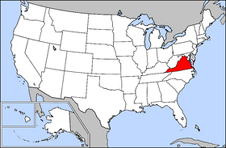
By Record Type

Virginia Genealogy Research Guide
If you're not sure which records would be helpful, you can try our Ancestor Source Finder tool.
Cemetery Records (28,460)
Census Records (3,703)
Church Records (1,689)
City Directories (1,138)
Court Records (1,089)
Death Records (1,564)
Histories and Genealogies (2,131)
Immigration Records (280)
Land Records (1,027)
Map Records (1,188)
Marriage Records (2,046)
Military Records (1,270)
Minority Records (250)
Miscellaneous Records (599)
Newspapers and Obituaries (3,611)
Probate Records (1,122)
School Records (2,401)
Tax Records (307)
By County
Albemarle County (740)
Alleghany County (318)
Amelia County (365)
Amherst County (467)
Appomattox County (336)
Arlington County (312)
Augusta County (925)
Bath County (255)
Bedford County (909)
Bland County (266)
Botetourt County (487)
Brunswick County (690)
Buchanan County (654)
Buckingham County (427)
Campbell County (510)
Caroline County (447)
Carroll County (730)
Charles City County (204)
Charlotte County (286)
Chesterfield County (491)
City of Alexandria (576)
City of Bristol (113)
City of Buena Vista (76)
City of Charlottesville (240)
City of Chesapeake (371)
City of Colonial Heights (42)
City of Covington (58)
City of Danville (283)
City of Emporia (65)
City of Fairfax (67)
City of Falls Church (75)
City of Franklin (405)
City of Fredericksburg (356)
City of Galax (67)
City of Hampton (299)
City of Harrisonburg (173)
City of Hopewell (66)
City of Lexington (129)
City of Lynchburg (456)
City of Manassas (90)
City of Manassas Park (34)
City of Martinsville (94)
City of Newport News (327)
City of Norfolk (680)
City of Norton (59)
City of Petersburg (367)
City of Poquoson (77)
City of Portsmouth (253)
City of Radford (75)
City of Richmond (1,271)
City of Roanoke (612)
City of Salem (118)
City of Staunton (284)
City of Suffolk (378)
City of Virginia Beach (482)
City of Waynesboro (88)
City of Williamsburg (181)
City of Winchester (243)
Clarke County (245)
Craig County (229)
Culpeper County (464)
Cumberland County (277)
Dickenson County (658)
Dinwiddie County (408)
Essex County (394)
Fairfax County (673)
Fauquier County (598)
Floyd County (583)
Fluvanna County (409)
Franklin County (706)
Frederick County (478)
Giles County (296)
Gloucester County (338)
Goochland County (463)
Grayson County (606)
Greene County (274)
Greensville County (172)
Halifax County (1,039)
Hanover County (591)
Henrico County (446)
Henry County (670)
Highland County (316)
Isle of Wight County (371)
James City County (191)
King George County (335)
King William County (244)
King and Queen County (235)
Lancaster County (272)
Lee County (713)
Loudoun County (655)
Louisa County (429)
Lunenburg County (296)
Madison County (282)
Mathews County (327)
Mecklenburg County (572)
Middlesex County (286)
Montgomery County (616)
Nelson County (598)
New Kent County (252)
Northampton County (381)
Northumberland County (398)
Nottoway County (304)
Orange County (395)
Page County (616)
Patrick County (778)
Pittsylvania County (1,080)
Powhatan County (217)
Prince Edward County (309)
Prince George County (229)
Prince William County (677)
Pulaski County (406)
Rappahannock County (228)
Richmond County (172)
Roanoke County (224)
Rockbridge County (397)
Rockingham County (733)
Russell County (772)
Scott County (748)
Shenandoah County (669)
Smyth County (381)
Southampton County (415)
Spotsylvania County (463)
Stafford County (394)
Surry County (280)
Sussex County (279)
Tazewell County (737)
Warren County (235)
Washington County (686)
Westmoreland County (303)
Wise County (639)
Wythe County (465)
York County (304)
Virginia Genealogy Research Guide
Quick Facts
Virginia is the oldest of the English colonies in America, and its records reach back to the first years of settlement at Jamestown. That depth is matched by an unusual jurisdictional structure and by heavy record loss, so the first question in any Virginia search is which courthouse held the record — and whether that courthouse still has it.
- Capital: Richmond, the seat of government since 1780. The colonial capital was Jamestown from 1607 and Williamsburg from 1699.
- Statehood: one of the original thirteen states. Virginia ratified the U.S. Constitution on June 25, 1788, as the tenth state, growing out of the Colony of Virginia, whose settlement at Jamestown in 1607 was the first permanent English colony in North America.
- Counties and independent cities: 95 counties and 38 independent cities. The colony was divided into eight shires in 1634, the origin of the county system; Dickenson County, formed in 1880, was the last county created. An independent city belongs to no county and keeps its own deeds, wills, and court records exactly as a county does, so a city and the county around it are two separate jurisdictions with two separate sets of records.
- Land type: Virginia is a state-land state, not a federal (public-domain) state. Title passed directly from the colony and then from the Commonwealth by patent and grant — through headrights, treasury rights, and military warrants — and land was laid out by metes and bounds rather than by township and range. There are no federal General Land Office records for Virginia; original title is documented at the state level and later transfers at the county or city level.
- Nickname and motto: the Old Dominion; the state motto is Sic Semper Tyrannis ("Thus Always to Tyrants").
- Where records live: deeds, wills, and court records are created and kept by the clerk of the circuit court in each county and independent city, and the Library of Virginia holds original volumes, loose papers, and microfilm for most localities. Vital records are centralized with the state rather than split among separate city systems.
- Record loss: British raids in 1781, the evacuation fire that swept Richmond in April 1865, and a long series of courthouse fires destroyed the records of many localities — the "burned counties." Separately, fifty western counties left in 1863 to form West Virginia, and the records of those counties went with them.
Libraries and Archives
Virginia's research collections cluster in Richmond, where the state archives, the historical society, and the leading manuscript collections sit close together; university special collections hold much of the surviving colonial material, and circuit court clerks still hold the original local records for their own jurisdictions. The principal Virginia repositories include:
- Library of Virginia (Richmond) — the state archives and the state library in one institution, and the single most important Virginia repository: original county and city court records (deeds, wills, order and minute books, marriage registers, chancery causes), Land Office patents and grants, personal property and land tax lists, Confederate pension applications, World War I service questionnaires, Bible records, newspapers, and city directories.
- Virginia Museum of History & Culture (the Virginia Historical Society) — family papers, plantation and business records, Bible records, and unpublished genealogical compilations.
- Virginia Genealogical Society — the statewide society, publisher of the Magazine of Virginia Genealogy.
- National Archives at Philadelphia — the federal court records for Virginia, including the naturalization and case files of the U.S. District Courts for the Eastern and Western Districts; federal military, census, and passenger records are held by the National Archives in Washington.
- Albert and Shirley Small Special Collections Library at the University of Virginia and the Special Collections Research Center at William & Mary's Swem Library — colonial and early national manuscripts, family papers, and the Swem Index to Virginia historical and genealogical periodicals.
- American Civil War Museum (Richmond) — Confederate manuscripts, soldiers' letters, and unit material.
- Black History Museum & Cultural Center of Virginia — African American family, church, and community collections.
- Denominational repositories: the Virginia Baptist Historical Society holds church minute books and membership rolls, the Union Presbyterian Seminary Library holds Presbyterian records, and Virginia Theological Seminary and the Episcopal Diocese of Virginia hold Anglican and Episcopal parish material.
- The FamilySearch Library and its worldwide FamilySearch Centers hold extensive Virginia microfilm and digital collections, and the clerk of the circuit court in each county and independent city holds that jurisdiction's original deeds, wills, and court records.
Major Websites
These sites host digitized Virginia records and indexes. Subscription sites are marked ($).
- FamilySearch — free; the backbone finding aid, with the FamilySearch Wiki, catalog, and large digitized collections of Virginia vital, church, court, military, and probate records.
- Ancestry ($) — extensive Virginia vital, census, tax, probate, military, and African American collections.
- MyHeritage ($) — Virginia vital records, censuses, and newspapers.
- Findmypast ($) — Virginia marriage, colonial, and Revolutionary War collections.
- Library of Virginia Digital Collections — free; digitized record series, photographs, maps, and manuscripts drawn from the state archives.
- Chancery Records Index — free; a statewide name index to chancery causes, with digitized images of the original suit papers.
- Virginia Untold: The African American Narrative — free; digitized records documenting enslaved and free Black Virginians.
- Virginia Land Office Patents and Grants — free; searchable images of the colonial patents and the Commonwealth grants, including the Northern Neck grants.
- Virginia Chronicle — free; digitized Virginia newspapers, searchable in full text.
- Chronicling America — free; the Library of Congress newspaper archive.
- Internet Archive and HathiTrust — free; digitized Virginia histories, published record abstracts, and law books.
- Encyclopedia Virginia — free; digitized primary documents and reference entries on Virginia people, places, and events.
- Find a Grave and BillionGraves — free; cemetery listings, photographs, and transcriptions.
Law and Government
Virginia's statutes and legislative records explain the jurisdictions and record-keeping duties that produced genealogical records — when clerks were told to record deeds, when registrars were told to record births, who was taxable, and who could marry. The foundational texts are digitized and free to read.
- The Statutes at Large: Being a Collection of All the Laws of Virginia (William Waller Hening, thirteen volumes) — every colonial and early state law from 1619 to 1792, and the place to learn why a given record exists; free on the Internet Archive.
- Journals of the House of Burgesses of Virginia, 1619–1776 — the proceedings of the colonial assembly, including petitions and claims that name individuals; free on the Internet Archive.
- Executive Journals of the Council of Colonial Virginia — the acts of the governor's Council, which sat as the colony's highest court and approved the land patents; free on the Internet Archive.
- Calendar of Virginia State Papers and Other Manuscripts (eleven volumes, 1652–1869) — abstracts of the state's surviving executive papers, long used for Revolutionary and militia service; free on the Internet Archive.
- The legislative petitions of the General Assembly (1776–1865) are held by the Library of Virginia, with digitization ongoing. Because petitioners signed by name and often recited their family circumstances, the petitions are a valuable substitute where county records burned.
- The session laws (the Acts of the General Assembly) and the successive editions of the Code of Virginia are digitized on the Internet Archive and HathiTrust, and the free Encyclopedia Virginia reproduces and explains many of the laws that governed enslavement, marriage, and the courts.
Vital Records (Birth, Marriage, Death)
Marriages have been recorded at the local courthouse since the 1600s, but civil registration of births and deaths came late and then broke down. Statewide registration of births and deaths ran from 1853 to 1896, when the law was repealed; registration then lapsed and did not resume until June 14, 1912. That gap is the central problem in Virginia vital-records research: for most of the state, no birth or death record was created between 1896 and 1912, and church records, Bible records, cemetery records, and obituaries must fill it.
Records for the gap years survive only for a handful of cities that went on registering on their own — Hampton, Newport News, Norfolk, Portsmouth, and Richmond. Because Virginia's independent cities are separate jurisdictions, their registers are filed under the city and not under the surrounding county. The Virginia Department of Health holds the modern certificates, with birth records closed for a long term of years and death, marriage, and divorce records closed for a shorter one; older records are transferred to the Library of Virginia, which is where genealogical research is done. A fee applies to ordering a certificate from the state.
- Births (statewide, 1853–1896): Virginia, Bureau of Vital Statistics, Birth Records — free on FamilySearch; also as Virginia Birth Registers, 1853–1911 ($). The broader free index Virginia Births and Christenings, 1584–1917 adds church baptisms reaching back into the colonial period.
- Marriages (county and city from the 1600s; statewide from 1853): Virginia, County Marriage Records, 1771–1943 and County Marriage Registers, 1853–1935 are free on FamilySearch, and the registers are also on Ancestry ($). The statewide index Virginia Marriages, 1785–1940 is free on FamilySearch and also on Ancestry ($) and MyHeritage ($). For the years before about 1850 the key documents are the marriage bond and the minister's return, filed with the county or city clerk.
- Deaths (statewide, 1853–1896): Virginia, Bureau of Vital Statistics, Death Records, 1853–1912 — free on FamilySearch; also Virginia Death Registers, 1853–1911 ($) and MyHeritage ($). The free index Virginia, Deaths and Burials, 1853–1912 is a useful cross-check.
- After registration resumed: Virginia, Death Certificates, 1912–1987 is free on FamilySearch, and Virginia Birth Records, 1912–2015, and Delayed Birth Records, 1721–1911 ($), Virginia Marriage Records, 1936–2014 ($), and Virginia Divorce Records, 1918–2014 ($) cover the modern period. Delayed birth certificates — filed by people born during the gap who later had to prove their age — are one of the best ways around it.
History and Timeline of Major Events
Key dates that shaped Virginia's jurisdictions and records:
- 1607 — The Virginia Company plants Jamestown, the first permanent English settlement in North America.
- 1619 — The first representative assembly in America meets at Jamestown, and the first documented Africans arrive at Point Comfort.
- 1624 — The Virginia Company's charter is revoked and Virginia becomes a royal colony.
- 1634 — The colony is divided into eight shires — the beginning of the county system and of county record-keeping.
- 1649 — Charles II grants the Northern Neck Proprietary, the great tract between the Rappahannock and the Potomac that would afterward be granted separately from the rest of the colony.
- 1676 — Bacon's Rebellion; Jamestown is burned.
- 1699 — The capital moves from Jamestown to Williamsburg.
- 1730s–1740s — Scots-Irish and German settlers come down the Great Wagon Road into the Shenandoah Valley.
- 1776 — Virginia declares independence and adopts its first state constitution and the Virginia Declaration of Rights.
- 1780 — The capital moves to Richmond.
- 1781 — British raids destroy public and county records; the war ends with the surrender at Yorktown in October.
- 1782 — Annual personal property and land tax lists begin — the finest census substitute the state has.
- 1786 — The Statute for Religious Freedom takes effect, disestablishing the Anglican Church and ending the parish's role in civil record-keeping.
- June 25, 1788 — Virginia ratifies the U.S. Constitution as the tenth state.
- 1792 — Kentucky, until then the western counties of Virginia, becomes a separate state.
- 1793 — County and city courts begin keeping registers of free Black residents.
- 1853 — Statewide registration of births, marriages, and deaths begins.
- 1861 — Virginia secedes, and Richmond becomes the Confederate capital.
- 1863 — Fifty western counties are admitted as the separate state of West Virginia.
- April 1865 — The evacuation fire destroys a large part of Richmond, and with it many state and court records.
- 1866 — Cohabitation registers record the marriages of formerly enslaved couples, naming spouses, children, and former enslavers.
- 1870 — Virginia is readmitted to the Union.
- 1871 — Cities become fully independent of the counties, creating the separate city jurisdictions that keep their own records.
- 1880 — Dickenson County, the last new county, is formed.
- 1896–1912 — Statewide registration of births and deaths lapses.
- 1912 — Registration of births and deaths resumes on June 14.
- 1924 — The Racial Integrity Act requires a racial classification on vital records, and Native Virginians are widely recorded as "colored," corrupting the documentary record of tribal descent.
- 1952–1974 — A wave of consolidations extinguishes several counties — among them Elizabeth City, Warwick, Norfolk, Princess Anne, and Nansemond — whose records pass to the successor cities of Hampton, Newport News, Chesapeake, Virginia Beach, and Suffolk.
Census Records and Substitutes
Federal censuses were taken every ten years from 1790 through 1950. Virginia's early returns fared badly: the 1790 and 1800 schedules were destroyed, and the 1890 population schedules were lost nationwide, although Virginia's 1890 special schedule of Union veterans and widows survives. The censuses are free on FamilySearch and on the National Archives 1950 census site, and are also searchable on Ancestry ($) and MyHeritage ($).
Virginia never took a regular state census. In its place the state has an exceptional run of enumerations and tax lists that together do the same work, and each one adds something different:
- 1623/24 — the "List of the Living and the Dead in Virginia": a roll of the surviving colonists and of those killed in the attack of 1622, arranged by settlement.
- 1624/25 — the Muster of the Inhabitants: a true colony-wide census that names every person, with ages, the ship each came on, and the year of arrival — the single richest source for the first generation.
- Colonial tithable lists (1600s–1700s): annual county lists of the taxable persons in each household, naming the head and counting the rest; for most of the colonial period this is the closest thing to a census.
- 1704 — the Quit Rent Rolls: a nearly complete list of Virginia landholders by county, published and indexed on Ancestry ($).
- 1782–1785 — the state enumerations: county lists of heads of household taken by the state, later printed by the Census Bureau as the official substitute for Virginia's destroyed 1790 census; free on the Internet Archive.
- 1782 onward — the annual personal property tax lists: taken every year in every county and city, naming the taxable adults household by household; used in series they will place a family year by year, far more precisely than a decennial census.
- 1782 onward — the annual land tax lists: every landowner, with acreage and a note of how the land was acquired; they follow a family's land even where the deed books burned.
- 1867 — the Reconstruction voter registrations: lists of registered voters, white and Black, county by county — a valuable name list three years before the 1870 census.
Other substitutes. City directories for Richmond, Norfolk, Alexandria, and other cities place a family between census years, and the mortality schedules taken with the censuses of 1850, 1860, 1870, and 1880 name those who died in the year before each count — a useful check on the incomplete death registers. A convenient starting point is the Virginia Compiled Census and Census Substitutes Index ($).
Church Records
Because civil registration began only in 1853 and then failed for sixteen years, church records are the most important substitute for Virginia vital records — and for the colonial period they are often the only record of a birth, marriage, or burial. The Church of England was the established church until 1786, and its parishes performed civil as well as religious duties: the parish register recorded births, baptisms, marriages, and burials, and the vestry book recorded the processioning of land boundaries, the binding out of orphans, and poor relief. Many registers were lost, but the survivors are heavily published. After the Revolution the Baptist and Methodist churches grew rapidly, the Presbyterian church predominated among the Scots-Irish of the Valley, and Quaker, Lutheran, and German Reformed congregations kept especially careful registers.
- Anglican and Episcopal: parish registers and vestry books are held by the Library of Virginia, by Virginia Theological Seminary, and by the Episcopal Diocese of Virginia; many of the surviving registers are published and digitized on the Internet Archive.
- Baptist: the Virginia Baptist Historical Society is the main repository of church minute books and membership rolls; Southern Baptist Church Records, 1750–1899 ($) is the largest online set.
- Quaker: monthly meeting minutes record births, marriages, deaths, removals, and disownments in unusual detail. Hinshaw's Encyclopedia of American Quaker Genealogy, Volume VI (Virginia) ($) abstracts the Virginia meetings.
- Presbyterian: session minutes and registers for the Valley congregations are at the Union Presbyterian Seminary Library.
- Lutheran and German Reformed: the Shenandoah Valley congregations — among them Hebron Lutheran Church in Madison County, founded by German settlers in 1717 — kept registers in German whose baptismal entries name sponsors, and so name extended kin.
- Roman Catholic: parish registers are held by the parish or by the Diocese of Richmond, erected in 1820.
Thousands of digitized congregational registers can be found through the FamilySearch Catalog by county, city, and town, and the free Virginia Vital Records, 1715–1901 collection draws heavily on parish and church registers.
Court Records
The county court is the heart of Virginia genealogy. From the 1630s a bench of justices of the peace met monthly in each county — and later in each independent city — and recorded almost everything a family did: deeds, wills, inventories, guardianships, apprenticeships, road orders, processioning returns, bastardy bonds, and suits between neighbors. Its order books and minute books are the connective tissue that ties the deed books and will books together.
- County and city courts (1630s onward) — deeds, probate, orders, and minutes. The records are kept today by the clerk of the circuit court in each county and independent city, with originals and microfilm at the Library of Virginia.
- The General Court (colonial, at Jamestown and then Williamsburg) — the colony's highest court, whose records were largely destroyed in 1865; the surviving fragments are published.
- District Courts (1789–1808), Superior Courts of Law and Chancery (1809–1831), and Circuit Superior Courts of Law and Chancery (1831–1851) — regional trial courts whose surviving papers are at the Library of Virginia or with the successor circuit courts.
- Circuit Courts (1852 onward) — the modern trial courts, and the custodians of the local records.
- Chancery causes — equity suits, and the richest court records of all: estate divisions, disputed wills, guardianships, divorces, and debt suits, filed with depositions and exhibits that can name three generations at once. The Library of Virginia's free Chancery Records Index indexes these causes by name across participating localities and provides digitized images of the suit papers. It is often the fastest way into a burned county, because chancery papers were filed loose and frequently survived when the bound books did not.
FamilySearch Full-Text Search makes many unindexed Virginia deed and court books searchable by every name they contain, including witnesses and adjoining landowners.
Ethnic/Minority Records
Knowing where a group settled, and which records it was made to generate, points to the sources most likely to document a family.
- African Americans. Virginia held the largest enslaved population of any state and also the largest population of free people of color, and the records are correspondingly deep. The Library of Virginia's free Virginia Untold: The African American Narrative gathers digitized records of enslaved and free Black Virginians — registers of free Negroes (kept by every county and city court from 1793), deeds of emancipation and manumission, freedom suits, certificates of importation, apprenticeship indentures, runaway records, and the cohabitation registers of 1866, which recorded the marriages of formerly enslaved couples and named their children and their former enslavers. Many of the same series are indexed on Ancestry, among them Free Negro Registration and Tax Records, 1792–1866 ($), Deeds of Emancipation and Manumission and Freedom Suits, 1782–1865 ($), and Bills of Sale and Deeds of Enslaved Individuals, 1703–1865 ($). Because the birth registers begun in 1853 recorded enslaved children, the free Virginia Slave Birth Index, 1853–1866 can name a mother and an enslaver together. For the years after emancipation, the free Virginia Freedmen's Bureau Field Office Records and Freedmen's Bureau marriage records on FamilySearch, together with the Freedman's Savings and Trust Company registers (Virginia had branches at Richmond, Norfolk, and Lynchburg), are the standard bridge across 1865. The Virginia Museum of History & Culture hosts the free Unknown No Longer database of the names of enslaved Virginians, and the Black History Museum & Cultural Center of Virginia holds family and community collections.
- Indigenous peoples. The Powhatan chiefdom of Algonquian-speaking peoples held the Tidewater — among them the Pamunkey, Mattaponi, Upper Mattaponi, Chickahominy, Rappahannock, Nansemond, and Patawomeck — while the Siouan-speaking Monacan held the Piedmont and the Iroquoian-speaking Nottoway and Meherrin lived south of the James. The Pamunkey and Mattaponi reservations, confirmed by the Treaty of Middle Plantation in 1677, are among the oldest in the country. Research is complicated by the Racial Integrity Act of 1924, under which the state registrar reclassified Native Virginians as "colored" and altered or annotated their birth, marriage, and death records; to trace tribal descent, work back through records made before 1924 — county registers, church registers, and tax lists — and through the tribes' own offices. Colonial treaties, land records, and tribal petitions are at the Library of Virginia.
- Scots-Irish and Germans. From the 1730s both groups came down the Great Wagon Road out of Pennsylvania into the Shenandoah Valley and the southwest. Augusta County was the mother county of the whole region, and Chalkley's Chronicles of the Scotch-Irish Settlement in Virginia — abstracts of the Augusta County court records — is free on the Internet Archive and is the standard entry point; German families are best traced through the Lutheran and Reformed church registers.
- Huguenots. French Protestant refugees settled at Manakin Town on the James above Richmond in 1700, in King William Parish, in what became Powhatan, Goochland, and Chesterfield counties; the parish register and the vestry book are the founding records of these families.
- Jewish communities. Congregations were founded at Richmond in the 1780s and later at Norfolk and Petersburg; the free Virginia, Jewish Cemetery Records Index on FamilySearch indexes burials across the state.
Immigration and Naturalization
Virginia's colonial immigration is documented not by passenger lists but by land records. Under the headright system, anyone who paid the passage of a settler could claim fifty acres, and the patent granting the land also names the people transported — so the Land Office patent books are the primary record of seventeenth-century arrivals. Most of those arrivals were indentured servants, and from 1718 a steady stream of transported convicts was landed on the Chesapeake as well.
- Virginia Land Office Patents and Grants — free at the Library of Virginia; search the patents, then read the headright names listed inside the document itself.
- Cavaliers and Pioneers: Abstracts of Virginia Land Patents and Grants (Nugent) — the standard published abstracts, which index the headright names that the online catalog does not; free on the Internet Archive, and also on Ancestry ($).
- Virginia Immigrants, 1623–1666 ($) — an index to the earliest arrivals.
- Later ports. Federal passenger lists survive for Alexandria, Norfolk and Portsmouth, Richmond, and Newport News; Virginia Arriving Passenger and Crew Lists, 1904–1963 ($) covers the twentieth century, and the free Alexandria Passenger and Crew Lists of Vessels covers the postwar years.
Naturalization. Before 1906 any court of record could naturalize, so declarations of intention and petitions are scattered through the county and city court order books — the Library of Virginia holds many of them, and they are worth looking for in the court minutes even when no separate naturalization volume survives. After 1906 the process was federalized: see the free Virginia Naturalization Petitions, 1906–1929 on FamilySearch and Virginia Federal Naturalization Records, 1901–1938 ($), with the originals at the National Archives at Philadelphia.
Land Records
As a state-land state, Virginia granted its own land, so there are no General Land Office records. Original title flowed from the colony — and after independence from the Commonwealth — by patent and grant, obtained by importing settlers (a headright), by buying a treasury right, or by redeeming a military warrant earned in service. Later transfers between individuals are deeds, recorded in the county or city where the land lay. Surveys are by metes and bounds — described by trees, streams, stones, and the neighbors' lines — so a deed identifies a family's neighbors as reliably as it identifies the land; and boundaries were periodically re-walked and re-marked in a ceremony called processioning, recorded in the parish vestry books.
Where the records are kept.
- County and independent-city level: deeds and mortgages are recorded by the clerk of the circuit court. A city and the county beside it are separate jurisdictions, so land that changed hands as a town grew may be recorded in either.
- Library of Virginia: the free, searchable Land Office Patents and Grants database covers the colonial patents (1623–1774) and the Commonwealth grants (1779 onward), with survey plats and accompanying papers.
The great proprietary and the land companies. Much of Virginia was opened through enormous grants, and knowing which one an ancestor's land fell under tells you which record series to search.
- The Northern Neck Proprietary (1649–1874): Charles II granted the whole peninsula between the Rappahannock and the Potomac — more than five million acres — to a group of supporters in 1649; the interest was consolidated in the Fairfax family and held by Thomas, sixth Lord Fairfax. The proprietary ran its own land office and issued its own grants, so land in the Northern Neck and the northern Valley (from the Chesapeake through Fairfax, Loudoun, Fauquier, and Culpeper to Frederick and Shenandoah) does not appear in the ordinary colonial patent series. The Northern Neck grants (1690–1874), with survey plats from 1697, are indexed with the Library of Virginia's land-grant database.
- The Loyal Company (1749): granted 800,000 acres in far southwestern Virginia, with Dr. Thomas Walker as its agent; its surveys underlie many early titles in the southwest.
- The Ohio Company (1749): granted 500,000 acres on the upper Ohio — a speculation whose collision with French claims helped touch off the French and Indian War.
- Revolutionary bounty land: Virginia paid its soldiers in land. Warrants were satisfied first in Kentucky — then still part of Virginia — and, when that proved insufficient, in the Virginia Military District reserved between the Little Miami and the Scioto rivers in what became Ohio. The warrants, surveys, and the state's own bounty-land records are at the Library of Virginia, so a Virginia soldier's land file may document a family that never lived in Virginia again.
Online, Virginia Land, Marriage, and Probate Records, 1639–1850 ($) indexes a large body of abstracted county land records, and FamilySearch Full-Text Search makes many unindexed deed books searchable by every name they contain — grantors, grantees, witnesses, and neighbors — which is the most effective way to work a county whose deed indexes are incomplete.
Military Records
Virginia fought in every American war and was the principal battleground of two of them, and its soldiers are documented at both the state and the federal level.
- Colonial militia and the French and Indian War: muster rolls and pay records survive unevenly; Virginia Colonial Militia, 1651–1776 ($) reprints the published lists.
- Revolutionary War: the Library of Virginia's Revolutionary War service records bring together bounty-land warrants, militia rolls, and public service claims — payments for supplies and impressed goods, which name thousands of civilians who never carried a musket. Federal pension files for Virginia soldiers are free on FamilySearch as Revolutionary War Pension Application Files, and Virginia Militia in the Revolutionary War ($) indexes the militia.
- War of 1812: the Library of Virginia's free War of 1812 Muster Rolls and Payrolls Index names the militiamen who served; Virginia Militia in the War of 1812 ($) reprints the published rolls.
- Civil War: Virginia furnished more Confederate soldiers than any other state, and thousands of Union soldiers as well, including many regiments of U.S. Colored Troops. Compiled service records are free on FamilySearch for both sides — Confederate and Union — and the National Park Service's free Soldiers and Sailors Database searches both armies at once. Confederate pensions were paid by the state from 1888 to disabled veterans and to widows, and the Library of Virginia's free index to the pension applications is among the best sources of personal detail; applications were later accepted from Black Virginians who had been sent to the army as laborers and body servants. Regimental histories are covered volume by volume in the Virginia Regimental Histories Series, and the American Civil War Museum holds the manuscript collections. For Unionist families, the free Southern Claims Commission Approved Claims name loyal Virginians who lost property to the Union army.
- World War I: the Library of Virginia's World War I History Commission Questionnaires are outstanding — veterans, or their families, filled out a form giving birth date and place, parents' names and birthplaces, schooling, occupation, and service history, all in a single document.
- World War II and after: the free Virginia World War II Draft Registration Cards are on FamilySearch, and Virginia Department of Military Affairs Records, 1876–1947 ($) covers state service across the intervening decades.
Probate Records
Probate — wills, administrations of intestate estates, inventories and appraisements, estate accounts, and guardianships of minors — is the richest single source of family relationships in Virginia, because the estate of a landholding family will usually name a widow, the children, and often the grandchildren and the sons-in-law. Probate has always been the business of the county court, and of the corresponding court in each independent city; there is no separate probate court and no state-level dividing line to remember.
- Will books: the recorded copy of the will, the order admitting it to probate, the executor's bond, the inventory, and the final account, all entered in the county or city will books and held today by the clerk of the circuit court.
- Loose estate papers: the original filed documents, which frequently survive at the Library of Virginia even where the bound will books were destroyed — the first place to look in a burned county.
- Finding aids: the Library of Virginia's free Wills and Estate Records Index covers the earliest period; Virginia Wills and Probate Records, 1652–1900 ($) is name-searchable with images across most localities; and Virginia Land, Marriage, and Probate Records, 1639–1850 ($) indexes the published abstracts.
- Burned counties: the Library of Virginia's Lost Records Localities Digital Collection gathers the scattered surviving records — loose papers, chancery causes, and copies filed elsewhere — for the localities whose courthouse records were destroyed, and is the standard route into an estate in a county with no will books.
FamilySearch Full-Text Search also makes many unindexed Virginia wills and estate files searchable by every name they contain.
Tax Records
Tax lists are Virginia's great compensating strength. Because the personal property and land tax lists were taken every year in every county and city from 1782, and because they survive far better than the court records, they can place a family in one place year after year, show when a son came of age and was first taxed in his own name, and show when a man died and his estate or his widow appeared in his place. In a burned county they are often the only continuous record that a family existed at all.
- Personal property tax lists (1782 onward): annual lists of taxable persons and property — adult men, enslaved people, horses, cattle, and carriages. The Library of Virginia holds the originals and the microfilm and describes them in its free Personal Property Tax Records guide; they are indexed online as Virginia Personal Property Tax Records, 1782–1900 ($).
- Land tax lists (1782 onward): annual lists of every landowner, with acreage, value, and a note of how and from whom the land was acquired — which lets you follow a chain of title even where the deed books are gone. See the Library of Virginia's free Land Tax Records guide.
- Colonial tithable lists and the quit rent rolls of 1704: the colonial predecessors of the tax lists; the quit rent rolls are a nearly complete list of landholders and are indexed on Ancestry ($).
- Federal tax lists: U.S. IRS Tax Assessment Lists, 1862–1918 ($) cover the Civil War income, license, and luxury taxes; the 1862–1874 Virginia assessment lists are also free on FamilySearch.
Later assessment rolls are held by the commissioner of the revenue and the treasurer in each county and independent city.
Back to Top