Delaware Genealogy
USA (1,403,636) > Delaware (3,645)
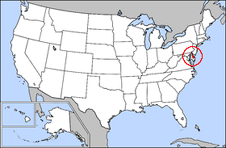
By Record Type

Delaware Genealogy Research Guide
If you're not sure which records would be helpful, you can try our Ancestor Source Finder tool.
Cemetery Records (982)
Census Records (226)
Church Records (335)
City Directories (331)
Court Records (19)
Death Records (75)
Histories and Genealogies (151)
Immigration Records (101)
Land Records (47)
Map Records (134)
Marriage Records (86)
Military Records (345)
Minority Records (59)
Miscellaneous Records (35)
Newspapers and Obituaries (564)
Probate Records (63)
School Records (224)
Tax Records (28)
By County
By City
Bellefonte (in New Castle County) (28)
Bethel (in Sussex County) (29)
Blackbird (in New Castle County) (28)
Blades (in Sussex County) (30)
Brandywine (in New Castle County) (29)
Bridgeville (in Sussex County) (53)
Camden (in Kent County) (45)
Canterbury (in Kent County) (27)
Cheswold (in Kent County) (27)
Christiana (in New Castle County) (44)
Clarksville (in Sussex County) (28)
Claymont (in New Castle County) (34)
Clayton (in Kent County) (40)
Cool Spring (in Sussex County) (29)
Dagsboro (in Sussex County) (42)
Delaware City (in New Castle County) (57)
Delmar (in Sussex County) (59)
Dover (in Kent County) (103)
Ellendale (in Sussex County) (34)
Farmington (in Kent County) (33)
Felton (in Kent County) (46)
Frankford (in Sussex County) (56)
Frederica (in Kent County) (39)
Georgetown (in Sussex County) (133)
Glasgow (in New Castle County) (39)
Greenville (in New Castle County) (30)
Greenwood (in Sussex County) (39)
Gumboro (in Sussex County) (32)
Harbeson (in Sussex County) (34)
Harrington (in Kent County) (51)
Hartly (in Kent County) (27)
Hockessin (in New Castle County) (45)
Indian River (in Sussex County) (29)
Kenton (in Kent County) (27)
Laurel (in Sussex County) (103)
Leipsic (in Kent County) (29)
Lewes (in Sussex County) (77)
Lincoln (in Sussex County) (32)
Little Creek (in Kent County) (29)
Lowes Crossroads (in Sussex County) (28)
Magnolia (in Kent County) (29)
Middletown (in New Castle County) (72)
Milford (in Sussex County) (81)
Millsboro (in Sussex County) (82)
Millville (in Sussex County) (29)
Milton (in Sussex County) (51)
Mount Pleasant (in New Castle County) (28)
New Castle (in New Castle County) (86)
Newark (in New Castle County) (123)
Newport (in New Castle County) (37)
Ocean View (in Sussex County) (34)
Odessa (in New Castle County) (37)
Pencader Hundred (in New Castle County) (30)
Port Penn (in New Castle County) (29)
Portsville (in Sussex County) (29)
Red Lion (in New Castle County) (29)
Rehoboth Beach (in Sussex County) (41)
Roxana (in Sussex County) (29)
Sandtown (in Kent County) (29)
Seaford (in Sussex County) (61)
Selbyville (in Sussex County) (38)
Smyrna (in Kent County) (89)
Thompsonville (in Kent County) (27)
Townsend (in New Castle County) (28)
Viola (in Kent County) (29)
Wilmington (in New Castle County) (864)
Yorklyn (in New Castle County) (34)
Delaware Genealogy Research Guide
Quick Facts
Delaware — “The First State” — earned its nickname by becoming the first of the thirteen colonies to ratify the U.S. Constitution, on December 7, 1787. For genealogists its defining trait is centralization: the Delaware Public Archives in Dover holds an unusually complete statewide set of vital, court, land, probate, tax, and military records, so a Delaware search often begins at the state level rather than the county courthouse.
- Capital: Dover. The capital moved from New Castle to Dover in 1777.
- Statehood: December 7, 1787, the first state to ratify the U.S. Constitution, formed from the “Three Lower Counties” on the Delaware.
- Counties: 3 — New Castle, Kent, and Sussex, the fewest of any state. New Castle grew out of the court district organized after the 1664 English takeover; St. Jones County was created in 1680 and renamed Kent in 1681; Deale County was created in 1680 and later renamed Sussex, with the three counties’ boundaries formalized under William Penn in 1682–1683.
- Land type: Delaware is a state-land state, not a federal (public-domain) state. Original title passed from the Dutch and Swedes, then the Duke of York, then William Penn’s proprietary, and finally the State of Delaware, so there are no federal General Land Office records — early grants are documented at the state level through warrants and surveys, and later transfers at the county level.
- Nickname and motto: the First State (also the Diamond State); the state motto is Liberty and Independence.
- Where records live: county offices — the Recorder of Deeds, Register of Wills, and Prothonotary — hold many records, but Delaware kept an unusually centralized set of state-level records, and the Delaware Public Archives holds statewide vital, probate, land, court, tax, and military records, a real strength for Delaware research.
Libraries and Archives
Delaware’s small size and centralized records mean a handful of institutions hold most of what genealogists need. The principal Delaware repositories include:
- Delaware Public Archives (Dover) — the primary repository for statewide and county government records: vital records, probate, land, court, naturalization, tax, and military records from the colonial period onward.
- Delaware Division of Libraries — the state library agency, with genealogy databases and access to statewide library resources.
- Delaware Historical Society (Wilmington) — its research library holds family histories, surname files, manuscripts, church records, maps, and photographs.
- Delaware Genealogical Society — the statewide genealogical society and a leading source of Delaware research guidance, record abstracts, and its journal.
- University of Delaware Library, Special Collections (Newark) — manuscripts, maps, printed Delaware history, and Orphans’ Court extracts.
- Wilmington Public Library — local history and genealogy collections for the state’s largest city.
- National Archives at Philadelphia — the NARA branch serving Delaware, holding federal court naturalizations, military records, and other federal records.
- The FamilySearch Library and its worldwide FamilySearch Centers hold extensive Delaware microfilm and digital collections, and county offices (Recorder of Deeds, Register of Wills, and Prothonotary) and local historical societies hold records for their own areas.
Major Websites
These sites host digitized Delaware records and indexes. Subscription sites are marked ($).
- FamilySearch — free; the backbone finding aid, with the FamilySearch Wiki, catalog, and large digitized collections of Delaware vital, land, probate, court, church, and naturalization records.
- Ancestry ($) — extensive Delaware birth, marriage, death, land, probate, and naturalization collections, many drawn from the Delaware Public Archives.
- MyHeritage ($) — Delaware marriage records and other indexed collections.
- Findmypast ($) — Delaware marriage and other United States record collections.
- Delaware Public Archives Digital Collections — free; searchable indexes to probate, naturalization, church, slavery, and vital records.
- Chronicling America — free; the Library of Congress archive of digitized historic Delaware newspapers.
- Internet Archive and HathiTrust — free; digitized Delaware law books, local histories, and church-record volumes.
- Find a Grave and BillionGraves — free; cemetery listings, photographs, and transcriptions.
Law and Government
Delaware’s laws and legislative records explain the jurisdictions and record-keeping practices that produced genealogical records, and they contain private acts such as legislative divorces and name changes. Many foundational texts are digitized and free to read.
- The Laws of the State of Delaware, 1700–1797 (two volumes) — the acts of the colonial and early state legislatures, printed at New Castle by Samuel and John Adams; free on the Internet Archive, with volume two also digitized.
- The annual Laws of the State of Delaware (session laws), beginning with the 1799 session, are digitized on the Internet Archive; the Laws of Delaware series at the Delaware Public Archives offers session-law volumes as free downloadable PDFs.
- The colonial laws applied under the Duke of York’s regime are transcribed alongside the early land records (see Land Records) and in the published Delaware Papers covering the Dutch and English periods.
Vital Records (Birth, Marriage, Death)
Delaware’s civil registration has an on-and-off history. A first attempt at statewide registration of births and deaths ran 1861–1863 and then lapsed; registration resumed in 1881 and was generally complied with by about 1921. Marriage registration is older, statewide from 1847, with marriage bonds surviving from 1744. Before 1913 the county Recorder of Deeds recorded vital events; a central Bureau of Vital Statistics was created in 1913. Older records are held by the Delaware Public Archives and more recent ones by the Division of Public Health’s Office of Vital Statistics, where a fee applies; access is restricted until births reach 72 years, marriages 50 years, and deaths 40 years, after which the records transfer to the Public Archives.
- Births (statewide, 1861–1863 and from 1881): Delaware Birth Records, 1861–1922 is free on FamilySearch; also on Ancestry ($) as Delaware Birth Records, 1800–1932.
- Marriages (statewide from 1847; bonds from 1744): Delaware Marriage Records, 1750–1954 ($) on Ancestry, also on MyHeritage ($); many marriage bonds and records are also indexed free on FamilySearch.
- Deaths (statewide, 1861–1863 and from 1881): Delaware Death Records, 1855–1961 is free on FamilySearch; also on Ancestry ($) as Delaware Death Records, 1861–1933.
- The Delaware Public Archives’ Guide to Vital Statistics Records describes its card indexes to births, marriages, deaths, and baptisms compiled from Bibles, newspapers, church records, and tombstones from about 1680 onward.
History and Timeline of Major Events
Delaware passed through Swedish, Dutch, and English hands before becoming the first state, and its records reflect each regime:
- 1631 — The Dutch establish Zwaanendael near present-day Lewes, the first European settlement; it is destroyed within a year.
- 1638 — Swedes and Finns found New Sweden at Fort Christina, present-day Wilmington.
- 1655 — The Dutch under Peter Stuyvesant conquer New Sweden.
- 1664 — The English seize the Delaware settlements, governed from New Castle under the Duke of York.
- 1680–1682 — County courts are organized and St. Jones (Kent) and Deale (Sussex) counties are created.
- 1682 — The Delaware territory becomes the “Three Lower Counties” under William Penn, who introduces “hundreds” as local tax and administrative subdivisions.
- 1704 — The Lower Counties gain a separate assembly while still sharing Pennsylvania’s governor.
- 1767 — The Mason–Dixon survey fixes Delaware’s boundaries with Maryland and Pennsylvania.
- 1776 — Delaware declares independence from both Britain and Pennsylvania and adopts its first state constitution.
- 1777 — The capital moves from New Castle to Dover.
- December 7, 1787 — Delaware ratifies the U.S. Constitution as the first state.
- 1802 — E. I. du Pont establishes gunpowder mills on the Brandywine, launching Delaware’s industrial rise.
- 1830s–1860s — Delaware, a slave state that remains in the Union, is a key corridor on the Underground Railroad, with Harriet Tubman and Thomas Garrett active in the state.
- 1861–1865 — Delaware stays in the Union and raises several regiments during the Civil War.
Census Records and Substitutes
Delaware appears in every federal census from 1800 onward, and because it never took regular state censuses, tax assessment lists are the single most important census substitute.
- Federal censuses (1800–1950): Delaware is complete from 1800, though the 1890 population schedule was destroyed nationwide. They are free on FamilySearch and searchable on Ancestry ($) and MyHeritage ($).
- 1790 (reconstructed): Delaware’s 1790 federal schedule is lost, but Leon de Valinger, Jr., compiled a Reconstructed 1790 Census of Delaware from surviving tax and assessment lists.
- 1782 assessment and census: the statewide 1782 tax assessment, published as the Delaware 1782 Tax Assessment and Census (compiled by Ralph D. Nelson, Jr.), covers all the hundreds, with actual census returns surviving for several of them.
- Colonial enumerations: early name lists survive for 1665–1697, together with colonial tax and quit-rent lists for 1681–1713, largely at the Delaware Public Archives.
- Substitutes: Wilmington and other city directories, together with the extensive county tax assessment lists at the Delaware Public Archives, are the best substitutes for placing a family between census years.
Church Records
Because civil registration is late and incomplete, church records are the most important substitute for vital records before about 1880. Delaware’s denominational mix reflects its Swedish, Dutch, English, and later immigrant heritage, and Methodism took especially deep root here.
- Swedish Lutheran: Holy Trinity (Old Swedes) Church in Wilmington, built 1698–1699 and consecrated in 1699 after the missionary Erik Björk arrived in 1697, kept baptisms and marriages from the 1690s that are among the oldest vital records in the state; see the Old Swedes Historic Site.
- Methodist: Delaware is central to early American Methodism — Barratt’s Chapel near Frederica (1780) is called the “Cradle of Methodism,” where Francis Asbury and Thomas Coke met on November 14, 1784, to plan the conference that organized the Methodist Episcopal Church.
- Quaker: Friends monthly-meeting records, such as those of the Wilmington Monthly Meeting, are rich in births, marriages, and deaths and are indexed among the Quaker collections on FamilySearch.
- Episcopal and Presbyterian: early parishes such as Immanuel on the Green in New Castle and congregations such as the Lewes Presbyterian Church left registers reaching into the early 1700s.
- Roman Catholic: the parishes of the Diocese of Wilmington, whose registers document the later Irish, Italian, and Polish communities.
- Many denominations are covered in the Delaware Church Records, 1707–1939 collection, free on FamilySearch, and in the church-records indexes at the Delaware Public Archives.
Court Records
Delaware’s courts changed over time, and their records reach well beyond lawsuits into estates, guardianships, naturalizations, divorces, and land disputes. The main courts a researcher encounters are:
- Court of Chancery, since 1792 — Delaware’s equity court, handling trusts, estates, guardianships, and land-title disputes, and later absorbing the probate-equity work of the Orphans’ Court.
- Orphans’ Court, from the colonial era into the twentieth century — guardianship of minors, partition of a decedent’s real estate, and appeals from the Register of Wills, with property valuations that are especially useful; its functions later passed to the Court of Chancery and the Register of Wills.
- Superior Court and its colonial predecessors, the Court of Common Pleas and the Court of General Sessions — general civil and criminal jurisdiction, naturalizations, and, from 1832, divorce.
- Levy Court — the county administrative and tax body (still the name of Kent County’s governing body), which produced assessment and county-government records.
- Published colonial compilations such as the Records of the Court of New Castle on Delaware and the Kent and Sussex county court records document the 1670s–1700s; surviving originals are largely at the Delaware Public Archives.
Ethnic/Minority Records
Delaware’s population reflects its layered colonial past and later immigration, and knowing where a group settled points to the records most likely to document a family.
- Swedes and Finns. The founders of New Sweden settled around Fort Christina and along the Christina and Brandywine; they are documented in the Old Swedes church records and in the 1693 census of the Swedes on the Delaware.
- Dutch and English/Welsh Quakers. Dutch-period land papers and Welsh Tract Baptist and Friends meeting records document these early communities in New Castle County.
- African Americans. Delaware was a slave state that remained in the Union and had one of the largest free Black populations in the country. Manumission papers, free-Black registers, bastardy bonds, and slavery-related legislation survive; the Delaware Public Archives collections gateway provides indexes to these slavery and manumission records.
- Nanticoke and Lenape. The Nanticoke community near Millsboro in Sussex County and the Lenape community near Cheswold in Kent County are documented in state legislation, school records, and church registers.
- Irish, Italians, and Poles. Later immigrant communities concentrated in Wilmington, documented through Catholic parish registers and naturalization records.
Immigration and Naturalization
Most immigrants to the Delaware Valley arrived through Philadelphia and other ports rather than the Port of Wilmington, but Delaware’s courts naturalized many residents, and those records survive well.
- Naturalizations (before 1906): the county courts handled naturalization; the records are indexed in Delaware County Naturalization Records, 1796–1958, free on FamilySearch, and on Ancestry ($) as Delaware Naturalization Records, 1796–1959.
- Naturalizations (from 1906): the federal district court handled naturalization; those records are held by the National Archives at Philadelphia.
- The Delaware Public Archives collections gateway provides an index to naturalizations in the Court of Common Pleas and Superior Court for all three counties.
Land Records
As a state-land state, Delaware granted land itself rather than through the federal government, so there are no General Land Office records. Title flowed from the Dutch and Swedes, then the Duke of York, then William Penn’s proprietary, and finally the state, with warrants and surveys preceding the patent; later transfers between individuals are recorded as deeds.
- State level: the Delaware Public Archives holds the warrants, surveys, and land-grant papers of the Duke of York, the Penn proprietary, and the state, together with the state’s warrant-and-survey card index.
- County level: deeds and mortgages are recorded by the Recorder of Deeds in New Castle, Kent, and Sussex counties.
- The Duke of York record: the earliest English titles, 1646–1679, are transcribed in Original Land Titles in Delaware, Commonly Known as the Duke of York Record, free on the Internet Archive.
- The Welsh Tract: a large tract in Pencader Hundred, New Castle County, taken up by Welsh Baptist settlers in 1701, whose settlement is documented in the Welsh Tract church and land records.
- Online: Delaware Land Records, 1677–1947 ($) on Ancestry covers all three counties, and FamilySearch Full-Text Search makes many unindexed deeds, warrants, and patents searchable by every name they contain.
Military Records
Delaware took part in every American conflict, and the state’s Revolutionary regiment earned a lasting nickname. Original service, militia, and pension records are held at the Delaware Public Archives, with much reprinted in the multi-volume Delaware Archives.
- Colonial and militia: militia records survive from the 1740s through the 1840s, and colonial service is abstracted in the published Delaware Archives.
- Revolution: the Delaware Regiment — the “Delaware Blues,” whose members were nicknamed the “Blue Hen’s Chickens” — served with distinction; service and pension records are free on FamilySearch, and rolls are reprinted in the Delaware Archives.
- War of 1812: militia and service records are held at the Delaware Public Archives.
- Civil War: Delaware raised Union regiments; see Delaware Civil War Service Records of Union Soldiers, 1861–1865, free on FamilySearch.
- Later conflicts: Spanish-American War, National Guard, World War I, and World War II service records and card files are held at the Delaware Public Archives.
Probate Records
Probate — wills, administrations of intestate estates, and guardianships of minors — is among the richest sources for family relationships, and Delaware’s probate records are notably centralized and well preserved, surviving for all three counties from about 1680.
- Register of Wills: in each county the Register of Wills proves wills, grants administrations, and appoints guardians; the estate file — petition, will or administration, bond, and inventory — usually names the heirs.
- Orphans’ Court: estates involving minors were overseen by the Orphans’ Court, whose real-estate valuations and partitions supplement the estate files.
- Online: Delaware Wills and Probate Records, 1676–1971 ($) includes images for all counties, and Delaware Wills and Administrations, 1683–1947 ($) is a companion index; the Delaware Public Archives collections gateway indexes probates for all three counties from about 1680, and FamilySearch Full-Text Search makes many unindexed wills and estate files searchable by name.
Tax Records
Delaware’s tax assessment lists are among the most valuable genealogical substitutes in the state, filling gaps left by the lost 1790 census and the late start of vital registration; several consecutive years can reveal when a young man came of age, moved, or died and left heirs.
- Colonial and county assessment lists: assessment lists survive from the 1720s for Kent, the 1730s for New Castle, and the 1760s for Sussex, held at the Delaware Public Archives; earlier 1693 lists are among the records held out of state at the Historical Society of Pennsylvania.
- The 1782 assessment: the statewide 1782 tax assessment underlies both the published Delaware 1782 Tax Assessment and Census and the reconstructed 1790 census.
- Quit rents: colonial quit-rent rolls of 1681–1713 often carry valuable genealogical detail and are described among the Delaware taxation records.
- Federal IRS assessment lists (1862–1874): the Civil War–era and later federal income, license, and luxury taxes for Delaware are indexed free on FamilySearch and on Ancestry ($).
Back to Top