Utah Genealogy
USA (1,403,636) > Utah (8,912)
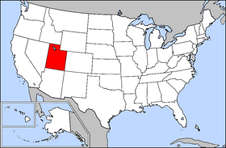
By Record Type

If you're not sure which records would be helpful, you can try our Ancestor Source Finder tool.
Cemetery Records (1,860)
Census Records (1,034)
Church Records (974)
City Directories (531)
Court Records (287)
Death Records (419)
Histories and Genealogies (534)
Immigration Records (175)
Land Records (142)
Map Records (365)
Marriage Records (337)
Military Records (308)
Minority Records (35)
Miscellaneous Records (111)
Newspapers and Obituaries (1,603)
Probate Records (134)
School Records (240)
Tax Records (64)
By County
Box Elder County (465)
Cache County (492)
Carbon County (220)
Daggett County (72)
Davis County (288)
Duchesne County (229)
Emery County (196)
Garfield County (154)
Grand County (120)
Iron County (214)
Juab County (219)
Kane County (148)
Millard County (259)
Morgan County (160)
Piute County (157)
Rich County (127)
Salt Lake County (1,454)
San Juan County (153)
Sanpete County (341)
Sevier County (252)
Summit County (251)
Tooele County (261)
Uintah County (193)
Utah County (794)
Wasatch County (151)
Washington County (378)
Wayne County (131)
Weber County (646)
By City
Alta (in Salt Lake County) (41)
Altamont (in Duchesne County) (34)
Alton (in Kane County) (36)
Altonah (in Duchesne County) (31)
American Fork (in Utah County) (91)
Annabella (in Sevier County) (34)
Antimony (in Garfield County) (37)
Avon (in Cache County) (35)
Axtell (in Sanpete County) (36)
Bear River City (in Box Elder County) (46)
Beaver (in Beaver County) (77)
Benjamin (in Utah County) (41)
Benson (in Cache County) (34)
Bingham Canyon (in Salt Lake County) (75)
Blanding (in San Juan County) (53)
Bluebell (in Duchesne County) (31)
Bluff (in San Juan County) (38)
Bluffdale (in Salt Lake County) (46)
Boulder (in Garfield County) (34)
Bountiful (in Davis County) (85)
Brigham City (in Box Elder County) (114)
Burrville (in Sevier County) (36)
Caineville (in Wayne County) (35)
Camp Douglas (in Salt Lake County) (42)
Cannonville (in Garfield County) (34)
Castle Dale (in Emery County) (48)
Cedar City (in Iron County) (74)
Cedar Fort (in Utah County) (41)
Centerfield (in Sanpete County) (36)
Centerville (in Davis County) (50)
Charleston (in Wasatch County) (38)
Chester (in Sanpete County) (35)
Circleville (in Piute County) (37)
Clarkston (in Cache County) (36)
Clawson (in Emery County) (34)
Clearfield (in Davis County) (49)
Cleveland (in Emery County) (35)
Clinton (in Davis County) (47)
Coalville (in Summit County) (56)
Copperton (in Salt Lake County) (42)
Corinne (in Box Elder County) (73)
Cornish (in Cache County) (38)
Croydon (in Morgan County) (34)
Delta (in Millard County) (46)
Deseret (in Millard County) (33)
Deweyville (in Box Elder County) (42)
Draper (in Salt Lake County) (47)
Duchesne (in Duchesne County) (58)
Dugway (in Tooele County) (40)
East Carbon (in Carbon County) (34)
Eden (in Weber County) (42)
Elmo (in Emery County) (36)
Elsinore (in Sevier County) (35)
Elwood (in Box Elder County) (42)
Emery (in Emery County) (35)
Enoch (in Iron County) (36)
Enterprise (in Washington County) (47)
Ephraim (in Sanpete County) (65)
Escalante (in Garfield County) (38)
Eureka (in Juab County) (65)
Fairfield (in Utah County) (44)
Fairview (in Sanpete County) (45)
Farmington (in Davis County) (48)
Fayette (in Sanpete County) (37)
Ferron (in Emery County) (39)
Fielding (in Box Elder County) (41)
Fillmore (in Millard County) (63)
Fort Duchesne (in Uintah County) (42)
Fountain Green (in Sanpete County) (38)
Francis (in Summit County) (36)
Frisco (in Beaver County) (36)
Garden City (in Rich County) (35)
Garfield (in Salt Lake County) (44)
Garland (in Box Elder County) (69)
Garrison (in Millard County) (33)
Glendale (in Kane County) (37)
Glenwood (in Sevier County) (40)
Goshen (in Utah County) (47)
Grafton (in Washington County) (35)
Grantsville (in Tooele County) (56)
Green River (in Emery County) (42)
Greenville (in Beaver County) (36)
Grouse Creek (in Box Elder County) (43)
Gunlock (in Washington County) (36)
Gunnison (in Sanpete County) (47)
Hatch (in Garfield County) (36)
Heber City (in Wasatch County) (54)
Helper (in Carbon County) (52)
Henefer (in Summit County) (36)
Henrieville (in Garfield County) (35)
Highland (in Utah County) (41)
Hinckley (in Millard County) (34)
Holden (in Millard County) (35)
Holladay (in Salt Lake County) (44)
Honeyville (in Box Elder County) (45)
Hooper (in Weber County) (48)
Huntington (in Emery County) (40)
Huntsville (in Weber County) (43)
Hurricane (in Washington County) (48)
Hyde Park (in Cache County) (39)
Hyrum (in Cache County) (52)
Ibapah (in Tooele County) (41)
Ivins (in Washington County) (35)
Joseph (in Sevier County) (34)
Junction (in Piute County) (43)
Kamas (in Summit County) (43)
Kanab (in Kane County) (56)
Kanarraville (in Iron County) (36)
Kanosh (in Millard County) (34)
Kaysville (in Davis County) (63)
Kingston (in Piute County) (35)
Koosharem (in Sevier County) (36)
La Verkin (in Washington County) (35)
Lake Point (in Tooele County) (40)
Laketown (in Rich County) (37)
Lapoint (in Uintah County) (38)
Layton (in Davis County) (59)
Leamington (in Millard County) (32)
Leeds (in Washington County) (44)
Lehi (in Utah County) (76)
Lewiston (in Cache County) (43)
Liberty (in Weber County) (40)
Lindon (in Utah County) (45)
Loa (in Wayne County) (40)
Logan (in Cache County) (185)
Lynndyl (in Millard County) (33)
Maeser (in Uintah County) (37)
Magna (in Salt Lake County) (52)
Mammoth (in Juab County) (41)
Manila (in Daggett County) (33)
Manti (in Sanpete County) (75)
Mantua (in Box Elder County) (41)
Mapleton (in Utah County) (41)
Marion (in Summit County) (35)
Marysvale (in Piute County) (57)
Meadow (in Millard County) (33)
Mendon (in Cache County) (41)
Mercur (in Tooele County) (46)
Midvale (in Salt Lake County) (78)
Midway (in Wasatch County) (43)
Milford (in Beaver County) (55)
Millville (in Cache County) (38)
Minersville (in Beaver County) (35)
Moab (in Grand County) (62)
Modena (in Iron County) (37)
Mona (in Juab County) (49)
Monroe (in Sevier County) (41)
Monticello (in San Juan County) (43)
Morgan (in Morgan County) (74)
Moroni (in Sanpete County) (41)
Mount Pleasant (in Sanpete County) (57)
Murray (in Salt Lake County) (73)
Myton (in Duchesne County) (46)
Neola (in Duchesne County) (34)
Nephi (in Juab County) (77)
New Harmony (in Washington County) (37)
Newton (in Cache County) (36)
North Ogden (in Weber County) (52)
Oak City (in Millard County) (36)
Oakley (in Summit County) (40)
Ogden (in Weber County) (385)
Ophir (in Tooele County) (43)
Orangeville (in Emery County) (34)
Orderville (in Kane County) (37)
Orem (in Utah County) (70)
Panguitch (in Garfield County) (52)
Paradise (in Cache County) (42)
Park City (in Summit County) (86)
Park Valley (in Box Elder County) (45)
Parowan (in Iron County) (53)
Payson (in Utah County) (70)
Peoa (in Summit County) (36)
Pine Valley (in Washington County) (39)
Plain City (in Weber County) (45)
Pleasant Grove (in Utah County) (65)
Plymouth (in Box Elder County) (41)
Portage (in Box Elder County) (46)
Porterville (in Morgan County) (35)
Price (in Carbon County) (81)
Providence (in Cache County) (35)
Provo (in Utah County) (255)
Randlett (in Uintah County) (39)
Randolph (in Rich County) (43)
Richfield (in Sevier County) (65)
Richmond (in Cache County) (46)
Riverside (in Box Elder County) (41)
Riverton (in Salt Lake County) (45)
Rockville (in Washington County) (36)
Roosevelt (in Duchesne County) (52)
Roy (in Weber County) (51)
Salem (in Utah County) (42)
Salina (in Sevier County) (48)
Salt Lake City (in Salt Lake County) (914)
Sandy (in Salt Lake County) (73)
Santa Clara (in Washington County) (37)
Santaquin (in Utah County) (46)
Scipio (in Millard County) (36)
Scofield (in Carbon County) (40)
Sigurd (in Sevier County) (37)
Smithfield (in Cache County) (52)
Snowville (in Box Elder County) (42)
South Jordan (in Salt Lake County) (46)
Spanish Fork (in Utah County) (75)
Spring City (in Sanpete County) (40)
Springdale (in Washington County) (36)
Springville (in Utah County) (73)
St George (in Washington County) (130)
Sterling (in Sanpete County) (35)
Stockton (in Tooele County) (44)
Summit (in Iron County) (36)
Sunnyside (in Carbon County) (36)
Syracuse (in Davis County) (48)
Taylorsville (in Salt Lake County) (44)
Tooele (in Tooele County) (80)
Topaz (in Millard County) (37)
Toquerville (in Washington County) (39)
Tremonton (in Box Elder County) (71)
Trenton (in Cache County) (39)
Tridell (in Uintah County) (37)
Tropic (in Garfield County) (35)
Uintah (in Weber County) (40)
Upalco (in Duchesne County) (32)
Vernal (in Uintah County) (67)
Vernon (in Tooele County) (45)
Veyo (in Washington County) (35)
Virgin (in Washington County) (38)
Wallsburg (in Wasatch County) (40)
Warren (in Weber County) (39)
Washakie (in Box Elder County) (41)
Washington (in Washington County) (39)
Wellington (in Carbon County) (36)
Wellsville (in Cache County) (44)
West Jordan (in Salt Lake County) (54)
West Point (in Davis County) (45)
West Valley City (in Salt Lake County) (43)
West Weber (in Weber County) (39)
Whiterocks (in Uintah County) (38)
Willard (in Box Elder County) (49)
Woodland (in Summit County) (35)
Woodruff (in Rich County) (39)
Yost (in Box Elder County) (41)
Utah Genealogy Research Guide
Quick Facts
Utah entered the Union on January 4, 1896 as the forty-fifth state, with Salt Lake City as its capital. Its path to statehood was unusually long: Latter-day Saint pioneers arrived in the Salt Lake Valley in July 1847, organized the provisional State of Deseret in 1849, and were reorganized by Congress as Utah Territory in 1850. Conflict over the practice of plural marriage — and the federal anti-polygamy laws that followed — delayed statehood through repeated rejected petitions across nearly half a century. The jurisdictional rule that matters most is that the original records were kept at the county level, while statewide vital registration is a twentieth-century development.
- Capital: Salt Lake City, the seat of government from the founding of the settlement in 1847, through the territorial period, and since statehood. Fillmore served briefly as the designated territorial capital in the mid-1850s before the legislature returned to Salt Lake City.
- Statehood: January 4, 1896, the forty-fifth state, formed from Utah Territory (1850–1896), which was itself preceded by the provisional State of Deseret of 1849–1850.
- Counties: 29. Seven were first created under Deseret in 1849–1850 — Davis, Iron, Salt Lake, Sanpete, Tooele, Utah, and Weber — and re-created by the territorial legislature in 1852; the last two, Duchesne and Daggett, were formed in 1913 and 1917.
- Land type: Utah is a federal (public-domain) state, not a state-land state. Title passed from the United States to the first private owner, so land is described by township, range, and section under the rectangular survey — measured from the Salt Lake Base and Meridian, whose initial point was fixed in 1855, and from the smaller Uintah Special Meridian of 1875 in the Uinta Basin. Federal General Land Office patents and homestead case files are therefore central to Utah land research, alongside county deeds.
- Nickname and motto: the Beehive State; the state motto is Industry.
- Where records live: deeds, probate, court, and marriage records are kept at the county level; birth and death registration is statewide from 1905. Utah has no separate municipal vital-records system, so the early city registers of Salt Lake City, Ogden, and Park City are described with the ordinary vital records below.
Libraries and Archives
Utah holds the densest concentration of genealogical material anywhere, anchored by the records of The Church of Jesus Christ of Latter-day Saints and by a state archive that has published much of its holdings online. The principal Utah repositories include:
- Utah State Archives and Records Service (Salt Lake City) — the central state archive: death and birth certificates, territorial militia records, court case files, naturalizations, tax and assessment rolls, prison and institutional records, and county records transferred from the courts.
- FamilySearch Library (Salt Lake City) — the largest genealogical library in the world, with microfilmed and digitized records from across Utah and the rest of the globe, and a network of FamilySearch Centers that extends its collections outward.
- Church History Library (The Church of Jesus Christ of Latter-day Saints) — ward, branch, and stake records, membership and ordinance records, missionary registers, patriarchal blessings, minutes, and the emigration and overland-travel records of the gathering to Utah.
- Utah Division of State History and the Utah State Historical Society — manuscripts, photographs, county and community histories, cemetery and burial data, and the research collections behind much published Utah scholarship.
- Utah State Library — statewide library services, state publications, and digital resources.
- J. Willard Marriott Library (University of Utah) — special collections and manuscripts, including papers documenting Utah's immigrant and minority communities.
- Harold B. Lee Library (Brigham Young University) — Mormon and Western Americana, family histories, and the university's emigration and migration databases.
- Merrill-Cazier Library (Utah State University) — regional manuscripts, folklore, and Cache Valley and northern Utah collections.
- Salt Lake City Public Library — local history, directories, and newspapers.
- International Society Daughters of Utah Pioneers (Pioneer Memorial Museum) and the Sons of Utah Pioneers — pioneer biographies, histories, photographs, and compiled family material.
- Utah Genealogical Association — the statewide society, with publications and instruction for Utah research.
- National Archives at Denver — the NARA branch serving Utah: federal court and territorial case files, homestead and land-entry case files, and Bureau of Indian Affairs records.
- Fort Douglas Military Museum — the post established above Salt Lake City in 1862 and the military history of the territory and state.
Major Websites
These sites host digitized Utah records and indexes. Subscription sites are marked ($).
- FamilySearch — free; the backbone finding aid, with the FamilySearch Wiki, catalog, and large digitized collections of Utah vital, church, court, land, probate, and census records.
- Ancestry ($) — extensive Utah vital, census, military, probate, church, and tax collections.
- MyHeritage ($) — Utah death, marriage, and burial collections and digitized newspapers.
- Findmypast ($) — Utah marriage, death, and divorce collections.
- Utah State Archives digital collections — free; searchable indexes and record images drawn from the State Archives, including the death and birth certificate series.
- Utah Digital Newspapers — free; a keyword-searchable archive of Utah newspapers published from 1850 onward, drawn from every county in the state.
- J. Willard Marriott Digital Library — free; photographs, maps, manuscripts, oral histories, and books digitized by the University of Utah.
- Mountain West Digital Library — free; an aggregated search across the digital collections of Utah libraries, archives, and museums.
- Church History Catalog — free; the catalog of the Church History Library's ward, membership, missionary, and pioneer records.
- Mormon Pioneer Overland Travel — free; a database of the companies and individuals who crossed the plains to Utah between 1847 and 1868, with sources and firsthand accounts.
- Mormon Migration (Saints by Sea) — free; Brigham Young University's database of the transatlantic voyages, 1840–1932, with passenger data and voyage accounts.
- Utah Cemeteries and Burials — free; the statewide burial index maintained by the Utah Division of State History.
- Find a Grave and BillionGraves — free; cemetery listings, headstone photographs, and transcriptions.
- Internet Archive and HathiTrust — free; digitized Utah county and community histories, biographical compendia, published record abstracts, and territorial law books.
- Chronicling America — free; the Library of Congress newspaper archive, including Utah titles.
Law and Government
Utah's statutes explain why its records look the way they do. The federal anti-polygamy laws in particular reshaped the courts, stripped the probate courts of their broad early powers, and forced the civil recording of marriages, so reading the governing act often tells you which office to search.
- The Acts, Resolutions and Memorials of the Territory of Utah and the successive compiled codes — the Compiled Laws of Utah of 1876 and 1888 and the Revised Statutes of 1898 — are digitized free on the Internet Archive and on HathiTrust.
- The Morrill Anti-Bigamy Act (1862) was the first federal law against plural marriage and limited the property the Church could hold; enforcement was minimal at first, but the act framed the prosecutions that followed.
- The Edmunds Act (1882) made unlawful cohabitation a crime and disqualified those practicing plural marriage from voting and holding office, producing a large body of federal court, marshal, and penitentiary records through the 1880s.
- The Edmunds–Tucker Act (1887) required marriages to be recorded civilly, disincorporated the Church, abolished the Nauvoo Legion, and stripped the probate courts of much of their jurisdiction — the single most useful statute to know when dating Utah records.
- The Constitution of the State of Utah (1895), adopted by the convention that preceded statehood, ended the territorial court system and transferred probate to the new state district courts.
- The territorial legislative journals and the Journals of the House and Council are digitized free on the Internet Archive and HathiTrust, and the Utah State Archives holds the state's legislative and governor's records.
Vital Records (Birth, Marriage, Death)
Statewide registration of births and deaths began in 1905, with compliance becoming general over the following decade or so; a handful of places registered earlier, so the pre-1905 period depends on county registers, city registers, church records, and cemetery records. Marriages have always been a county record — kept by the county clerk from the creation of the county, and required to be recorded civilly from 1887. Access to recent records is restricted, a fee applies for certified copies, and only qualified applicants may order records still within the closed period; the older records described below are open to researchers.
Births. Certificates are held by the Utah Office of Vital Records and Statistics, with the older ones transferred to the State Archives. Salt Lake City and Ogden registered births from about 1890 and Park City from about 1892, and a number of counties kept birth registers from the late 1890s.
- The Utah Birth Certificate Index at the Utah State Archives is free, with images released as they pass out of the restricted period.
- Utah Birth Registers, 1892–1944 ($) — the county and municipal registers that precede and overlap statewide registration.
- Utah Birth Certificates, 1903–1911 ($) — the earliest statewide certificates.
Deaths. Death certificates were issued from 1904 and registration became statewide in 1905. This is the most accessible of the Utah vital records: the State Archives has indexed the certificates and published the images free.
- The Utah Death Certificate Index and the accompanying digitized certificates are free at the Utah State Archives.
- Utah, Death Certificates, 1904–1966 — free on FamilySearch.
- Utah Death and Military Death Certificates, 1904–1970 ($), and Utah Death Registers, 1847–1966 ($), which reach back before statewide registration through sexton, cemetery, and county records; also on MyHeritage ($).
Marriages. The county clerk issues and records the license; before 1887 look also to justice-of-the-peace returns, probate court records, and church records, since many early marriages were never filed with a civil officer.
- Utah, County Marriages — free on FamilySearch, browsable and indexed county by county.
- Utah Select Marriage Index, 1887–1985 ($), with Utah, County Marriages, 1887–1937 ($) and Utah, Marriages, 1887–1999 ($) on MyHeritage.
- Divorces were granted by the probate courts and the territorial district courts before statehood and by the state district courts after; the older files are with the county clerk or the Utah State Archives.
History and Timeline of Major Events
Key dates that shaped Utah's jurisdictions and records:
- 1776 — The Domínguez–Escalante expedition becomes the first documented European party to travel through the region.
- 1821 — Mexico wins independence, and the region becomes Mexican territory; fur trappers and mountain men work the mountains and valleys through the 1820s and 1830s.
- July 24, 1847 — The first company of Latter-day Saint pioneers enters the Salt Lake Valley, beginning a colonization effort that founds hundreds of settlements across the Great Basin.
- 1848 — The Treaty of Guadalupe Hidalgo transfers the region from Mexico to the United States.
- 1849 — Settlers organize the provisional State of Deseret and charter the Perpetual Emigrating Fund; the first counties are created.
- September 9, 1850 — Congress creates Utah Territory as part of the Compromise of 1850.
- 1851 — The federal census of 1850 is actually enumerated in Utah in the spring of 1851.
- 1852 — The territorial legislature re-creates the counties and establishes the probate courts, giving them unusually broad civil and criminal jurisdiction.
- 1853–1854 — The Walker War between settlers and Ute bands.
- 1855 — The initial point of the Salt Lake Base and Meridian is fixed, and federal surveying of the territory begins.
- 1857–1858 — The Utah War brings a federal army and a new territorial governor; the Mountain Meadows Massacre occurs in September 1857.
- 1861–1868 — Utah Territory is repeatedly reduced as Nevada, Colorado, Nebraska, and Wyoming territories are organized from its land.
- 1862 — The Morrill Anti-Bigamy Act; Lot Smith's Utah cavalry company guards the overland mail; Fort Douglas is established above Salt Lake City.
- 1865–1872 — The Black Hawk War, the territory's most sustained conflict with Native peoples, generating extensive militia service records.
- May 10, 1869 — The transcontinental railroad is completed at Promontory Summit, opening Utah to national markets, mining capital, and non-Mormon immigration.
- 1869 — The federal land office opens at Salt Lake City, more than twenty years after settlement began.
- 1882 and 1887 — The Edmunds Act and the Edmunds–Tucker Act intensify anti-polygamy prosecution, require civil marriage records, and dismantle the probate courts' broad jurisdiction.
- 1890 — The Manifesto ends Church-sanctioned plural marriage; the federal census of that year is later destroyed.
- January 4, 1896 — Utah is admitted as the forty-fifth state; the probate courts are abolished and their work passes to the state district courts.
- 1905 — Statewide birth and death registration begins, and reservation land in the Uinta Basin is opened to homestead entry.
- 1913 and 1917 — Duchesne and Daggett counties are created, completing the present twenty-nine.
- 1942–1945 — The Topaz Relocation Center in Millard County confines Japanese Americans removed from the West Coast.
Census Records and Substitutes
Federal censuses were taken every ten years, and Utah appears in each from 1850 through 1950 — as a territory before 1896 and as a state after. The 1890 federal census was almost entirely destroyed, leaving only the special schedule of Union veterans and widows. The censuses are free on FamilySearch and on the National Archives 1950 census site, and are also searchable on Ancestry ($) and MyHeritage ($). Mortality schedules survive for 1870 and 1880.
Territorial and church enumerations fill the gaps, and because the settlement was organized ecclesiastically, church censuses do work that state censuses do elsewhere. What each enumeration records varies:
- 1850 (enumerated 1851): the first federal count of Utah Territory, taken in the spring of 1851 rather than in 1850, naming every free person with age, sex, and birthplace.
- 1851 Tooele County: a separate local enumeration survives for Tooele County and has been published.
- 1852–1853 Bishops' Reports: a church census listing residents ward by ward — the registry of persons residing in the various wards — indexed through the Early Church Information File and digitized on FamilySearch; it is the closest thing to a territory-wide name list for the early 1850s.
- 1856 Utah Territorial Census: compiled to support a bid for statehood, naming heads of household and household members by settlement. It is the most important territorial name list, though it is known to include some people who had already died or had left the territory, so entries should be corroborated.
- 1860, 1870, and 1880 federal censuses: the standard decennial schedules, with 1880 adding relationship to head of household and the birthplaces of each person's parents — valuable for identifying the European origins of convert immigrants.
- 1872 fragments: partial territorial enumerations survive for some localities.
- 1890: the federal schedules were destroyed; the surviving special schedule of Union veterans and widows is the only federal substitute.
- 1900 onward: the federal schedules resume in full, with 1900 giving month and year of birth and year of immigration, and 1920 and later giving naturalization detail.
Substitutes. Where a census is missing, the strongest Utah substitutes are Latter-day Saint ward membership records and church censuses, which name families continuously through the nineteenth century; city directories for Salt Lake City, Ogden, Provo, and Logan; county tax and poll lists; and cemetery and sexton records. Together these can place a family in a specific settlement in almost any year.
Church Records
Church records matter more in Utah than in any other state. Because civil registration arrived so late and most nineteenth-century settlers were Latter-day Saints, ward records are frequently the earliest and fullest account of a family — often recording births, blessings, baptisms, marriages, and deaths decades before any civil officer wrote the name down. Other denominations arrived with the railroad and the mining economy from about 1870.
- Ward, branch, and stake records: membership and ordinance registers, minutes, and historical records. The FamilySearch Library holds the microfilmed and digitized ward and branch records for the nineteenth and early twentieth centuries, and the Church History Catalog describes the originals; more recent membership records remain with the Church History Library under access restrictions.
- Early Church Information File: a master card index drawn from ward, cemetery, emigration, biographical, and periodical sources for the nineteenth century, and the fastest single route into the early Latter-day Saint population — free on FamilySearch.
- Membership, missionary, and church census records: the worldwide record of members, missionary registers, mission calls, and the twentieth-century church censuses are all searchable free on FamilySearch, subject to privacy restrictions on the most recent decades.
- Patriarchal blessings and temple ordinance records: held by the Church History Library, with access limited to the person and to direct descendants.
- Roman Catholic: the Diocese of Salt Lake City, erected in 1891, covers the entire state; sacramental registers begin in the early 1870s and are held by the parishes and the diocesan archive.
- Episcopal, Presbyterian, Methodist, and Congregational: mission congregations were established from the 1860s and 1870s, often alongside schools; the Episcopal Diocese of Utah holds its own records, and the Depression-era Inventory of the Church Archives of Utah describes many Protestant congregational holdings.
- Greek Orthodox and Jewish congregations: Holy Trinity in Salt Lake City and the Carbon County parishes served the Greek mining and railroad communities, and the Jewish congregations B'nai Israel and Montefiore — later joined as Congregation Kol Ami — served Salt Lake City; their records are held by the congregations and in university special collections.
Court Records
Utah's courts moved through ecclesiastical, provisional, territorial, and state phases, and the shifting jurisdiction is the key to finding a case file. The point that most often surprises researchers: in territorial Utah the county probate courts were not merely probate courts. The legislature gave them broad civil and criminal jurisdiction, so a probate file may hold a divorce, a naturalization, a debt suit, or a criminal matter that has nothing to do with an estate.
- Bishop's and church courts, from 1847 — the earliest disputes among settlers were commonly heard and settled ecclesiastically; surviving minutes are with the Church History Library rather than any civil archive.
- Probate courts, in each county from 1852 to 1896 — probate, guardianship, adoption, divorce, naturalization, and (until the federal acts of the 1880s curtailed them) general civil and criminal cases.
- Territorial district courts, 1852–1896 — federal courts exercising both federal and territorial jurisdiction, which tried the polygamy prosecutions of the 1870s and 1880s and produced a rich body of case files, marshal's records, and penitentiary commitments.
- Justices of the peace — small civil claims, minor criminal matters, and marriage returns; the records are scattered and many do not survive.
- State district courts, since 1896 — courts of general jurisdiction, taking over probate from the abolished probate courts; the Utah Supreme Court hears appeals.
Territorial case files of the U.S. district courts are indexed and imaged free through FamilySearch, drawn from the originals at the National Archives at Denver. Court records generally remain with the court for a period of years and then transfer to the Utah State Archives, which describes the series county by county; naturalization records follow the same path.
Ethnic/Minority Records
Utah's population combines Native peoples with a large European convert migration and, after the railroad, the mining and industrial immigration that built the coal camps and smelter towns. Knowing which community a family belonged to points directly to the records most likely to name them.
- Indigenous peoples. The Ute bands held the central and eastern mountains and the Uinta Basin, the Southern Paiute the southwest, the Goshute the western desert, the Navajo (Diné) the southeast beyond the San Juan, and the Northwestern Shoshone the north. Federal agency records — censuses, allotment and school records, and correspondence — are in the Bureau of Indian Affairs records at the National Archives at Denver, with the Uintah and Ouray Agency serving the Uinta Basin reservation; enrollment itself is held by the tribes. Digitized examples include the Census of the Ute Tribe, 1944, free on FamilySearch.
- Scandinavians. Danish, Swedish, and Norwegian converts were the largest non-English-speaking group among the settlers, concentrated in Sanpete and Sevier counties and across the central valleys. The Scandinavian Mission emigration registers, held by the Church History Library and filmed by FamilySearch, name emigrants by company and year and are the bridge back to the parish registers of the homeland.
- British and Welsh. The British Mission supplied the largest share of the immigrant population; Welsh converts settled heavily in Malad Valley and in Sanpete County, and their emigration is documented in the British Mission registers and the Mormon Migration database.
- Greeks. Recruited for the coal mines of Carbon County and the smelters and railroads of the Salt Lake area from about 1900, the Greek community centered on its Orthodox parishes; the Utah State Historical Society and university special collections hold the community's papers and oral histories.
- Italians, South Slavs, and Basques. Italians and South Slavs worked the same coal and mining districts as the Greeks, particularly in Carbon and Tooele counties, while Basque sheepherders worked the western ranges; company, parish, and fraternal-society records are the principal sources.
- Japanese Americans. A community grew in Salt Lake City from the early twentieth century, and during the Second World War the Topaz Relocation Center in Millard County confined thousands of people removed from the West Coast. The Topaz Museum and the Densho digital archive document the camp and its families.
- Chinese. Chinese laborers built the western railroad grades and later worked in mining and service trades, with a community in the Plum Alley district of Salt Lake City; census, newspaper, and immigration files are the main record trail.
- African Americans. Black pioneers were present from the first companies of 1847, among them Green Flake; later communities formed in Salt Lake City and Ogden around their churches and around the railroad. Church, census, newspaper, and Utah State Historical Society collections document them.
- Hispanic and Jewish Utahns. Spanish and Mexican traders passed through the region long before settlement, and Hispanic communities grew with the railroads, mines, and beet fields in the twentieth century; Jewish merchants and families in Salt Lake City and Ogden are documented through B'nai Israel, Montefiore, and Congregation Kol Ami.
Immigration and Naturalization
Utah's immigration was unlike any other state's: it was organized. Latter-day Saint converts gathered from Britain, Scandinavia, and continental Europe in chartered companies, sailing from Liverpool and other ports and crossing the plains by wagon, handcart, and — after 1869 — rail. Because the migration was administered, it was recorded, and the resulting emigration registers are among the richest immigration sources anywhere.
- Ports of entry: New Orleans was the chief port for the companies until 1855, after which they were routed through New York, with some arrivals at Boston and Philadelphia. Ships' manifests for these ports are the federal record of arrival.
- The Perpetual Emigrating Fund, chartered in 1849 and operating until the mid-1880s, advanced passage money to poorer converts and kept accounts naming the emigrants it assisted; the financial records are on FamilySearch.
- Mormon Migration (Saints by Sea) — free; Brigham Young University's database of the transatlantic crossings, 1840–1932, combining passenger lists with diaries and voyage accounts.
- Mormon Pioneer Overland Travel — free; the companies and individuals who crossed the plains from 1847 to 1868, including the handcart companies, with the sources that name each person. The same data is on Ancestry as Utah, Mormon Pioneer Overland Travel Records, 1847–1868 ($), and the voyage data as U.S., Mormon Migration Records, 1840–1932 ($).
- European emigration registers: the British and Scandinavian Mission emigration records and the European emigration card index, filmed by FamilySearch and held by the Church History Library, list emigrants by ship and company and often give the home parish.
Naturalization. Before 1906 the probate courts and the territorial district courts both naturalized, so declarations of intention and petitions are split between county and federal series; after 1906 the process was federalized and standardized, and the district courts handled it. The surviving records are at the Utah State Archives, with the county clerks, and — for the federal courts — at the National Archives at Denver; many are filmed and searchable free on FamilySearch. Because many immigrants arrived as converts intending to stay, declarations were often filed soon after arrival, and a naturalization file will frequently give the ship, the port, and the date of arrival.
Land Records
Utah is a federal (public-domain) state, so original title passed from the United States to the first private owner, and the federal patent is the beginning of every chain. But Utah's land history has a twist found almost nowhere else: settlers occupied, surveyed, and improved the land for more than twenty years before the federal land office opened. Understanding that gap is the whole of Utah land research.
The survey and the early occupation.
- The rectangular survey: land is described by township, range, and section from the Salt Lake Base and Meridian, whose initial point was fixed in 1855 at the southeast corner of Temple Square by the first Surveyor-General of the territory. The Uintah Special Meridian, established in 1875, governs part of the Uinta Basin. Nearly every Utah deed, patent, and plat is written in these terms.
- Occupation before title (1847–1869): land was distributed by ecclesiastical and municipal authority — city lots, "big field" farm lots, and irrigation-based allotments — and the resulting claims were recorded not as federal patents but in county and probate court records. When the federal land office finally opened at Salt Lake City in 1869, settlers had to regularize titles they had already held for a generation.
- The Townsite Act of 1867: the mechanism by which existing settlements were regularized. The probate judge entered the townsite on behalf of the occupants and then deeded individual lots to them, so townsite deeds in the probate court records are often the first written title to a town lot — a distinctively Utah record.
Where the records are kept.
- County level: deeds, mortgages, and later transfers are recorded by the county recorder, with the deed books running from the 1850s and 1860s in the older counties; many are filmed on FamilySearch.
- Federal patents: homestead, cash-entry, and other patents are searchable free on the Bureau of Land Management General Land Office Records site, which returns the patentee, the legal description, and an image of the patent.
- Tract books, plats, and survey field notes: the tract books show every entry attempted on a parcel, not merely the one that succeeded; Utah's plats and survey records are available through the BLM Utah land records site, with originals at the BLM Utah State Office and copies at the National Archives.
- Homestead case files: the application file — proof of residence, cultivation, witnesses, and often naturalization evidence — is far richer than the patent and is held at the National Archives at Denver.
Large grants, tracts, and openings. Utah has no colonial proprietary tracts, but several large blocks of land moved at once, and knowing which one covered an ancestor's farm tells you where the records survive.
- Railroad land grants: the Union Pacific and Central Pacific received alternating sections along their routes under the Pacific Railway Acts, so land in the railroad corridors across northern Utah passed from the railroad rather than from a land office, and the deed will name the railroad as grantor.
- The Uintah and Ouray Reservation opening (1905): reservation land in the Uinta Basin was allotted to tribal members and the surplus opened to homestead entry, drawing a rush of settlers and creating a distinct body of allotment, lottery, and entry records; Duchesne County was carved out of the newly opened land in 1913.
- Colonizing missions: settlement was directed rather than spontaneous — the Iron Mission to the southwest in the 1850s, the Cotton Mission to the Virgin River country, the San Juan Mission through the Hole-in-the-Rock in 1879–1880, and the Muddy and Bear Lake settlements. Company and mission records, held by the Church History Library, name the families called to each place.
- Large private and corporate holdings: extensive ranch and livestock companies assembled land in the northern and eastern counties from railroad grants and homestead purchases, and their corporate records survive in university and historical-society collections.
Online, county deed books are widely filmed and browsable free on FamilySearch, and FamilySearch Full-Text Search makes many unindexed deeds and land records searchable by every name they contain, including grantors, grantees, witnesses, and neighbors.
Military Records
Utah's military records begin with a territorial militia and a battalion raised for the Mexican War, run through several Indian wars fought largely by that militia, and then join the federal series. The state-level records are concentrated at the Utah State Archives; compiled service records and pension files are federal.
- Mormon Battalion (1846–1848): the infantry battalion raised from among the migrating Latter-day Saints for the Mexican–American War, which marched to California. Compiled service and pension records are federal and on FamilySearch and Fold3; the Church History Library's biographical database identifies the members.
- Nauvoo Legion and territorial militia (1849–1887): muster rolls, pay rolls, correspondence, and orders, held by the Utah State Archives as the territorial militia records and digitized free through FamilySearch. The Legion was abolished by the Edmunds–Tucker Act in 1887.
- Walker War (1853–1854) and Utah War (1857–1858): militia service is documented in the territorial militia records, supplemented by diaries and company papers at the university libraries and the Church History Library.
- Black Hawk War (1865–1872): the longest and most heavily manned of the territorial conflicts; militia rolls are in the territorial militia records, and veterans later filed Indian-war pension affidavits that add biographical detail.
- Civil War: Utah's participation was limited — Lot Smith's Utah cavalry company was mustered in 1862 to guard the overland mail and telegraph lines, and Fort Douglas was established that year with California volunteers. Union service records are free on FamilySearch.
- Spanish-American War through the World Wars: state service cards and abstracts, World War I service questionnaires, and county draft-board registrations are held by the Utah State Archives and the Utah State Historical Society, and many are searchable in Utah, Military Records, 1861–1970 ($). Fort Douglas remained an active post through both wars, and its museum documents Utah units.
Probate Records
Probate — wills, administrations of intestate estates, and guardianships of minors — is among the richest sources for family relationships, naming heirs, widows, and children who appear nowhere else. In Utah the record trail follows the court reorganizations, and the dividing line is 1896.
- Before 1896: the county probate court, established in 1852, proved wills, granted administrations, and appointed guardians — while also exercising the broad civil and criminal jurisdiction described above, so an early probate volume may contain matters that are not estates at all. It also entered townsites and deeded town lots under the 1867 act, and it naturalized.
- Since 1896: the state district court in each county handles probate; the estate file — petition, will or letters of administration, bond, inventory, and final distribution — usually names the heirs and their residences.
- Guardianships and insanity proceedings were handled by the same courts and often survive in separate series.
Online, Utah probate records are browsable free by county on FamilySearch, and Utah, Wills and Probate Records, 1800–1985 ($) is name-searchable across the counties on Ancestry. FamilySearch Full-Text Search also makes many unindexed wills and estate files searchable by every name they contain. Older files that have left the courthouse are described among the county series at the Utah State Archives.
Tax Records
Tax lists place a family in a specific settlement and year, and are especially valuable in Utah for the decades between the sparse territorial enumerations; several consecutive years can reveal when a young man came of age, when a family moved, and when an estate passed to heirs.
- County assessment rolls: real and personal property assessments run from the 1850s forward, listing the taxpayer, the property, and its valuation. They are held by the county assessors and treasurers, with many series transferred to the Utah State Archives and filmed on FamilySearch.
- Poll and road taxes: levied on adult men from the territorial period into the twentieth century and often worked off in labor on the roads, these lists name men who owned no property and so escape the assessment rolls entirely.
- Federal assessment lists: Utah Territory appears in the Civil War–era federal tax assessments, and the national series is searchable as U.S. IRS Tax Assessment Lists, 1862–1918 ($); the territorial assessment volumes are also held by the Utah State Archives.
- Inheritance and abatement records: inheritance-tax files accompany the district court probate series after statehood, and tax-abatement records name individuals — often widows, the elderly, and the indigent — who petitioned for relief from the county levy.
Back to Top