Florida Genealogy
USA (1,403,636) > Florida (19,597)
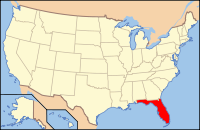
By Record Type

Florida Genealogy Research Guide
If you're not sure which records would be helpful, you can try our Ancestor Source Finder tool.
|
Birth Records (135) Cemetery Records (6,720) Census Records (2,606) Church Records (360) City Directories (1,956) Court Records (50) Death Records (499) Histories and Genealogies (483) Immigration Records (94) Land Records (458) |
Map Records (789) Marriage Records (711) Military Records (824) Minority Records (100) Miscellaneous Records (142) Newspapers and Obituaries (2,150) Probate Records (197) School Records (2,057) Tax Records (22) |
By County
By City
Florida Genealogy Research Guide
Quick Facts
Florida was the twenty-seventh state, but Europeans kept records there for nearly three centuries before statehood. St. Augustine, founded by Spain in 1565, is the oldest continuously occupied European settlement in the continental United States, and the peninsula passed through Spanish, British, and Spanish hands again before the United States took possession in 1821. That long and divided colonial past — together with the fact that statewide vital registration did not begin until the turn of the twentieth century — means the earliest and richest records are colonial, ecclesiastical, and county-level rather than state-level.
- Capital: Tallahassee, chosen in 1824 as a midpoint between the two earlier seats of government, St. Augustine in the east and Pensacola in the west.
- Statehood: March 3, 1845, the twenty-seventh state, formed from the Territory of Florida (organized 1821–1822).
- Counties: 67. The first two, Escambia and St. Johns, were created on July 21, 1821, dividing the former provinces of West and East Florida roughly at the Suwannee River; the last, Gilchrist, was created in 1925.
- Land type: Florida is a federal (public-domain) state, not a state-land state. Original title passed from the federal government to individuals by patent, so there are federal General Land Office records for Florida — and layered beneath them are the Spanish and British colonial land grants that the United States agreed to honor in 1821, which are documented at the state level.
- Nickname and motto: the Sunshine State; the state motto is "In God We Trust."
- Where records live: most genealogical records — deeds, probate, marriages, and naturalizations — are kept at the county level (the clerk of the circuit court, and historically the county judge), and statewide births and deaths are held by the state health department; Florida has no separate-city vital-records system.
Libraries and Archives
Florida's principal collections cluster in Tallahassee, where the state archives and library hold state-government records; university libraries hold the colonial and regional material; and county courthouses, public libraries, and local societies hold records for their own areas. The principal Florida repositories include:
- State Library and Archives of Florida (Tallahassee) — the primary state repository: Spanish land grants, Confederate pension files, militia muster rolls, territorial and state census fragments, and state-government records; its digitized holdings are published free through Florida Memory.
- Florida Memory — free; the online access point for the State Library and Archives collections.
- University of Florida Digital Collections — the P.K. Yonge Library of Florida History, the Florida Digital Newspaper Library, and major Spanish colonial transcripts (the Stetson Collection and the East Florida Papers).
- University of West Florida Libraries — the strongest collections on colonial Pensacola and West Florida.
- Florida Historical Society — the state's oldest cultural society and publisher of the Florida Historical Quarterly, with manuscripts, maps, and photographs at its Library of Florida History.
- Florida State Genealogical Society — the statewide society; publisher of The Florida Genealogist and administrator of the Florida Pioneer Descendants Certificate Program.
- Florida Genealogical Society (Tampa) — a long-running regional society for the Tampa Bay area.
- Florida History and Genealogy Library (Tampa) — one of the largest genealogical collections in the Southeast, with a Florida and Gulf-South emphasis.
- National Archives at Atlanta — the NARA branch serving Florida: federal court, naturalization, passenger-arrival, military, and land-entry records.
- Diocese of St. Augustine Archives and the St. Augustine Historical Society — the Cathedral Parish sacramental registers (from 1594) and Minorcan and colonial St. Augustine research.
- The FamilySearch Library and its worldwide FamilySearch Centers hold extensive Florida microfilm and digital collections, and county clerks of court, county judges, and local historical societies hold records for their own areas.
Major Websites
These sites host digitized Florida records and indexes. Subscription sites are marked ($).
- FamilySearch — free; the backbone finding aid, with the FamilySearch Wiki, catalog, and large digitized collections of Florida vital, census, military, land, probate, and church records.
- Florida Memory — free; the State Library and Archives of Florida's digitized collections, including Spanish land grants and Confederate pension files.
- Ancestry ($) — extensive Florida vital, census, naturalization, military, probate, and tax collections.
- MyHeritage ($) — Florida vital records, state censuses, and immigration collections.
- Findmypast ($) — Florida marriage, census, and Confederate pension collections.
- Fold3 ($) — military service, pension, and related records.
- BLM General Land Office Records — free; federal land patents and survey plats for Florida.
- University of Florida Digital Collections — free; Florida newspapers, histories, photographs, and colonial transcripts.
- Chronicling America — free; the Library of Congress digitized newspaper archive.
- Internet Archive and HathiTrust — free; digitized Florida histories, published record abstracts, and law books.
- Find a Grave — free; cemetery listings, photographs, and transcriptions.
Law and Government
Florida's laws and legislative records explain the jurisdictions and record-keeping practices that produced its genealogical records, and many foundational texts have been digitized and are free to read.
- The Acts of the Legislative Council of the Territory of Florida (1822–1845) — the territorial session laws; individual sessions are free on the Internet Archive.
- The Acts and Resolutions of the General Assembly of the State of Florida (the session laws, from 1845) are digitized on the Internet Archive and by the State Library of Florida and the Florida State University College of Law.
- The early digests and revisions — Duval's Compilation (1839–1840), Thompson's Digest (1847), Bush's Digest (1872), McClellan's Digest (1881), the Revised Statutes (1892), and the General Statutes (1906) — are digitized on Google Books and HathiTrust.
- The Florida Historical Legal Documents collection (University of Florida) gathers the laws of the Territory of Florida (1822–1845) and the state constitutions of 1838, 1865, 1868, and 1885.
- The State Library and Archives of Florida holds the territorial and state legislative records, and the journals of the Territorial Legislative Council and early Senate (1822–1845) are digitized on the Internet Archive.
Vital Records (Birth, Marriage, Death)
Statewide civil registration of births and deaths was established by an 1899 law and was generally complied with by about 1920; the state Bureau of Vital Statistics holds births and deaths filed from 1917 onward. Scattered earlier local records survive — some births from the 1860s and deaths from 1877 were later deposited with the state office — but coverage before 1917 is spotty. Access to recent records is restricted by law, a fee applies, and genealogical copies are available to eligible applicants; use the online indexes below to find a record, then order it from the Florida Department of Health.
Deaths (statewide, from 1877): the Florida Death Index, 1877–1998 is free on FamilySearch and also on Ancestry ($); the companion Florida Deaths, 1877–1939 adds images of early death certificates, free on FamilySearch.
Births (from 1880): Florida Births and Christenings, 1880–1935 is a free index on FamilySearch; births from 1917 are held by the state Bureau of Vital Statistics under access limits.
Marriages: kept by each county (the county judge, now the clerk of the circuit court) usually from the county's creation, with statewide registration from June 1927. The Florida Marriage Index, 1822–1875 and 1927–2001 is free on FamilySearch and also on Ancestry ($); many county marriage books are browsable free on FamilySearch, and the county clerks hold the originals.
History and Timeline of Major Events
Key dates that shaped Florida's jurisdictions and records:
- 1565 — Pedro Menendez de Aviles founds St. Augustine, the oldest continuously occupied European settlement in the continental United States (First Spanish Period, 1565–1763).
- 1594 — The earliest surviving St. Augustine Cathedral Parish sacramental records begin.
- 1738 — Spain establishes Fort Mose north of St. Augustine, the first legally sanctioned free Black settlement in what is now the United States.
- 1763 — Spain cedes Florida to Britain; during the British Period (1763–1783) the peninsula is divided into East Florida (capital St. Augustine) and West Florida (capital Pensacola).
- 1768 — Andrew Turnbull lands about 1,400 Minorcan, Greek, and Italian colonists at New Smyrna; survivors resettle in St. Augustine's Minorcan Quarter by 1777.
- 1783–1784 — Florida returns to Spain (Second Spanish Period, 1784–1821).
- 1817–1818 — The First Seminole War.
- 1821 — The United States takes possession; Escambia and St. Johns, the first two counties, are created, and the Territory of Florida is organized.
- 1824 — Tallahassee is chosen as the territorial capital, between St. Augustine and Pensacola.
- 1835–1842 — The Second Seminole War, the longest and costliest of the U.S. Indian wars, opens with the Dade battle of December 1835.
- 1842 — The Armed Occupation Act grants land to settlers who improve and defend it in the Florida interior.
- March 3, 1845 — Florida is admitted as the twenty-seventh state.
- 1855–1858 — The Third Seminole War.
- 1861 — Florida secedes from the Union (January 10).
- 1881 — Hamilton Disston contracts to buy four million acres of state Internal Improvement Fund land, opening central and south Florida to drainage, railroads, and settlement.
- 1880s–1910s — Henry Flagler's Florida East Coast Railway and Henry Plant's Gulf-coast lines drive land development and the creation of new counties.
- 1898 — The Spanish-American War; Tampa serves as the chief staging point for the Cuba expedition.
- 1925 — Gilchrist County is created, the sixty-seventh and last.
Census Records and Substitutes
Federal censuses were taken every ten years, and Florida appears from 1830 onward, though the 1890 federal schedules were almost entirely destroyed. They are free on FamilySearch and on the National Archives 1950 census site, and are also searchable on Ancestry ($) and MyHeritage ($).
State censuses fall between the federal years and, where they survive, place a family in the intervening decade. What each records and how much survives varies by year:
- 1825, 1855, and 1875: early territorial and state enumerations that are largely lost; scattered county fragments survive (for example, an 1875 enumeration for Alachua County).
- 1866–1867: Reconstruction-era enumerations; the surviving 1867 returns cover only a handful of counties (among them Hernando, Madison, Orange, and Santa Rosa).
- 1885: the most useful early state census, taken as of June 1 with partial federal funding and comprising population, agriculture, manufactures, and mortality schedules. It survives for the counties then in existence except Alachua, Clay, Columbia, and Nassau, and helps fill the gap left by the destroyed 1890 federal census. It is free on FamilySearch and also on Ancestry ($).
- 1895: reported taken but with very few surviving schedules (the returns for Nassau County are a notable survival).
- 1935: a full state enumeration listing every resident with age, sex, race, relationship, birthplace, and occupation; the original schedules are at the State Archives. It is free on FamilySearch and also on MyHeritage ($).
- 1945: the last state census, similar in content to 1935; the original schedules are at the State Archives. It is free on FamilySearch and also on MyHeritage ($).
The 1867, 1875, 1885, 1935, and 1945 enumerations are also indexed together on Ancestry ($). Spanish colonial enumerations survive for St. Augustine and Pensacola from the two Spanish periods, many of them published; where censuses are missing, city directories and tax rolls (below) are the best substitutes for placing a family in a given year.
Church Records
Because civil registration is so late in Florida, church records are the most important substitute for vital records before the twentieth century. The Roman Catholic church arrived with the first Spanish settlers, and the St. Augustine Cathedral Parish registers — baptisms from 1594 — are the oldest surviving written ecclesiastical records in what is now the United States. The Anglican (later Episcopal) church took root during the British period, and Methodist, Baptist, and Presbyterian congregations grew across the territorial and statehood eras.
- The Diocese of St. Augustine Archives holds the Cathedral Parish sacramental registers (1594–1821 and later); until 1735 people of all backgrounds were recorded together, and thereafter in separate books.
- The digitized St. Augustine registers are available online through the Slave Societies Digital Archive (Vanderbilt University) and the diocese's own digital project, an essential source for Spanish, Native, and African-descended families alike.
- The Work Projects Administration's published abstracts of the St. Augustine parish baptisms are free on the Internet Archive and HathiTrust, and thousands of congregational registers for later Protestant and Catholic churches can be found through the FamilySearch Catalog by county and town.
Pensacola's colonial Catholic records survive for the Spanish periods and are held through the diocese and in university collections; later Catholic parish records are held by the parish or diocesan archives.
Court Records
Florida's courts changed with each change of sovereignty, and their records reach well beyond lawsuits into estates, guardianships, naturalizations, and land claims. The main courts a researcher encounters are:
- Spanish colonial courts (to 1821) — civil-law tribunals and notary (escribano) records, surviving mainly in the East Florida Papers and Spanish colonial archives.
- Territorial Superior Courts (1822–1845) — created for the Eastern, Western, Middle, and Southern judicial districts; they held original and appellate jurisdiction and adjudicated land-title claims, including the Spanish grants.
- County (Inferior) Courts and the county judge (from 1822) — kept probate, marriage, administration, and guardianship records.
- Circuit Courts (from 1845) — succeeded the Superior Courts as the main trial courts and took custody of their files; the clerk of the circuit court holds deeds, civil case files, and, historically, naturalizations.
Colonial and territorial court records are described among the holdings of the State Library and Archives of Florida, and many county court records are digitized on FamilySearch.
Ethnic/Minority Records
Florida has been multi-ethnic since its founding, and knowing where a group settled points to the records most likely to document a family.
- Native peoples. The Timucua, Apalachee, and Calusa of the Spanish era were largely gone by the eighteenth century and appear chiefly in mission and colonial records; the Seminole and Miccosukee, formed from Creek migrants, are documented in Seminole War, removal, and later Indian census records. Treaties and related records are at the State Library and Archives of Florida.
- Minorcans. The New Smyrna colonists of 1768 — Minorcans, Greeks, and Italians — resettled in St. Augustine; Father Pedro Camps's parish register (the "Golden Book of the Minorcans") and the St. Augustine Historical Society are the key sources.
- African Americans. People of African descent have lived in Florida since the Spanish period, first largely enslaved, with free Black and maroon communities as well; Fort Mose (1738) near St. Augustine was the first free Black settlement in what is now the United States. Spanish sacramental registers (through the Slave Societies Digital Archive), Freedmen's Bureau records on FamilySearch, and Reconstruction voter registrations are central sources.
- Cuban and Spanish communities. Cigar workers settled Key West and, from the 1880s, Ybor City in Tampa; passenger lists, naturalizations, and university collections document these families.
- Bahamian communities. Bahamian settlers concentrated in Key West and, later, South Florida; their arrivals appear in the Key West passenger lists and in church records.
Immigration and Naturalization
Florida's Gulf and Atlantic ports — Pensacola, Key West, Tampa, Jacksonville, and Miami — drew heavy Caribbean and especially Cuban traffic, and passenger manifests survive from the late nineteenth century.
- Florida Arriving and Departing Passenger and Crew Lists, 1898–1963 ($); the Key West, Tampa, and Pensacola manifests are also free on FamilySearch.
- Key West arrivals, including many Cuban passengers, are indexed free on FamilySearch, and steamship traffic through the Florida ports is documented in the National Archives passenger records.
Naturalization. Before 1906 any court of record — federal, territorial, county, or local — could naturalize, so records are scattered; after 1906 the process was federalized. Key finding aids are the Florida Naturalization Records, 1847–1995 ($) and the free county and federal naturalization collections on FamilySearch. The National Archives at Atlanta holds the federal court naturalizations, and the State Archives holds naturalization records for a number of counties.
Land Records
As a federal (public-domain) state, Florida's public land passed from the United States to individuals by patent, so — unlike a state-land state — there are federal General Land Office records. Layered beneath them are the Spanish and British colonial grants the United States agreed to honor in 1821. Florida land research almost always works both layers at once.
Where the records are kept.
- Federal patents: the Bureau of Land Management General Land Office Records site provides free searchable images of Florida cash and homestead land patents and survey plats; the first federal land office opened at Tallahassee in 1825, with others at Newnansville and St. Augustine.
- Spanish and British grants: the Spanish Land Grant records at the State Archives of Florida — created for the U.S. land commissioners who confirmed or rejected claims after 1821 — are digitized free on Florida Memory and often reveal a claimant's arrival date and family.
- County level: deeds and mortgages are recorded by the clerk of the circuit court in each county from its creation.
The large colonial and speculative tracts. Much of Florida was opened through a handful of enormous grants and purchases, and knowing which tract an ancestor's land fell in tells you where the settlement records survive.
- The Forbes Purchase (Apalachee lands): a tract of roughly 1.2 million acres between the Apalachicola and St. Marks rivers, ceded by the Creeks and Seminoles to Panton, Leslie & Company and its successor John Forbes & Company in the years 1804–1811 — the largest single grant in Spanish Florida, its validity sustained by the U.S. Supreme Court in Mitchel v. United States (1835).
- The Arredondo Grant: a Spanish grant of some 289,000 acres centered on the Alachua country, covering much of present-day Alachua County and parts of Levy and Marion; it was upheld by the U.S. Supreme Court in United States v. Arredondo (1832).
- The Armed Occupation Act tracts (1842): permits granting land to settlers who occupied, cultivated, and defended it in the East Florida interior; the permit files are held at the state level.
- The Disston Purchase (1881): Hamilton Disston's four-million-acre purchase of Internal Improvement Fund land, the largest single land transaction of its kind in the state, which opened the Kissimmee–Okeechobee basin and founded towns such as Kissimmee, St. Cloud, and Tarpon Springs.
- The Flagler and Plant holdings: the state land grants that accompanied Henry Flagler's Florida East Coast Railway down the Atlantic coast and Henry Plant's Gulf-coast lines, which shaped late-nineteenth-century settlement.
Online, the federal patents on the BLM GLO Records site and the Spanish grants on Florida Memory are the starting points, and FamilySearch Full-Text Search makes many unindexed deeds, patents, and grants searchable by every name they contain, including grantors, grantees, witnesses, and neighbors.
Military Records
Florida took part in every American conflict from the colonial era onward, and its distinctive Seminole Wars and its Confederate service generated large bodies of record.
- Spanish colonial and territorial militia: documented in Spanish colonial records (including the free Black militia at Fort Mose) and in the early territorial muster rolls at the State Archives.
- Seminole Wars (First, 1817–1818; Second, 1835–1842; Third, 1855–1858): Florida militia muster rolls of the Seminole (Florida) Wars are digitized on Florida Memory and through the University of Florida Digital Collections; federal compiled service and pension records are on FamilySearch and Fold3.
- Mexican War (1846–1848): muster rolls of the Florida volunteer companies are held at the State Archives.
- Civil War (Florida seceded 1861): Confederate compiled service records are on FamilySearch and Fold3, and the Confederate pension applications — Florida granted pensions to veterans from 1885 and to widows from 1889 — are digitized free on Florida Memory and also on Ancestry ($) and Findmypast; Union service records are on FamilySearch.
- Spanish-American War (1898): compiled service records of the Florida infantry are at the National Archives and the FamilySearch Library; Tampa was the chief staging point for the Cuba expedition.
Probate Records
Probate — wills, administrations of intestate estates, and guardianships of minors — is among the richest sources for family relationships. Custody has shifted with the courts over time.
- Colonial period: Spanish testamentary matters were handled by colonial notaries, and their records survive in the Spanish colonial archives.
- 1822 onward: the county judge proved wills, granted administrations, and appointed guardians; the estate file — petition, will or administration, bond, and inventory — usually names the heirs.
- Later: probate jurisdiction passed to the clerk of the circuit court under a twentieth-century reorganization; probate is filed in the county of residence.
Online, Florida Probate Records are free and browsable by county on FamilySearch, and Florida Wills and Probate Records, 1827–1950 ($) on Ancestry is name-searchable across most counties. FamilySearch Full-Text Search also makes many unindexed wills and estate files searchable by every name they contain.
Tax Records
Tax rolls place a family in a specific county and year and are valuable substitutes where censuses or deeds are missing; several consecutive years can reveal when a young man came of age, moved, or died and left heirs. Antebellum rolls also list enslaved people by number and free persons of color by name.
- The State Library and Archives of Florida holds territorial and state tax rolls (personal-property and land taxes), with comptroller-forwarded volumes reaching back to the 1820s; county tax collectors and property appraisers hold later assessment rolls.
- U.S. IRS Tax Assessment Lists, 1862–1918 ($) — the Civil War–era federal income, license, and excise taxes; Florida's surviving assessment lists (chiefly the mid-1860s) are also free on FamilySearch.
- Where tax rolls are lost, the census substitutes above — city directories and voter registrations — help place a family between the surviving enumerations.
Back to Top