Kentucky Genealogy
USA (1,403,636) > Kentucky (50,020)
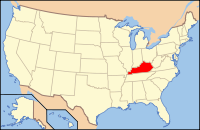
By Record Type

Kentucky Genealogy Research Guide
If you're not sure which records would be helpful, you can try our Ancestor Source Finder tool.
Cemetery Records (26,257)
Census Records (4,046)
Church Records (1,380)
City Directories (896)
Court Records (2,002)
Death Records (1,952)
Histories and Genealogies (1,420)
Immigration Records (128)
Land Records (752)
Map Records (1,092)
Marriage Records (1,986)
Military Records (1,034)
Minority Records (109)
Miscellaneous Records (341)
Newspapers and Obituaries (3,811)
Probate Records (948)
School Records (1,874)
Tax Records (1,093)
By County
Allen County (417)
Anderson County (333)
Ballard County (282)
Barren County (807)
Bath County (440)
Bell County (580)
Boone County (415)
Bourbon County (410)
Boyd County (523)
Boyle County (360)
Bracken County (319)
Breathitt County (561)
Breckinridge County (556)
Bullitt County (388)
Butler County (410)
Caldwell County (330)
Calloway County (495)
Campbell County (550)
Carlisle County (175)
Carroll County (286)
Carter County (590)
Casey County (420)
Christian County (635)
Clark County (420)
Clay County (596)
Clinton County (248)
Crittenden County (368)
Cumberland County (284)
Daviess County (472)
Edmonson County (335)
Elliott County (322)
Estill County (471)
Fayette County (895)
Fleming County (367)
Floyd County (368)
Franklin County (539)
Fulton County (322)
Gallatin County (260)
Garrard County (316)
Grant County (259)
Graves County (560)
Grayson County (432)
Green County (571)
Greenup County (525)
Hancock County (299)
Hardin County (535)
Harlan County (408)
Harrison County (387)
Hart County (462)
Henderson County (464)
Henry County (279)
Hickman County (221)
Hopkins County (395)
Jackson County (396)
Jefferson County (1,498)
Jessamine County (383)
Johnson County (346)
Kenton County (655)
Knott County (460)
Knox County (682)
Larue County (313)
Laurel County (600)
Lawrence County (569)
Lee County (316)
Leslie County (373)
Letcher County (480)
Lewis County (328)
Lincoln County (403)
Livingston County (346)
Logan County (602)
Lyon County (237)
Madison County (590)
Magoffin County (521)
Marion County (293)
Marshall County (456)
Martin County (335)
Mason County (428)
McCracken County (527)
McCreary County (257)
McLean County (239)
Meade County (258)
Menifee County (241)
Mercer County (502)
Metcalfe County (348)
Monroe County (350)
Montgomery County (406)
Morgan County (486)
Muhlenberg County (467)
Nelson County (447)
Nicholas County (220)
Ohio County (578)
Oldham County (278)
Owen County (335)
Owsley County (362)
Pendleton County (327)
Perry County (747)
Pike County (472)
Powell County (305)
Pulaski County (639)
Robertson County (152)
Rockcastle County (424)
Rowan County (381)
Russell County (439)
Scott County (464)
Shelby County (417)
Simpson County (368)
Spencer County (226)
Taylor County (331)
Todd County (364)
Trigg County (484)
Trimble County (249)
Union County (293)
Warren County (664)
Washington County (327)
Wayne County (469)
Webster County (350)
Whitley County (534)
Wolfe County (462)
Woodford County (415)
By City
Adairville (in Logan County) (48)
Adams (in Lawrence County) (28)
Adele (in Morgan County) (26)
Adolphus (in Allen County) (25)
Albany (in Clinton County) (81)
Alexandria (in Campbell County) (58)
Allegre (in Todd County) (32)
Allen City (in Floyd County) (23)
Allensville (in Todd County) (30)
Almo (in Calloway County) (30)
Alton (in Anderson County) (23)
Alvaton (in Warren County) (40)
Amburgey (in Knott County) (23)
Anchorage (in Jefferson County) (25)
Annville (in Jackson County) (36)
Anthoston (in Henderson County) (30)
Apex (in Christian County) (26)
Argillite (in Greenup County) (56)
Arjay (in Bell County) (26)
Arlington (in Carlisle County) (34)
Artemus (in Knox County) (43)
Arvel (in Lee County) (23)
Ary (in Perry County) (38)
Ashland (in Boyd County) (160)
Athens (in Fayette County) (30)
Athol (in Lee County) (26)
Auburn (in Logan County) (52)
Augusta (in Bracken County) (68)
Ault (in Elliott County) (26)
Austin (in Barren County) (40)
Auxier (in Floyd County) (25)
Avawam (in Perry County) (48)
Axtel (in Breckinridge County) (27)
Backusburg (in Calloway County) (28)
Bagdad (in Shelby County) (41)
Bailey Switch (in Knox County) (29)
Baizetown (in Ohio County) (25)
Baldrock (in Laurel County) (27)
Baldwin (in Madison County) (30)
Balkan (in Bell County) (23)
Ballard (in Anderson County) (23)
Ballardsville (in Oldham County) (25)
Bandana (in Ballard County) (24)
Baptist (in Wolfe County) (23)
Barbourville (in Knox County) (115)
Barcreek (in Clay County) (24)
Bardstown (in Nelson County) (136)
Bardwell (in Carlisle County) (49)
Barlow (in Ballard County) (29)
Barwick (in Breathitt County) (23)
Battletown (in Meade County) (37)
Baxter (in Harlan County) (28)
Bayou (in Livingston County) (26)
Bear Branch (in Leslie County) (29)
Bearville (in Knott County) (22)
Beattyville (in Lee County) (85)
Beauty (in Martin County) (33)
Beaver Dam (in Ohio County) (66)
Beckton (in Barren County) (36)
Beda (in Ohio County) (25)
Bedford (in Trimble County) (91)
Bee Spring (in Edmonson County) (29)
Beech Grove (in McLean County) (31)
Belfry (in Pike County) (28)
Bellevue (in Campbell County) (43)
Bells Run (in Ohio County) (25)
Belton (in Muhlenberg County) (27)
Benton (in Marshall County) (132)
Berea (in Madison County) (94)
Bernstadt (in Laurel County) (23)
Berry (in Harrison County) (30)
Bethany (in Wolfe County) (23)
Beulah Heights (in McCreary County) (23)
Bewleyville (in Breckinridge County) (29)
Biddle (in Scott County) (24)
Big Bone (in Boone County) (25)
Big Clifty (in Grayson County) (28)
Big Creek (in Clay County) (34)
Big Spring (in Breckinridge County) (26)
Bighill (in Madison County) (28)
Bimble (in Knox County) (32)
Birdie (in Anderson County) (26)
Blackey (in Letcher County) (40)
Blaine (in Lawrence County) (65)
Blairs Mills (in Morgan County) (26)
Blandville (in Ballard County) (26)
Blaze (in Morgan County) (24)
Bledsoe (in Harlan County) (35)
Bloomfield (in Nelson County) (39)
Bloomington (in Magoffin County) (26)
Bloyd (in Green County) (24)
Blue John (in Pulaski County) (26)
Bluehole (in Clay County) (25)
Boaz (in Graves County) (32)
Bobtown (in Madison County) (29)
Boltsfork (in Boyd County) (27)
Bon Ayr (in Barren County) (25)
Bonnieville (in Hart County) (47)
Bonnyman (in Perry County) (48)
Boonesborough (in Madison County) (32)
Booneville (in Owsley County) (84)
Booth (in Wolfe County) (23)
Boston (in Nelson County) (33)
Boston in Pendleton County (in Pendleton County) (23)
Botto (in Clay County) (30)
Bowen (in Powell County) (23)
Bowling Green (in Warren County) (246)
Boxville (in Union County) (26)
Bradfordsville (in Marion County) (29)
Brandenburg (in Meade County) (55)
Breeding (in Adair County) (30)
Bremen (in Muhlenberg County) (35)
Brewers (in Marshall County) (38)
Brightshade (in Clay County) (29)
Bristow (in Warren County) (24)
Brodhead (in Rockcastle County) (35)
Bromley (in Kenton County) (27)
Bronston (in Pulaski County) (28)
Brooks (in Bullitt County) (33)
Brooksville (in Bracken County) (62)
Browns Fork (in Perry County) (33)
Brownsboro (in Oldham County) (28)
Brownsville (in Edmonson County) (62)
Bryan (in Russell County) (28)
Bryants Store (in Knox County) (35)
Bryantsville (in Garrard County) (29)
Buckeye (in Garrard County) (28)
Buckhorn (in Perry County) (43)
Buckner (in Oldham County) (31)
Buffalo (in Larue County) (27)
Buford (in Ohio County) (26)
Bulan (in Perry County) (30)
Burgin (in Mercer County) (36)
Burkesville (in Cumberland County) (61)
Burlington (in Boone County) (55)
Burna (in Livingston County) (43)
Burning Fork (in Magoffin County) (29)
Burning Springs (in Clay County) (29)
Burnside (in Pulaski County) (32)
Bush (in Laurel County) (29)
Busseyville (in Lawrence County) (24)
Busy (in Perry County) (72)
Butler (in Pendleton County) (33)
Bybee (in Madison County) (29)
Cadiz (in Trigg County) (138)
Cairo (in Henderson County) (30)
Calhoun (in McLean County) (52)
California (in Campbell County) (32)
Callaway (in Bell County) (24)
Calvary (in Marion County) (25)
Calvert City (in Marshall County) (34)
Calvin (in Bell County) (26)
Camargo (in Montgomery County) (30)
Camp Springs (in Campbell County) (26)
Campbellsville (in Taylor County) (134)
Campton (in Wolfe County) (84)
Cane Valley (in Adair County) (34)
Caney (in Morgan County) (28)
Caneyville (in Grayson County) (55)
Canmer (in Hart County) (30)
Cannel City (in Morgan County) (30)
Cannon (in Knox County) (25)
Cannonsburg (in Boyd County) (35)
Canoe (in Breathitt County) (34)
Carcassonne (in Letcher County) (23)
Carlisle (in Nicholas County) (60)
Carmack (in Lyon County) (26)
Carpenter (in Whitley County) (23)
Carrie (in Knott County) (24)
Carrollton (in Carroll County) (75)
Carrsville (in Livingston County) (24)
Carthage (in Campbell County) (27)
Carver (in Magoffin County) (27)
Catlettsburg (in Boyd County) (111)
Cave City (in Barren County) (66)
Cawood (in Harlan County) (29)
Cayce (in Fulton County) (31)
Cecilia (in Hardin County) (36)
Center (in Metcalfe County) (28)
Centertown (in Ohio County) (33)
Central City (in Muhlenberg County) (51)
Cerulean (in Trigg County) (29)
Chance (in Adair County) (23)
Chaplin (in Nelson County) (28)
Charley (in Lawrence County) (26)
Chavies (in Perry County) (37)
Chenoa (in Bell County) (35)
Christopher (in Perry County) (23)
Cinda (in Leslie County) (22)
Clarkson (in Grayson County) (34)
Clay (in Webster County) (39)
Clay City (in Powell County) (44)
Clay Village (in Shelby County) (27)
Clayhole (in Breathitt County) (29)
Clearfield (in Rowan County) (33)
Clementsville (in Casey County) (25)
Clifford (in Lawrence County) (27)
Clifty (in Todd County) (31)
Climax (in Rockcastle County) (24)
Clinton (in Hickman County) (48)
Clintonville (in Bourbon County) (31)
Clover Bottom (in Jackson County) (29)
Cloverport (in Breckinridge County) (51)
Cold Spring (in Campbell County) (38)
Coldiron (in Harlan County) (25)
College Hill (in Madison County) (29)
Colson (in Letcher County) (26)
Columbia (in Adair County) (128)
Columbus (in Hickman County) (43)
Combs (in Perry County) (28)
Confederate (in Lyon County) (24)
Confluence (in Leslie County) (22)
Constance (in Boone County) (28)
Conway (in Rockcastle County) (28)
Coopersville (in Wayne County) (26)
Coral Hill (in Barren County) (31)
Corbin (in Knox County) (107)
Corinth (in Grant County) (33)
Cornettsville (in Perry County) (32)
Corydon (in Henderson County) (42)
Cottongim (in Clay County) (25)
Covington (in Kenton County) (255)
Cowcreek (in Owsley County) (32)
Coxs Creek (in Nelson County) (28)
Crab Orchard (in Lincoln County) (55)
Crane Nest (in Knox County) (24)
Cranks (in Harlan County) (29)
Cranston (in Rowan County) (34)
Creelsboro (in Russell County) (53)
Crestwood (in Oldham County) (37)
Crider (in Caldwell County) (26)
Crittenden (in Grant County) (25)
Crockett (in Morgan County) (29)
Crockettsville (in Breathitt County) (23)
Crocus (in Adair County) (23)
Crofton (in Christian County) (55)
Cromona (in Letcher County) (22)
Cromwell (in Ohio County) (28)
Cropper (in Shelby County) (32)
Crown (in Letcher County) (23)
Cub Run (in Hart County) (30)
Cubage (in Bell County) (23)
Cumberland (in Harlan County) (40)
Cundiff (in Adair County) (29)
Cunningham (in Carlisle County) (27)
Custer (in Breckinridge County) (31)
Cutshin (in Leslie County) (24)
Cuzick (in Madison County) (27)
Cynthiana (in Harrison County) (105)
Dahl (in Pulaski County) (27)
Dalton (in Hopkins County) (24)
Dana (in Floyd County) (24)
Danleyton (in Greenup County) (26)
Danville (in Boyle County) (154)
Darfork (in Perry County) (31)
Davis Crossroads (in Butler County) (27)
Dawson Springs (in Hopkins County) (43)
Dayton (in Campbell County) (57)
Deane (in Letcher County) (26)
Debord (in Martin County) (26)
Delphia (in Perry County) (25)
Delta (in Wayne County) (25)
Denniston (in Menifee County) (26)
Denton (in Carter County) (26)
Denver (in Johnson County) (26)
Dewitt (in Knox County) (34)
Dexter (in Calloway County) (27)
Dice (in Perry County) (32)
Dingus (in Morgan County) (32)
Dishman Springs (in Knox County) (25)
Disputanta (in Rockcastle County) (28)
Dixon (in Webster County) (41)
Dobbins (in Elliott County) (22)
Donaldson (in Trigg County) (25)
Donansburg (in Green County) (25)
Dongola (in Letcher County) (22)
Dover (in Mason County) (35)
Drakesboro (in Muhlenberg County) (28)
Dreyfus (in Madison County) (35)
Dry Fork (in Barren County) (25)
Dry Ridge (in Grant County) (51)
Dryhill (in Leslie County) (29)
Dublin (in Graves County) (25)
Duco (in Magoffin County) (25)
Dukedom (in Graves County) (23)
Duluth (in Madison County) (30)
Dunmor (in Muhlenberg County) (30)
Dunnville (in Casey County) (30)
Dunraven (in Perry County) (23)
Durbin (in Boyd County) (26)
Dwarf (in Perry County) (29)
Earlington (in Hopkins County) (35)
East Bernstadt (in Laurel County) (62)
East Point (in Johnson County) (24)
Easterday (in Carroll County) (24)
Eastview (in Hardin County) (29)
Ebon (in Morgan County) (25)
Echols (in Ohio County) (26)
Eddyville (in Lyon County) (53)
Edgewood (in Kenton County) (25)
Edmonton (in Metcalfe County) (86)
Eighty Eight (in Barren County) (27)
Ekron (in Meade County) (28)
Eli (in Russell County) (30)
Elizabethtown (in Hardin County) (109)
Elizaville (in Fleming County) (28)
Elk Creek (in Spencer County) (27)
Elk Horn (in Taylor County) (24)
Elkhorn City (in Pike County) (35)
Elkton (in Todd County) (92)
Elliottville (in Rowan County) (29)
Ellisburg (in Casey County) (33)
Elmrock (in Knott County) (22)
Elsmere (in Kenton County) (25)
Emanuel (in Knox County) (24)
Emerson (in Lewis County) (23)
Eminence (in Henry County) (34)
Emmalena (in Knott County) (28)
Eolia (in Letcher County) (28)
Erlanger (in Kenton County) (37)
Ermine (in Letcher County) (27)
Essie (in Leslie County) (26)
Esto (in Russell County) (28)
Etoile (in Barren County) (25)
Eubank (in Pulaski County) (39)
Evarts (in Harlan County) (25)
Ewing (in Fleming County) (23)
Ezel (in Morgan County) (31)
Fairdale (in Jefferson County) (26)
Fairdealing (in Marshall County) (26)
Fairfield (in Nelson County) (28)
Fairplay (in Adair County) (29)
Fairview (in Fleming County) (23)
Falcon (in Magoffin County) (31)
Fall Rock (in Clay County) (34)
Falls of Rough (in Grayson County) (30)
Fallsburg (in Lawrence County) (38)
Falmouth (in Pendleton County) (81)
Fancy Farm (in Graves County) (24)
Fariston (in Laurel County) (24)
Farmersville (in Caldwell County) (27)
Farmington (in Graves County) (24)
Faubush (in Pulaski County) (30)
Fenton (in Trigg County) (25)
Ferguson Spring (in Trigg County) (23)
Fern Creek (in Jefferson County) (28)
Ferndale (in Bell County) (32)
Fillmore (in Lee County) (26)
Finchville (in Shelby County) (33)
Finney (in Barren County) (25)
Fisherville (in Jefferson County) (29)
Fisty (in Knott County) (31)
Flat Fork (in Magoffin County) (24)
Flat Gap (in Johnson County) (25)
Flat Lick (in Knox County) (46)
Flat Rock (in Caldwell County) (26)
Flatgap (in Johnson County) (28)
Flatwoods (in Greenup County) (26)
Flemingsburg (in Fleming County) (101)
Flippin (in Monroe County) (27)
Florence (in Boone County) (55)
Fogertown (in Clay County) (30)
Fonthill (in Russell County) (24)
Foraker (in Magoffin County) (25)
Ford (in Clark County) (25)
Fordsville (in Ohio County) (52)
Forkland (in Boyle County) (31)
Fort Campbell (in Christian County) (38)
Fort Knox (in Hardin County) (82)
Fort Mitchell (in Kenton County) (43)
Fort Thomas (in Campbell County) (46)
Fountain Run (in Monroe County) (33)
Fourmile (in Bell County) (39)
Fox Creek (in Anderson County) (25)
Foxtown (in Jackson County) (24)
Frakes (in Bell County) (30)
Frances (in Crittenden County) (27)
Frankfort (in Franklin County) (298)
Franklin (in Simpson County) (119)
Frazer (in Wayne County) (30)
Fredonia (in Caldwell County) (37)
Fredville (in Magoffin County) (29)
Freeburn (in Pike County) (30)
Freedom (in Russell County) (24)
Frenchburg (in Menifee County) (47)
Frozen Creek (in Breathitt County) (27)
Fruit Hill (in Christian County) (29)
Fulgham (in Hickman County) (24)
Fulton (in Fulton County) (81)
Fultz (in Carter County) (23)
Fusonia (in Perry County) (24)
Gabe (in Green County) (25)
Gadberry (in Adair County) (27)
Gamaliel (in Monroe County) (34)
Garfield (in Breckinridge County) (26)
Garner in Knott County (in Knott County) (31)
Garrard (in Clay County) (27)
Garrett (in Floyd County) (26)
Garrison (in Lewis County) (35)
Gentrys Mill (in Adair County) (24)
Georges Creek (in Lawrence County) (31)
Georgetown (in Scott County) (110)
Germantown (in Bracken County) (27)
Ghent (in Carroll County) (39)
Gilbertsville (in Marshall County) (25)
Gillmore (in Wolfe County) (28)
Gimlet (in Elliott County) (23)
Girdler (in Knox County) (34)
Glasgow (in Barren County) (184)
Glen Dean (in Breckinridge County) (25)
Glencoe (in Gallatin County) (31)
Glendale (in Hardin County) (32)
Glens Fork (in Adair County) (33)
Glenville (in McLean County) (25)
Goffs Corner (in Clark County) (25)
Golden Pond (in Trigg County) (40)
Goodluck (in Metcalfe County) (24)
Goose Rock (in Clay County) (30)
Gordon (in Letcher County) (26)
Goshen (in Oldham County) (36)
Gradyville (in Adair County) (25)
Graham (in Muhlenberg County) (32)
Grahn (in Carter County) (33)
Grand Rivers (in Livingston County) (24)
Grange City (in Fleming County) (28)
Grants Lick (in Campbell County) (31)
Grassy Creek (in Morgan County) (34)
Grassy Lick (in Montgomery County) (26)
Gravel Switch (in Marion County) (29)
Gray (in Knox County) (46)
Gray Hawk (in Jackson County) (25)
Grayson (in Carter County) (115)
Greasy Creek (in Pike County) (39)
Great Crossing (in Scott County) (25)
Greenmount (in Laurel County) (27)
Greensburg (in Green County) (154)
Greenup (in Greenup County) (55)
Greenville (in Muhlenberg County) (96)
Gregoryville (in Carter County) (25)
Gresham (in Green County) (25)
Gunlock (in Magoffin County) (40)
Guston (in Meade County) (26)
Guthrie (in Todd County) (39)
Gypsy (in Magoffin County) (28)
Hadley (in Warren County) (28)
Haldeman (in Rowan County) (23)
Halfway (in Allen County) (25)
Halifax (in Allen County) (26)
Hallie (in Letcher County) (31)
Hammond (in Knox County) (24)
Hampton (in Livingston County) (29)
Hanson (in Hopkins County) (31)
Happy (in Perry County) (30)
Hardin (in Marshall County) (45)
Hardinsburg (in Breckinridge County) (60)
Hardshell (in Breathitt County) (27)
Hardyville (in Hart County) (26)
Harlan (in Harlan County) (39)
Harmony (in Owen County) (23)
Harold (in Floyd County) (25)
Harrodsburg (in Mercer County) (119)
Hartford (in Ohio County) (77)
Hawesville (in Hancock County) (59)
Haywood (in Barren County) (25)
Hazard (in Perry County) (110)
Hazel (in Calloway County) (25)
Hazel Green (in Wolfe County) (51)
Hazel Patch (in Laurel County) (24)
Hebbardsville (in Henderson County) (37)
Hebron (in Boone County) (33)
Hector (in Clay County) (31)
Heidelberg (in Lee County) (28)
Heidrick (in Knox County) (30)
Hellier (in Pike County) (25)
Helton (in Leslie County) (31)
Henderson (in Henderson County) (135)
Herndon (in Christian County) (31)
Hi Hat (in Floyd County) (24)
Hickman (in Fulton County) (76)
Hickory (in Graves County) (27)
Hillsboro (in Fleming County) (42)
Hilltop (in Grayson County) (27)
Hima (in Clay County) (25)
Hindman (in Knott County) (64)
Hinkle (in Knox County) (28)
Hiseville (in Barren County) (49)
Hitchins (in Carter County) (39)
Hodgenville (in Larue County) (68)
Holland (in Allen County) (27)
Hollonville (in Wolfe County) (24)
Hollybush (in Knott County) (25)
Hopewell (in Greenup County) (27)
Hopkinsville (in Christian County) (269)
Horse Branch (in Ohio County) (36)
Horse Cave (in Hart County) (58)
Howards Mill (in Montgomery County) (25)
Howe Valley (in Hardin County) (25)
Hueysville (in Floyd County) (27)
Hunnewell (in Greenup County) (25)
Hustonville (in Lincoln County) (34)
Hyden (in Leslie County) (63)
Ibex (in Elliott County) (25)
Independence (in Kenton County) (40)
Inez (in Martin County) (93)
Ingram (in Bell County) (28)
Iola (in Marshall County) (26)
Iron Hill (in Carter County) (25)
Irvine (in Estill County) (89)
Irvington (in Breckinridge County) (27)
Island (in McLean County) (28)
Island City (in Owsley County) (40)
Isom (in Letcher County) (38)
Isonville (in Elliott County) (42)
Ivyton (in Magoffin County) (29)
Jabez (in Russell County) (30)
Jacks Creek (in Floyd County) (24)
Jackson (in Breathitt County) (119)
Jamboree (in Pike County) (32)
Jamestown (in Russell County) (63)
Jarvis (in Knox County) (26)
Jeff (in Perry County) (26)
Jeffersontown (in Jefferson County) (46)
Jeffersonville (in Montgomery County) (64)
Jellico (in Whitley County) (24)
Jenkins (in Letcher County) (29)
Jeremiah (in Letcher County) (36)
Jetson (in Butler County) (27)
Jetts Creek (in Breathitt County) (24)
Jinks (in Estill County) (24)
Job (in Martin County) (26)
Joppa (in Adair County) (27)
Joy (in Livingston County) (28)
Junction City (in Boyle County) (32)
Karlus (in Russell County) (26)
Keavy (in Laurel County) (40)
Keene (in Jessamine County) (27)
Kehoe (in Greenup County) (27)
Kessinger (in Hart County) (23)
Kettle Island (in Bell County) (34)
Kevil (in Ballard County) (28)
Kimper (in Pike County) (43)
Kings Creek (in Letcher County) (23)
Kings Mountain (in Lincoln County) (29)
Kirkmansville (in Todd County) (26)
Kirksey (in Calloway County) (26)
Kite (in Knott County) (43)
Knifley (in Adair County) (31)
Knob Lick (in Metcalfe County) (43)
Kodak (in Perry County) (25)
Krypton (in Perry County) (34)
Kuttawa (in Lyon County) (32)
La Center (in Ballard County) (33)
La Grange (in Oldham County) (66)
LaFayette (in Christian County) (27)
Lakeville (in Magoffin County) (26)
Lamasco (in Lyon County) (25)
Lancaster (in Garrard County) (87)
Landsaw (in Wolfe County) (29)
Langley (in Floyd County) (26)
Langnau (in Laurel County) (25)
Larkslane (in Knott County) (22)
Latonia (in Kenton County) (26)
Latonia Lakes (in Kenton County) (25)
Lawrenceburg (in Anderson County) (91)
Lawton (in Carter County) (23)
Leatherwood (in Perry County) (29)
Lebanon (in Marion County) (91)
Lebanon Junction (in Bullitt County) (41)
Leburn (in Knott County) (38)
Lee City (in Wolfe County) (40)
Leighton (in Estill County) (26)
Leitchfield (in Grayson County) (109)
Lenox (in Morgan County) (25)
Leon (in Carter County) (24)
Lerose (in Owsley County) (24)
Levee (in Montgomery County) (27)
Lewisburg (in Logan County) (47)
Lewisport (in Hancock County) (52)
Lexington (in Fayette County) (599)
Liberty (in Casey County) (74)
Lida (in Laurel County) (23)
Liletown (in Green County) (25)
Lily (in Laurel County) (31)
Linefork (in Letcher County) (29)
Linton (in Trigg County) (25)
Linwood (in Hart County) (28)
Littcarr (in Knott County) (23)
Little Barren (in Green County) (24)
Little Hickman (in Jessamine County) (29)
Livermore (in McLean County) (30)
Livingston (in Rockcastle County) (43)
Lloyd (in Greenup County) (28)
Load (in Greenup County) (41)
Locust Hill (in Breckinridge County) (23)
Lola (in Livingston County) (33)
London (in Laurel County) (169)
Lone Oak (in McCracken County) (30)
Longlick (in Scott County) (27)
Loretto (in Marion County) (25)
Lost Creek (in Breathitt County) (35)
Lot (in Whitley County) (39)
Louden (in Whitley County) (31)
Louisa (in Lawrence County) (143)
Louisville (in Jefferson County) (1,045)
Lovely (in Martin County) (27)
Lowes (in Graves County) (25)
Lowmansville (in Lawrence County) (37)
Loyall (in Harlan County) (23)
Lucas (in Barren County) (40)
Ludlow (in Kenton County) (50)
Lyndon (in Jefferson County) (26)
Lynn (in Greenup County) (25)
Lynnville (in Graves County) (26)
Mac (in Taylor County) (27)
Mackey Bend (in Knox County) (24)
Mackville (in Washington County) (39)
Madisonville (in Hopkins County) (96)
Magnolia (in Larue County) (30)
Mallie (in Knott County) (33)
Maloneton (in Greenup County) (30)
Mammoth Cave (in Edmonson County) (70)
Manchester (in Clay County) (89)
Marion (in Crittenden County) (114)
Marrowbone (in Cumberland County) (25)
Marrowbone in Pike County (in Pike County) (26)
Marshes Siding (in McCreary County) (23)
Martha (in Lawrence County) (38)
Martin (in Floyd County) (34)
Mary (in Wolfe County) (24)
Marydell (in Laurel County) (27)
Mashfork (in Magoffin County) (28)
Massac (in McCracken County) (26)
Matthew (in Morgan County) (27)
Mayfield (in Graves County) (136)
Mayking (in Letcher County) (26)
Mays Lick (in Mason County) (29)
Maysville (in Mason County) (202)
Maytown (in Floyd County) (31)
McDaniels (in Breckinridge County) (25)
McDowell (in Floyd County) (27)
McHenry (in Ohio County) (28)
McKee (in Jackson County) (45)
McQuady (in Breckinridge County) (27)
McRoberts (in Letcher County) (22)
McWhorter (in Laurel County) (24)
Means (in Menifee County) (31)
Melbourne (in Campbell County) (26)
Melvin (in Floyd County) (27)
Merry Oaks (in Barren County) (25)
Meshack (in Monroe County) (24)
Middleburg (in Casey County) (26)
Middlesboro (in Bell County) (123)
Middlesborough (in Bell County) (23)
Middletown (in Jefferson County) (30)
Midway (in Woodford County) (61)
Milburn (in Carlisle County) (31)
Milford (in Bracken County) (26)
Mill Springs (in Wayne County) (27)
Millersburg (in Bourbon County) (50)
Million (in Madison County) (31)
Millstone (in Letcher County) (27)
Milltown (in Adair County) (24)
Millville (in Woodford County) (27)
Millwood (in Grayson County) (24)
Milo (in Martin County) (24)
Milton (in Trimble County) (32)
Mima (in Morgan County) (26)
Minerva (in Mason County) (25)
Miracle (in Bell County) (27)
Mitchellsburg (in Boyle County) (25)
Mize (in Morgan County) (25)
Monroe (in Hart County) (25)
Monterey (in Owen County) (31)
Monticello (in Wayne County) (78)
Montpelier (in Adair County) (25)
Moon (in Morgan County) (25)
Moores Creek (in Jackson County) (27)
Morehead (in Rowan County) (167)
Morgan (in Pendleton County) (23)
Morganfield (in Union County) (59)
Morgantown (in Butler County) (94)
Morning View (in Kenton County) (25)
Mortons Gap (in Hopkins County) (24)
Mortonsville (in Woodford County) (29)
Moscow (in Hickman County) (24)
Mount Auburn (in Pendleton County) (23)
Mount Eden (in Spencer County) (25)
Mount Olive (in Casey County) (26)
Mount Olivet (in Robertson County) (43)
Mount Sterling (in Montgomery County) (128)
Mount Vernon (in Rockcastle County) (86)
Mount Victory (in Pulaski County) (26)
Mount Washington (in Bullitt County) (48)
Mountain Ash (in Whitley County) (24)
Mousie (in Knott County) (47)
Mozelle (in Leslie County) (22)
Muddy Ford (in Scott County) (28)
Muldraugh (in Meade County) (25)
Munfordville (in Hart County) (71)
Murray (in Calloway County) (125)
Nancy (in Pulaski County) (60)
Naomi (in Pulaski County) (27)
Napoleon (in Gallatin County) (30)
Neave (in Bracken County) (23)
Nebo (in Hopkins County) (39)
Ned (in Breathitt County) (26)
Needmore (in Boyle County) (24)
Neon (in Letcher County) (25)
Nevisdale (in Whitley County) (34)
New Castle (in Henry County) (34)
New Concord (in Calloway County) (32)
New Haven (in Larue County) (26)
New Liberty (in Owen County) (30)
Newby (in Madison County) (29)
Newfoundland (in Elliott County) (25)
Newport (in Campbell County) (137)
Niagara (in Henderson County) (33)
Nicholasville (in Jessamine County) (136)
Nippa (in Johnson County) (23)
Noble (in Breathitt County) (24)
Nobob (in Barren County) (25)
Noctor (in Breathitt County) (32)
Nonesuch (in Woodford County) (26)
North Fork (in Powell County) (24)
North Middletown (in Bourbon County) (33)
Nortonville (in Hopkins County) (32)
Oak Grove (in Christian County) (29)
Oak Level (in Marshall County) (32)
Oakdale (in Breathitt County) (31)
Oakland (in Warren County) (30)
Ogle (in Clay County) (24)
Oil Springs (in Johnson County) (33)
Olaton (in Ohio County) (26)
Oldtown (in Greenup County) (44)
Olga (in Russell County) (27)
Olive (in Marshall County) (24)
Olive Hill (in Carter County) (140)
Olmstead (in Logan County) (30)
Olympia (in Bath County) (25)
Oneida (in Clay County) (42)
Ophir (in Morgan County) (27)
Orlando (in Rockcastle County) (28)
Ottenheim (in Lincoln County) (27)
Otter Creek (in Clay County) (24)
Owensboro (in Daviess County) (195)
Owenton (in Owen County) (63)
Owingsville (in Bath County) (115)
Ozark (in Adair County) (28)
Paducah (in McCracken County) (321)
Paint Lick (in Garrard County) (35)
Paintsville (in Johnson County) (62)
Palma (in Marshall County) (26)
Panther (in Daviess County) (26)
Paris (in Bourbon County) (155)
Park (in Barren County) (26)
Park City (in Barren County) (33)
Park Hills (in Kenton County) (26)
Parkers Lake (in McCreary County) (29)
Parmleysville (in Wayne County) (29)
Parnell (in Wayne County) (33)
Partridge (in Letcher County) (23)
Patesville (in Hancock County) (25)
Patrick (in Lawrence County) (27)
Payne Gap (in Letcher County) (23)
Payneville (in Meade County) (23)
Peach Grove (in Pendleton County) (23)
Peaks Mill (in Franklin County) (24)
Pearl (in Whitley County) (24)
Pebworth (in Owsley County) (24)
Pellville (in Hancock County) (24)
Pellyton (in Adair County) (24)
Pembroke (in Christian County) (44)
Pence (in Wolfe County) (23)
Pendleton (in Henry County) (25)
Penrod (in Muhlenberg County) (25)
Perryville (in Boyle County) (40)
Persimmon Grove (in Campbell County) (26)
Petersburg (in Boone County) (32)
Pewee Valley (in Oldham County) (37)
Peytona (in Shelby County) (26)
Phelps (in Pike County) (53)
Phil (in Casey County) (26)
Philpot (in Daviess County) (31)
Pierce (in Green County) (28)
Pig (in Edmonson County) (23)
Pigeonroost (in Clay County) (25)
Pikeville (in Pike County) (86)
Pilgrim (in Martin County) (57)
Pilot View (in Clark County) (24)
Pine Knot (in McCreary County) (38)
Pine Ridge (in Wolfe County) (27)
Pine Top (in Knott County) (42)
Pineville (in Bell County) (103)
Pippa Passes (in Knott County) (39)
Piqua (in Robertson County) (24)
Pisgah (in Woodford County) (26)
Pittsburg (in Laurel County) (27)
Plank (in Clay County) (30)
Pleasant Hill (in Mercer County) (30)
Pleasure Ridge Park (in Jefferson County) (24)
Pollard (in Jessamine County) (28)
Pomeroyton (in Menifee County) (28)
Pomp (in Morgan County) (26)
Poole (in Webster County) (25)
Porter (in Scott County) (30)
Portersburg (in Clay County) (26)
Powderly (in Muhlenberg County) (27)
Powersburg (in Wayne County) (25)
Powersville (in Bracken County) (23)
Prestonsburg (in Floyd County) (41)
Princeton (in Caldwell County) (86)
Providence (in Webster County) (53)
Providence in Trimble County (in Trimble County) (24)
Pryorsburg (in Graves County) (25)
Quicksand (in Breathitt County) (31)
Quincy (in Lewis County) (28)
Rabbit Hash (in Boone County) (26)
Raceland (in Greenup County) (28)
Radcliff in Hardin County (in Hardin County) (29)
Randolph (in Metcalfe County) (27)
Raven (in Knott County) (24)
Ravenna (in Estill County) (40)
Raywick (in Marion County) (24)
Red Hill (in Allen County) (26)
Redbud (in Harlan County) (23)
Reed (in Henderson County) (25)
Relief (in Morgan County) (26)
Rhoda (in Edmonson County) (23)
Ricetown (in Owsley County) (22)
Rich Pond (in Warren County) (24)
Richardson (in Lawrence County) (27)
Richardsville (in Warren County) (29)
Richmond (in Madison County) (166)
Rineyville (in Hardin County) (31)
River (in Johnson County) (23)
Roaring Spring (in Trigg County) (23)
Roark (in Leslie County) (22)
Robards (in Henderson County) (35)
Rochester (in Butler County) (26)
Rockcastle (in Trigg County) (24)
Rockfield (in Warren County) (32)
Rockholds (in Whitley County) (66)
Rockhouse (in Pike County) (25)
Rockport (in Ohio County) (26)
Rocky Hill (in Edmonson County) (25)
Rocky Hill in Barren County (in Barren County) (38)
Rogers (in Wolfe County) (41)
Rogers Gap (in Scott County) (27)
Roseville (in Hancock County) (23)
Roseville in Barren County (in Barren County) (30)
Rosewood (in Muhlenberg County) (25)
Roundstone (in Rockcastle County) (25)
Rousseau (in Breathitt County) (27)
Rowena (in Russell County) (23)
Rowletts (in Hart County) (22)
Roxana (in Letcher County) (27)
Royalton (in Magoffin County) (32)
Ruckerville (in Clark County) (27)
Ruddles Mills (in Bourbon County) (29)
Rush (in Boyd County) (44)
Russell (in Russell County) (32)
Russell Corner (in Oldham County) (23)
Russell Springs (in Russell County) (64)
Russellville (in Logan County) (155)
Sacramento (in McLean County) (26)
Sadieville (in Scott County) (50)
Saint Charles (in Hopkins County) (29)
Saint Helens (in Lee County) (23)
Saint Matthews (in Jefferson County) (25)
Saint Vincent (in Union County) (25)
Salem (in Livingston County) (46)
Saloma (in Taylor County) (28)
Salt Lick (in Bath County) (57)
Salvisa (in Mercer County) (31)
Salyersville (in Magoffin County) (102)
Sanders (in Carroll County) (26)
Sandgap (in Jackson County) (46)
Sandy Hook (in Elliott County) (79)
Sano (in Adair County) (31)
Sasser (in Laurel County) (27)
Saul (in Perry County) (25)
Savoyard (in Metcalfe County) (24)
Saxton (in Whitley County) (30)
Scale (in Marshall County) (26)
Scalf (in Knox County) (27)
Science Hill (in Pulaski County) (39)
Scottsville (in Allen County) (156)
Scoville (in Owsley County) (26)
Sebastians Branch (in Breathitt County) (24)
Sebree (in Webster County) (37)
Sedalia (in Graves County) (43)
Seitz (in Magoffin County) (27)
Settle (in Allen County) (24)
Sewellton (in Russell County) (30)
Sextons Creek (in Clay County) (33)
Shakertown (in Mercer County) (28)
Sharon Grove (in Todd County) (27)
Sharpe (in Marshall County) (25)
Sharpsburg (in Bath County) (39)
Shelbyville (in Shelby County) (132)
Shepherdsville (in Bullitt County) (89)
Shively (in Jefferson County) (28)
Shopville (in Pulaski County) (25)
Short Creek (in Grayson County) (24)
Shoulderblade (in Breathitt County) (24)
Shrewsbury (in Grayson County) (23)
Sibert (in Clay County) (24)
Sidell (in Clay County) (27)
Siler (in Whitley County) (51)
Simpsonville (in Shelby County) (51)
Sitka (in Johnson County) (24)
Sizerock (in Leslie County) (24)
Skinnersburg (in Scott County) (27)
Skylight (in Oldham County) (26)
Slade (in Powell County) (23)
Slaughters (in Webster County) (31)
Slemp (in Perry County) (26)
Slick Rock (in Barren County) (27)
Smilax (in Leslie County) (31)
Smith (in Harlan County) (28)
Smithfield (in Henry County) (28)
Smithland (in Livingston County) (45)
Smiths Grove (in Warren County) (42)
Smoky Valley (in Carter County) (23)
Soldier (in Carter County) (26)
Somerset (in Pulaski County) (165)
Sonora (in Hardin County) (32)
Sorgho (in Daviess County) (27)
South Portsmouth (in Greenup County) (30)
South Shore (in Greenup County) (31)
South Union (in Logan County) (25)
Southgate (in Campbell County) (31)
Sparksville (in Adair County) (24)
Sparta (in Gallatin County) (27)
Spottsville (in Henderson County) (28)
Spout Springs (in Estill County) (28)
Spring Lick (in Grayson County) (23)
Springfield (in Washington County) (80)
Stacy Fork (in Morgan County) (25)
Staffordsville (in Johnson County) (26)
Stamping Ground (in Scott County) (54)
Stanford (in Lincoln County) (107)
Stanley (in Daviess County) (24)
Stanton (in Powell County) (45)
Stay (in Owsley County) (23)
Stearns (in McCreary County) (33)
Stephens (in Elliott County) (26)
Stephensport (in Breckinridge County) (24)
Stillwater (in Wolfe County) (27)
Stinking Creek (in Knox County) (38)
Stinnett (in Leslie County) (28)
Stinnettsville (in Breckinridge County) (23)
Stonewall in Scott County (in Scott County) (25)
Stoney Fork (in Bell County) (24)
Strunk (in McCreary County) (33)
Sturgeon (in Owsley County) (46)
Sturgis (in Union County) (48)
Sugar Grove (in Butler County) (26)
Sulphur Well (in Metcalfe County) (31)
Summer Shade (in Metcalfe County) (32)
Summersville (in Green County) (73)
Summit (in Boyd County) (26)
Sunnybrook (in Wayne County) (29)
Swampton (in Magoffin County) (26)
Swan Lake (in Knox County) (24)
Symsonia (in Graves County) (36)
Taylor Mill (in Kenton County) (33)
Taylorsville (in Spencer County) (71)
Tedders (in Knox County) (24)
Teddy (in Casey County) (27)
Temple Hill (in Barren County) (32)
Thelma (in Johnson County) (24)
Thousandsticks (in Leslie County) (26)
Three Forks (in Warren County) (26)
Threelinks (in Jackson County) (24)
Tiline (in Livingston County) (28)
Tollesboro (in Lewis County) (31)
Tomahawk (in Martin County) (39)
Tompkinsville (in Monroe County) (75)
Topmost (in Knott County) (26)
Tracy (in Barren County) (42)
Trammel (in Allen County) (25)
Travellers Rest (in Owsley County) (32)
Trent (in Wolfe County) (24)
Trenton (in Todd County) (51)
Troy (in Woodford County) (25)
Truitt (in Greenup County) (26)
Turkey Foot (in Scott County) (28)
Tyner (in Jackson County) (36)
Ulvah (in Letcher County) (22)
Ulysses (in Lawrence County) (25)
Union (in Boone County) (40)
Union City (in Madison County) (30)
Uniontown (in Union County) (41)
Upton (in Hardin County) (33)
Urban (in Clay County) (28)
Utica (in Daviess County) (25)
Valeria (in Wolfe County) (27)
Valley Station (in Jefferson County) (38)
Valley View (in Madison County) (28)
Van (in Letcher County) (24)
Van Lear (in Johnson County) (25)
Vanceburg (in Lewis County) (71)
Vancleve (in Breathitt County) (34)
Varney (in Pike County) (24)
Verda (in Harlan County) (26)
Verne (in Whitley County) (27)
Verona (in Boone County) (38)
Versailles (in Woodford County) (107)
Vest (in Knott County) (26)
Vicco (in Perry County) (28)
Vicksburg (in Livingston County) (24)
Villa Hills (in Kenton County) (25)
Vincent (in Owsley County) (37)
Vine Grove (in Hardin County) (37)
Viper (in Perry County) (62)
Volga (in Johnson County) (24)
Waddy (in Shelby County) (41)
Waldo (in Magoffin County) (28)
Walker (in Knox County) (28)
Wallingford (in Fleming County) (28)
Wallins Creek (in Harlan County) (31)
Wallonia (in Trigg County) (25)
Walton (in Boone County) (48)
War Creek (in Breathitt County) (29)
Warbranch (in Leslie County) (26)
Warfield (in Martin County) (24)
Warnock (in Greenup County) (26)
Warsaw (in Gallatin County) (58)
Washington (in Mason County) (27)
Water Valley (in Graves County) (28)
Waterview (in Cumberland County) (23)
Watts (in Breathitt County) (23)
Waverly (in Union County) (25)
Wayland (in Floyd County) (23)
Waynesburg (in Lincoln County) (46)
Webbs Cross Roads (in Russell County) (24)
Webbville (in Lawrence County) (52)
Weed (in Adair County) (23)
Weir (in Muhlenberg County) (29)
Wellington (in Menifee County) (30)
West Liberty (in Morgan County) (89)
West Paducah (in McCracken County) (33)
West Point (in Hardin County) (38)
Westport (in Oldham County) (23)
Wheelwright (in Floyd County) (23)
White Mills (in Hardin County) (28)
White Oak (in Morgan County) (32)
White Plains (in Hopkins County) (27)
White Rose (in Taylor County) (26)
White Sulphur in Scott County (in Scott County) (25)
Whitehouse (in Johnson County) (23)
Whitesburg (in Letcher County) (54)
Whitesville (in Daviess County) (39)
Whitley City (in McCreary County) (38)
Wickliffe (in Ballard County) (43)
Wilder (in Campbell County) (30)
Willard (in Carter County) (31)
Williamsburg (in Whitley County) (123)
Williamsport (in Johnson County) (24)
Williamstown (in Grant County) (54)
Willisburg (in Washington County) (34)
Willow (in Bracken County) (24)
Wilmore (in Jessamine County) (47)
Wilton (in Knox County) (33)
Winchester (in Clark County) (139)
Wingo (in Graves County) (46)
Winston (in Estill County) (25)
Wisdom (in Metcalfe County) (30)
Wolf Creek (in Meade County) (25)
Woodbine (in Whitley County) (31)
Woodburn (in Warren County) (27)
Woodbury (in Butler County) (24)
Woodsbend (in Morgan County) (26)
Woollum (in Knox County) (26)
Wooton (in Leslie County) (39)
Wrigley (in Morgan County) (29)
Wurtland (in Greenup County) (40)
Wyoming (in Bath County) (23)
Yamacraw (in McCreary County) (24)
Yeaddiss (in Leslie County) (38)
Yeaman (in Grayson County) (26)
Yerkes (in Perry County) (36)
Yocum (in Morgan County) (25)
York (in Greenup County) (48)
Yosemite (in Casey County) (26)
Zachariah (in Wolfe County) (24)
Zag (in Morgan County) (24)
Zion (in Henderson County) (27)
Zoe (in Lee County) (36)
Kentucky Genealogy Research Guide
Quick Facts
Kentucky is a state where the county, not the state, is the heart of record-keeping, and where the land itself was granted first by Virginia and then by the Commonwealth of Kentucky. Grasping that split — and the county-by-county custody of deeds, marriages, and probate — is the single most useful thing a researcher can learn before beginning.
- Capital: Frankfort, chosen as the seat of government in 1792.
- Statehood: Kentucky entered the Union on June 1, 1792, as the 15th state. It was formed from the western counties of Virginia — the region organized as Kentucky County, and later the District of Kentucky, of Virginia.
- Land type: Kentucky is a state-land state, not a federal (public-domain) state. Land was granted by Virginia before 1792 and by Kentucky afterward, so there are no federal General Land Office records for Kentucky. Grants issued from Virginia treasury and military warrants and, after statehood, from Kentucky Land Office patents, and were laid out by the metes-and-bounds method. Because settlers chose and described their own irregular tracts, boundaries frequently overlapped — the notorious “shingled” surveys that produced generations of land litigation.
- Counties: 120. The first three — Fayette, Jefferson, and Lincoln — were created in 1780 out of Kentucky County; the last, McCreary, in 1912. Kentucky was carved into an unusually large number of small counties, so boundary and creation dates matter greatly.
- Nickname and motto: the Bluegrass State; the state motto is “United We Stand, Divided We Fall.”
- Where records live: most records are county-level — the County Clerk holds deeds, marriage records, and wills and probate from the county’s creation, and the Circuit Court Clerk holds circuit court case files, including divorces. Statewide birth and death records begin in 1911. Kentucky has no separate municipal vital-records system; the pre-1911 city registers for Louisville, Lexington, Covington, and Newport are handled within the ordinary vital-records channels described below.
Libraries and Archives
A handful of major repositories hold the bulk of Kentucky’s original and microfilmed records. Because so much is county-level, the state archives and the leading historical societies are where scattered county records have been gathered, filmed, and made searchable.
- Kentucky Department for Libraries and Archives (KDLA, Frankfort) — the state archives, holding county records, pre-1911 and 1911-forward vital records, court, tax, and military records, and the Kentucky State Digital Archives.
- Kentucky Historical Society (Frankfort) — a leading research library; its Martin F. Schmidt Research Library houses the largest genealogical collection in the Commonwealth, with digital collections at kyhistory.com.
- The Filson Historical Society (Louisville) — strong manuscript, family-history, and surname-folder collections.
- University of Kentucky Special Collections Research Center — manuscripts, photographs, oral histories, and the ExploreUK digital gateway.
- National Archives at Atlanta — the NARA branch serving Kentucky federal records, including federal court and naturalization records.
- The FamilySearch Library and its worldwide FamilySearch Centers hold the largest single collection of microfilmed and digitized Kentucky county records, searchable through the catalog.
- Major public libraries — the Louisville Free Public Library, the Lexington Public Library, and the Kenton County Public Library, whose Northern Kentucky genealogy holdings are especially strong.
- The Southern Baptist Theological Seminary Archives (Louisville) — Baptist church minutes and association records, important in a state where the Baptist church predominated.
Major Websites
These sites host digitized Kentucky records and indexes. Subscription sites are marked ($).
- FamilySearch — free; the backbone finding aid, with the FamilySearch Wiki, catalog, and large digitized collections of Kentucky vital, land, probate, court, and church records.
- Ancestry ($) — extensive Kentucky vital, land, probate, military, and naturalization collections.
- MyHeritage ($) — Kentucky births, marriages, and deaths among its collections.
- Findmypast ($) — Kentucky birth, marriage, and death indexes and the 1929 Kentucky wills, deeds, and marriages compilation.
- Kentucky State Digital Archives — free; the state archives’ online catalog and digitized record series.
- Kentucky Digital Library — free; newspapers, photographs, and rare Kentuckiana imprints from libraries across the state.
- Notable Kentucky African Americans Database — free; a University of Kentucky finding aid to people, places, and events in Black Kentucky history.
- Chronicling America — free; the Library of Congress archive of digitized historic Kentucky newspapers.
- Internet Archive and HathiTrust — free; digitized county histories, adjutant-general reports, and law books.
- Find a Grave and BillionGraves — free; cemetery listings, photographs, and transcriptions statewide.
Law and Government
Kentucky’s early statutes are unusually rich for genealogy because the legislature routinely passed private acts naming individuals — school trustees, road builders, divorcing couples, and more. Many of these volumes are digitized and free to read.
- The Statute Law of Kentucky (William Littell, five volumes, 1809–1819) — the first critically edited body of Kentucky statutes, covering 1792 onward and including the Virginia laws and both the 1792 and 1799 constitutions; free on the Internet Archive (Volume 3, Volume 4, and Volume 5).
- W. T. Smith’s complete name-and-subject index to Littell’s laws, a genealogical finding aid to the statutes, is free at the Internet Archive and on HathiTrust.
- The 1822 digest of the statute law of Kentucky (compiled with Jacob Swigert) is cataloged on HathiTrust, and the printed Acts of the General Assembly and the histories of the 1792 and 1799 constitutions are found through the same digital libraries.
Vital Records (Birth, Marriage, Death)
Kentucky was an early adopter of vital registration but a late and imperfect enforcer. The Sutton Law of January 9, 1852 made Kentucky the first state west of the Alleghenies to require the recording of births, deaths, and marriages, but compliance was minimal and the requirement lapsed; continuous statewide registration dates only from 1911. Marriages, by contrast, were recorded by the County Clerk from the founding of each county. Access is governed by state rules and a fee applies for certificates ordered from the state office, without earlier records being open to the public sooner.
- Births and deaths (statewide, from 1911): enacted under the Vital Statistics Law of 1910, with continuous recording beginning in 1911 and general compliance by about 1920; births become public after roughly a century and deaths after roughly half a century.
- Earlier civil returns (1852–1910): partial county returns survive for 1852–1862, 1874–1878, and 1892–1910, arranged by county at KDLA and the Kentucky Historical Society. A few cities kept their own registers before 1911 — Louisville, Lexington, Covington, and Newport.
- Marriages (from county formation): marriage bonds, consents, licenses, and registers are held by the County Clerk; some run to the earliest years of the oldest counties, and statewide marriage registration began in 1958.
- Death records and index: Kentucky Death Records, 1852–1965 ($) and the Kentucky Death Index, 1911–2000 ($) on Ancestry; the free Kentucky Deaths and Burials, 1843–1970 on FamilySearch; and Kentucky Deaths, 1900–1999 ($) on MyHeritage.
- Birth records and index: Kentucky Birth Records, 1847–1911 ($) and Kentucky Birth Index, 1911–1999 ($) on Ancestry; also Kentucky Births, 1911–1999 ($) on MyHeritage.
- Marriage records and index: Kentucky County Marriage Records, 1783–1965 ($) and Kentucky Marriage Records, 1852–1914 ($) on Ancestry, and the free Kentucky County Marriages, 1797–1954 on FamilySearch.
- Ordering and access: the Kentucky Office of Vital Statistics genealogy page explains what is held where and the access rules.
History and Timeline of Major Events
Key dates that shaped Kentucky’s jurisdictions and records:
- 1750s–1770s — Long Hunters and Virginia surveyors explore the Kentucky country; Daniel Boone and others scout the region.
- 1774–1775 — Harrodsburg and Fort Boonesborough are founded; the Transylvania Company (Richard Henderson) purchases a vast tract from the Cherokee in 1775, an extralegal claim later voided but foundational to early settlement.
- 1776–1780 — Virginia organizes Kentucky County (1776); in 1780 it is divided into the first three counties, Fayette, Jefferson, and Lincoln.
- 1779 — The Virginia Land Law establishes the warrant-and-survey system (settlement, preemption, and treasury warrants) that governs early Kentucky land.
- 1792 — Kentucky becomes the 15th state on June 1; Frankfort is chosen as the capital, and the Kentucky Land Office begins issuing grants.
- 1801 — The Cane Ridge Revival in Bourbon County draws thousands and helps launch the Disciples of Christ / Christian Church movement.
- 1808 — The Diocese of Bardstown is established, the first Catholic diocese west of the Appalachians (the see moves to Louisville in 1841).
- 1818 — The Jackson Purchase opens far western Kentucky after the Chickasaw cession; this region alone was later surveyed on the federal township-and-range grid.
- 1820s–1850s — Canal and railroad development, river commerce on the Ohio, and steady creation of new counties.
- 1861–1865 — A Union border state with deeply divided loyalties; Kentucky never secedes, but a Confederate shadow government is set up at Bowling Green, and Kentuckians serve in both armies.
- 1912 — McCreary County, the 120th and last county, is created.
Census Records and Substitutes
Federal census research in Kentucky begins with a loss: the 1790 and 1800 schedules were destroyed. Kentucky also never conducted regular state censuses, so the reconstructions and the county tax lists are indispensable substitutes and deserve careful, individual treatment.
- Federal censuses (1810 onward): the 1810 through 1950 schedules survive, though the 1890 census was almost entirely destroyed nationally. Search them free on FamilySearch and on Ancestry via the U.S. federal census category ($) and the MyHeritage U.S. census category ($).
- The lost 1790 census, reconstructed: Charles Brunk Heinemann’s First Census of Kentucky, 1790 rebuilds the missing schedule from surviving tax lists — a name-by-name substitute for the earliest statehood-era population.
- The lost 1800 census, reconstructed: G. Glenn Clift’s Second Census of Kentucky, 1800 compiles tax-list names from the surviving manuscript tax volumes of the 42 counties then in existence — the closest thing to an 1800 census for the state.
- Virginia-era tax substitutes: for the 1780s, Virginia Taxpayers, 1782–1787 and the 1787 census of Virginia list Kentucky-county residents while the region was still part of Virginia.
- Annual county tax lists: the richest substitute of all — see the Tax Records section below — because they name most adult men every year from the founding of each county.
- City directories: for Louisville, Lexington, Covington, and other cities, directories fill gaps between censuses; many are digitized on the Internet Archive and HathiTrust.
Church Records
Because civil vital records are thin before 1911, church registers are often the best source for births, marriages, and deaths. Kentucky’s denominational mix is distinctive, and several major archives hold these records.
- Baptist: the dominant denomination in Kentucky. Congregational minutes and association records are held at the Southern Baptist Theological Seminary Archives in Louisville and the Southern Baptist Historical Library & Archives; digitized records also appear in U.S. Southern Baptist Church Records, 1750–1899 ($).
- Disciples of Christ / Christian Church: born partly on Kentucky soil through the Cane Ridge Revival of 1801, when Barton W. Stone hosted a camp meeting in Bourbon County; Cane Ridge congregation records survive from the early nineteenth century.
- Methodist and Presbyterian: widespread across the state; the Shane Manuscript Collection on early Kentucky Presbyterians is held at the Presbyterian Historical Society.
- Roman Catholic: the early Catholic “Holy Land” of Nelson, Marion, and Washington counties centered on Bardstown, seat of the 1808 Diocese of Bardstown; sacramental registers are held by parishes and the successor dioceses of Louisville and Owensboro.
- Shakers: the communities at Pleasant Hill (near Harrodsburg) and South Union kept detailed membership and covenant records now in manuscript collections.
- Online: the free Kentucky Church Records, 1818–1995 on FamilySearch gathers records across denominations.
Court Records
Understanding which court created a record is essential, because custody is split between two county officials. Over time the structure shifted, but the basic division held.
- County Court: handled probate, guardianships, road and administrative matters, and recorded deeds and marriages; its records are kept by the County Clerk. There was no separate probate court — the County Court did that work.
- Circuit Court: the trial court of general jurisdiction, hearing civil suits (including land disputes and divorces) and serious criminal cases; its case files are kept by the Circuit Court Clerk.
- Quarter Sessions and early courts: in the earliest years, courts of quarter sessions and district courts handled some matters later absorbed by the Circuit Court.
- Court of Appeals: historically Kentucky’s highest court, whose land-case records are especially valuable given the shingled-survey litigation.
- KDLA offers a free search of Kentucky court cases (1785–1991); see the Kentucky Department for Libraries and Archives.
Ethnic/Minority Records
Kentucky’s population history includes a large enslaved and later free Black community, Native peoples of the far west, and immigrant communities concentrated in the river cities and the eastern mountains.
- African Americans: Kentucky was a slave state, so pre-1865 research relies on slaveholders’ deeds, wills, and tax lists. For the emancipation era, use the free Kentucky Freedmen’s Bureau Field Office Records, 1865–1872 and the Freedman’s Bank records (Lexington and Louisville branches). The University of Kentucky’s free Notable Kentucky African Americans Database is a rich finding aid, and Berea College — founded in 1855 as the first interracial and coeducational college in the South — holds relevant archives at its Special Collections & Archives.
- Cherokee and Chickasaw: the Chickasaw ceded the Jackson Purchase region of far western Kentucky in 1818; earlier Cherokee claims underlay the Transylvania purchase of 1775.
- German and Irish immigrants: concentrated in Louisville and in Covington and Newport in Northern Kentucky, which has a strong German heritage; German-language church and newspaper records document these communities.
- Appalachian / Scots-Irish: the Scots-Irish and English who came over the Wilderness Road settled eastern Kentucky; their records are largely the county deed, tax, and church records of the mountain counties.
Immigration and Naturalization
Kentucky was populated mainly by internal migration rather than direct foreign immigration, which shapes what records exist and where. Most early arrivals came overland or by river from Virginia, the Carolinas, and Pennsylvania.
- Migration routes: the Wilderness Road through the Cumberland Gap and the Ohio River were the two great arteries of settlement; tracing an ancestor into Kentucky usually means tracing them back along one of these routes.
- Foreign immigration: real but limited, concentrated in the Ohio River cities of Louisville, Covington, and Newport, with some arrivals via the port of New Orleans and up the Mississippi and Ohio.
- Naturalization before 1906: handled by county courts; look in County Court and Circuit Court records for declarations and petitions.
- Naturalization from 1906: federalized; the National Archives at Atlanta holds federal naturalizations for Kentucky, and digitized records appear in Kentucky Naturalization Records, 1906–1991 ($).
Land Records
Land is where Kentucky’s state-land status matters most. Grants came first from Virginia and then from the Commonwealth of Kentucky, each under a series of laws, and the metes-and-bounds surveys overlapped so badly that land litigation dominated the early courts. The original grants are centralized at the Secretary of State’s Land Office; deeds thereafter are county records.
- The Kentucky Land Office: the Secretary of State holds all patent records issued within Kentucky, including Virginia patents predating 1792, with searchable databases and scanned images; start at the Land Office and its non-military and military registers.
- Nine patent series: patents fall into nine groups — Virginia; Old Kentucky; South of Green River; Tellico; Kentucky Land Warrants; County Court Orders; South of Walker’s Line; West of Tennessee River (Non-Military); and West of Tennessee River (Military).
- The 1779 Virginia Land Law and warrants: settlement and preemption certificates (400-acre settlement rights and 1,000-acre preemptions) and treasury warrants underlie the earliest tracts; military warrants rewarded French and Indian War, Lord Dunmore’s War, and Revolutionary War service.
- Major tracts and districts: the Transylvania (Henderson) purchase of 1775, an extralegal Cherokee cession voided by Virginia but foundational to early settlement; the Virginia Military District concept of bounty land for Revolutionary service; the Green River country, or grants south of the Green River (1797–1866), reserved for veterans and used to relieve squatters; the Tellico grants (1803–1853) on land the Cherokee ceded in 1805; and the Jackson Purchase of 1818, the only part of Kentucky surveyed on the federal township-and-range grid.
- The shingled-survey problem: because claimants described their own irregular boundaries, tracts overlapped and titles clashed, producing extensive Court of Appeals litigation — a reason to search court records alongside grants.
- Indexes and online collections: Willard Rouse Jillson’s The Kentucky Land Grants indexes roughly 150,000 grants (1782–1924) and is the standard finding aid; it underlies Kentucky Land Grants, 1782–1924 ($). County deeds after patenting are searchable through FamilySearch, including its Full-Text Search of deed images, which surfaces every name a document contains.
Military Records
Kentuckians served in every American conflict from the frontier wars onward, and because the state was divided in the Civil War, it uniquely documented both Union and Confederate soldiers. State-level service abstracts complement the federal service and pension files.
- Frontier and Revolution: Lord Dunmore’s War and colonial militia service, and Revolutionary service rendered as Virginians — often rewarded with Kentucky bounty land; George Rogers Clark expedition records name many early settlers.
- War of 1812: Kentucky sent large numbers of troops (the Raisin River massacre and the Battle of the Thames). The Report of the Adjutant General of the State of Kentucky: Soldiers of the War of 1812 is digitized free on the Internet Archive.
- Civil War, both sides: the Adjutant General’s reports were published in Union and Confederate volumes — see the Confederate Kentucky Volunteers report on the Internet Archive and Thomas Speed’s The Union Regiments of Kentucky. Confederate pension applications are searchable free in the Kentucky Confederate Pension Applications on FamilySearch and on Ancestry ($).
- Later wars: Mexican War, Spanish-American War, and World War I service is documented in adjutant-general rosters and in the federal draft registrations (WWI cards free on FamilySearch).
- State holdings: KDLA and the Kentucky Department of Military Affairs (Military Records and Research Branch) hold service and militia records; the National Archives holds federal service and pension files.
Probate Records
Probate — wills, administrations of intestate estates, and guardianships of minors — was a County Court function from the beginning, so the records are county records held by the County Clerk. They are among the richest sources for family relationships, often naming spouses, children, and other kin.
- Types: wills, administrations, inventories and appraisements, bonds, settlements, and guardianships, held at the county level from county formation; there was no separate probate court.
- Online collections: the free Kentucky Probate Records, 1727–1990 on FamilySearch and Kentucky Wills and Probate Records, 1774–1989 ($) on Ancestry, which covers nearly all counties.
- Full-text search: FamilySearch Full-Text Search reads probate and estate images directly, surfacing names not in traditional indexes.
- Published abstracts such as the Abstract of Early Kentucky Wills and Inventories extend coverage of the earliest counties.
Tax Records
Kentucky’s county tax lists are exceptionally important because they substitute for the lost 1790 and 1800 censuses and, uniquely, name most adult men every single year. All free males 21 and over owing the poll tax were listed, as were property-owning widows and underage landowners, so the lists trace individuals and their comings and goings far more finely than the decennial census.
- Annual county tax lists (from 1782): the oldest counties — Fayette, Jefferson, Lincoln, and others formed by 1792 — have lists that begin at or before statehood, recording land (acreage, watercourse, and the person who entered or patented it), enslaved people, livestock, carriages, and later the number of children. KDLA holds the master set of county tax books, extensively microfilmed and digitized.
- Original holdings: the original tax lists from 1782 to 1875 are largely at the Kentucky Historical Society, with a duplicate microfilm set at KDLA.
- Federal Direct Tax and IRS assessments: the U.S. Internal Revenue assessment lists (1862–1874, extending into the twentieth century) cover Kentucky by district; the free United States IRS Tax Assessment Lists on FamilySearch provides access.
- Early substitute lists: the pre-1800 tax lists for Fayette, Mercer, Washington, and other early counties are digitized free on FamilySearch and underlie the reconstructed 1790 and 1800 censuses.
- Online index: digitized tax images are also searchable on Kentucky Tax Lists, 1799–1801 ($).
Back to Top